 Labrador
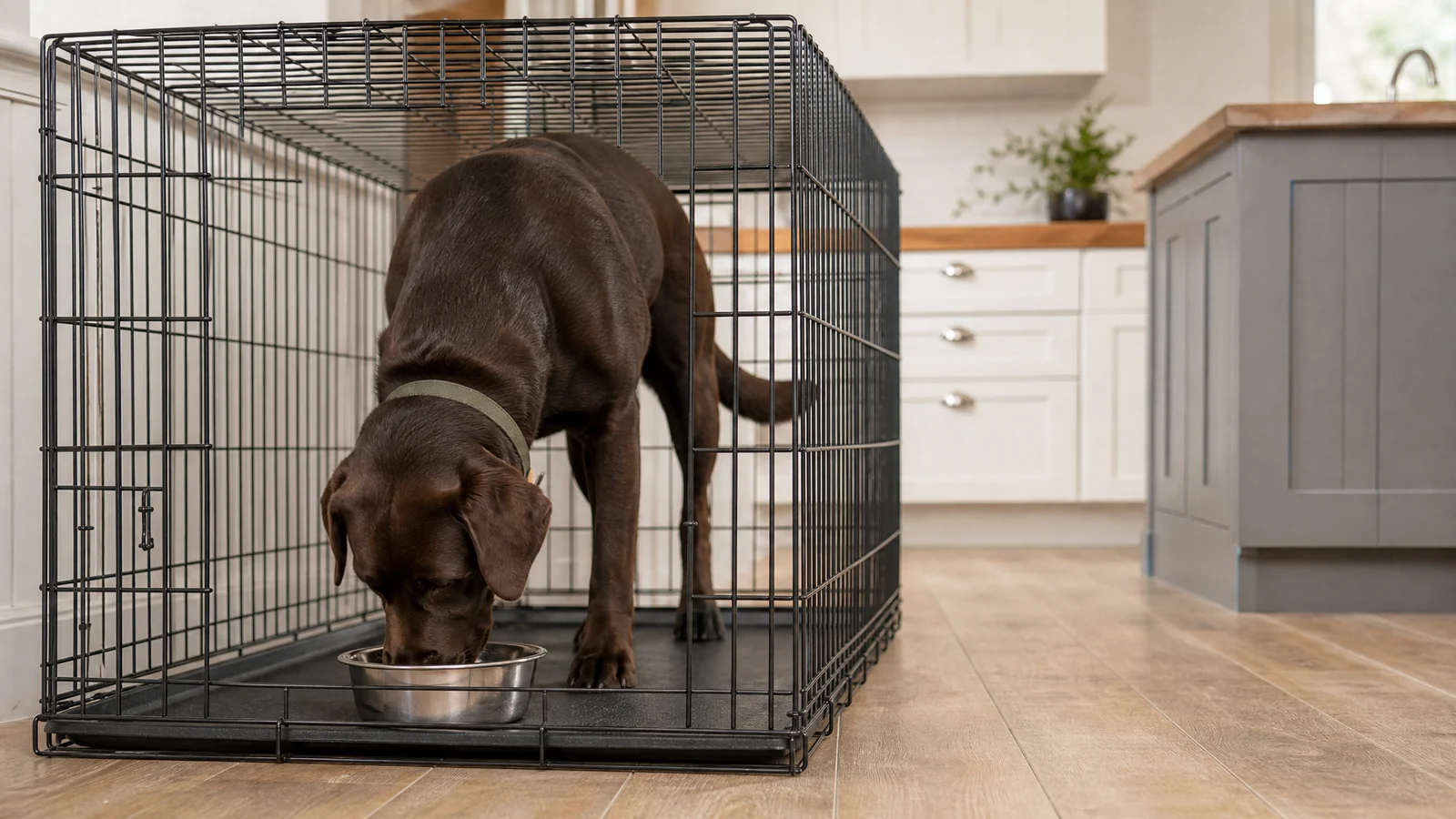
What size crate fits a Lab puppy, and how long can they stay in it? The stock answer is a crate just big enough to turn around in, plus a rule of so many hours per month of age. For a fast-growing, high-energy Labrador Retriever, both halves fall short. The first assumes a dog who stays one size, and the second ignores that Labs are people dogs, badly suited to long stretches alone.
Done well, a crate gives you quicker house training, easy travel and a dog who stays calm at the vet. Done badly, it becomes a parking spot for a dog who needed company. We specialize in Labrador behavior and training, and this guide covers the whole crate habit, from the first hours at home and meals inside to sizing, short spells after exercise, the den feel and calm handling at the clinic.
Day-One Crate Training for a Labrador Retriever Puppy
Skip the advice to let a new puppy settle in before the crate appears. Crate training begins the day the puppy arrives, because the first hours decide whether the door means something good or something strange.
A puppy confined while you cannot watch has no hidden corner to use, and puppies do not want to soil their bed, so they wait for you to take them out. Pair that with a steady schedule of outdoor trips and a treat the moment they finish, with play only afterward, and house training has a shape. Some Labs need many months to get there, so keep the schedule steady rather than judging by week two.
The first night is the real test. Many owners find a crate beside the bed helps a pup settle, and a worn T-shirt tucked inside adds a familiar scent. After that, routine matters more than volume:
- Take the water up an hour or more before bed and make the last trip out just before sleep.
- Keep every night trip dark, silent and boring, with no play and straight back to the crate.
- If crying starts, reward the first moment of quiet. Many owners say a few nights of this ended the protest.
- Expect a long road. Owners most often put the end of night waking between about 4 and 8 months, and a minority wait years.
The crate does not teach anything alone. It simply makes your schedule possible.
Feed Every Labrador Retriever Meal Inside the Crate
Most Labs will cross a room for food, so spend that appetite on the crate. Many owners say feeding meals inside turned the whole thing around, even for rescue dogs who had panicked with the door shut. Waiting for a dog to get used to the crate is the weak plan. Giving them a daily reason to like it is the strong one. If you brought home an adult, our guide to adopting a rescue Labrador covers the first weeks.
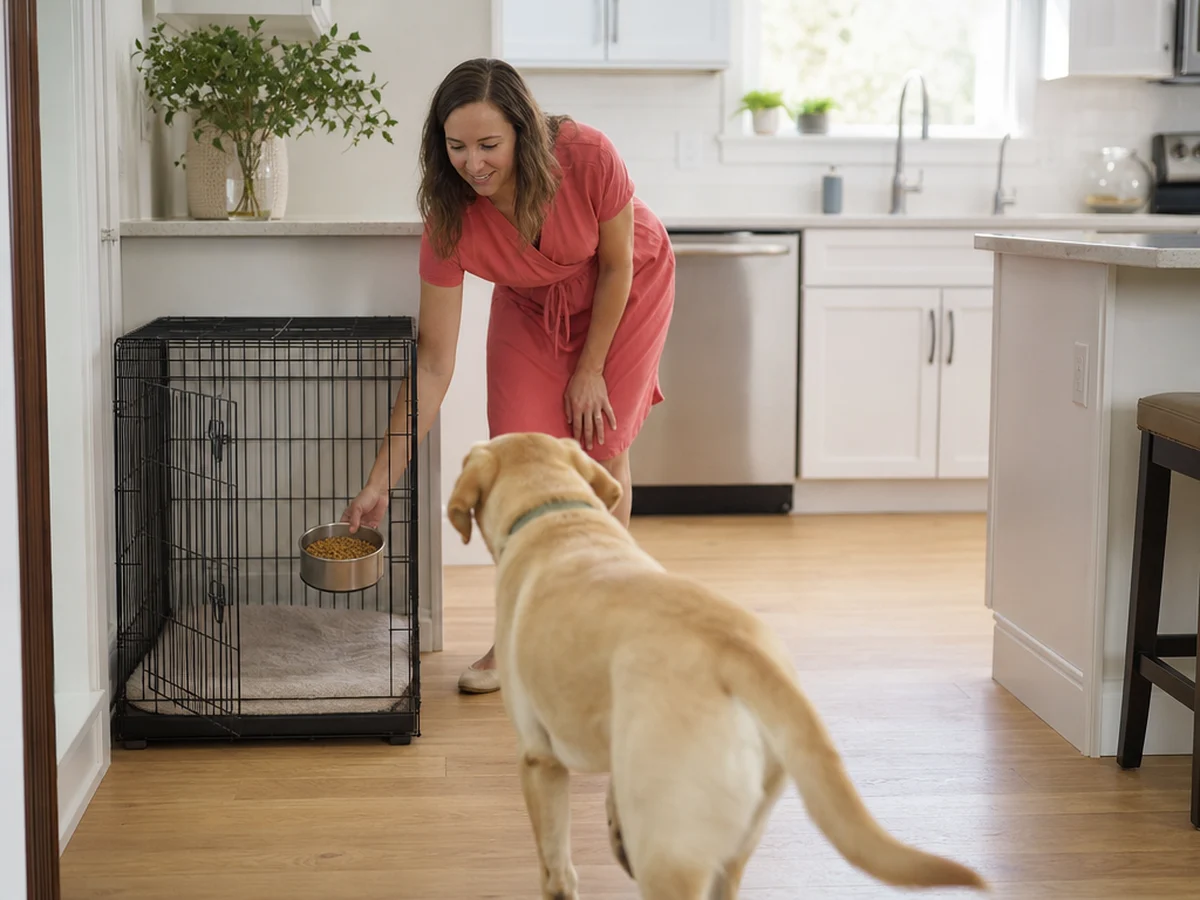
Phase it in over several days:
- Set the bowl near the door, then just inside, then toward the back, one step per meal or two.
- Use a marker word and a treat to mark and reward each step, even a nose poked in, building to the whole body.
- Add a cue word such as crate only after they walk in happily.
- Close the door while they eat and open it before the bowl is empty, then stretch the closed time bit by bit.
- Follow meals with a nap, and add stuffed chew toys and quick games, like tossing a treat in for them to chase.
The goal is a dog who picks the crate for naps. Many owners report that naps after crate meals, stuffed toys and crate games are what made their Lab run to it. Some pups still cry hard or panic behind a closed door, and a few never take to it. For them a playpen is a fine alternative, not a failure, and these dogs often settle better in a pen or loose.
The Right Crate Size Fits a Grown Labrador Retriever
The turn-around rule suits a dog who stays small. A Lab puppy does not. Buy for the adult, block off the extra space with a divider while the puppy is little, and move the divider back as they grow. A string of ever-larger crates costs more and teaches nothing extra.
Adult Labs in family homes run from about 52 to over 100 pounds, so any one-size chart is a guess. Measure your own dog instead. Note their height standing and their length stretched out, then choose the crate that lets a full-grown dog stand, turn and lie flat on their side. Between two sizes, take the larger and use the divider.
Size shapes house training more than most owners expect. Too much floor lets a puppy use one end as a bathroom, which erases the reason the crate works, since a pup will wait only when the space feels like a bed. Too little makes the closed door miserable and the crate something to dodge. Aim for room to rest comfortably and no spare corner. Measure, divide, adjust.
Why Add Short Crate Spells After Exercise?
Because a tired Lab is ready to settle, and a closed door right after a good run asks far less of them than one at the height of their energy. After exercise, which for a puppy means short walks and play, close the door for a few moments. Stay in view, return before any fuss, reward calm, and add a little time each round.
What about the hours-per-month formula? Doubt any rule that ignores the dog. We give no hour count because dogs vary, and the useful measure is whether this puppy is settling. For adults, crating all day at work is off the table, and Labs are not well suited to long periods alone anyway. Our guide to leaving a Labrador alone shows how to build absences from seconds, using treats and praise.
The crate has one firm limit. It must never replace play and socializing, and a Lab left waiting in there too often is a Lab shortchanged on the company they need. Exercise first, crate second, company in between.
A Partly Covered Wire Crate Feels Like a Den
You can partly cover a wire crate with a blanket for a den-like feel. The word that matters is partly. Draping every side shuts out a household that a Lab pup wants to watch, so leave the front and at least one side open. Watch for a pup who tugs the blanket through the bars to chew, and take the cover off if that starts. And do not overrate the cover. It frames the space, but meals, chews and naps are what make a dog like it.
Put the crate where people pass through during the day, and in the bedroom at night at first. Labs need to live indoors with the family, so skip the garage and the far corner. A covered den also helps in other situations. Owners facing fireworks often left treats inside one, as helping a noise-shy Lab explains. Short on space? Our guide to apartment life with a Lab covers fitting a crate into a small home.
Why Does Crate Calm Matter at the Vet?
Because it is one of three reasons a crate earns its place in a Lab's life, and the other two feed it. House training comes first. Travel is second, since the crate becomes a mobile home and you never wonder where to keep your dog when you leave the house. Third is the vet. A puppy who accepts a crate is not stressed when they need a hospital stay during an illness. The aim is a safe, comfortable space where the dog can relax, sleep or retreat.
The comfort carries over because the dog already knows what a crate means. Practice with short car trips and a stuffed chew, and bring familiar bedding to the clinic. Weekly handling of paws, nails and ears with treats makes exams easier too. Keep regular vet visits on the calendar, and if a dog who liked the crate suddenly refuses it, have your vet check for soreness before assuming a training problem.
Working Crate Signs and When to Call a Professional
A Lab wants to be with people, so the crate succeeds when it becomes a place the dog chooses rather than a wall between you. These are the signs it is working:
- The Lab walks in on their own, or hurries over when the treat bag rustles.
- They settle within minutes after exercise and rest quietly, with no scratching or howling.
- Night waking fades, and trips out stay quick and dull.
- Car rides and waiting rooms bring calm instead of panic.
Ask a trainer, and your vet if pain is possible, when distress persists or grows over several weeks instead of fading. The same goes for injury to the mouth, nails or paws from fighting the door, and for soiling in a crate the dog used to keep clean. A pup who panics despite meals and games may simply do better in a playpen, and a professional can help you decide.
Size the crate for the grown dog, pair it with food and rest, and never let it stand in for exercise, play and company. A Lab who chooses to walk in is the result you are after.
 Exercise and jobsHow Much Exercise Does a Labrador Retriever Need?
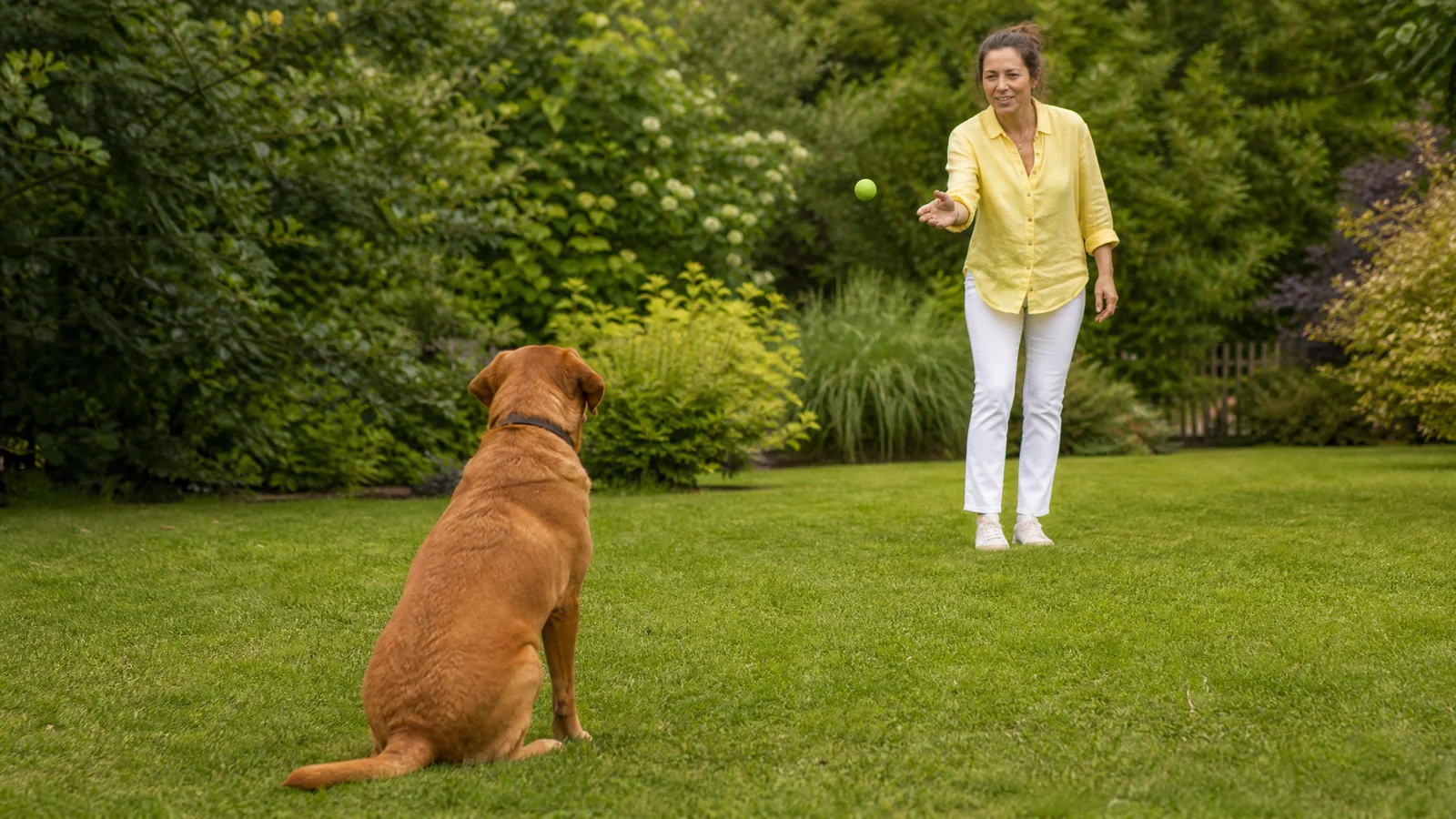 Zoomies and settlingImpulse Control for a Labrador Retriever: Wait, Settle and Focus
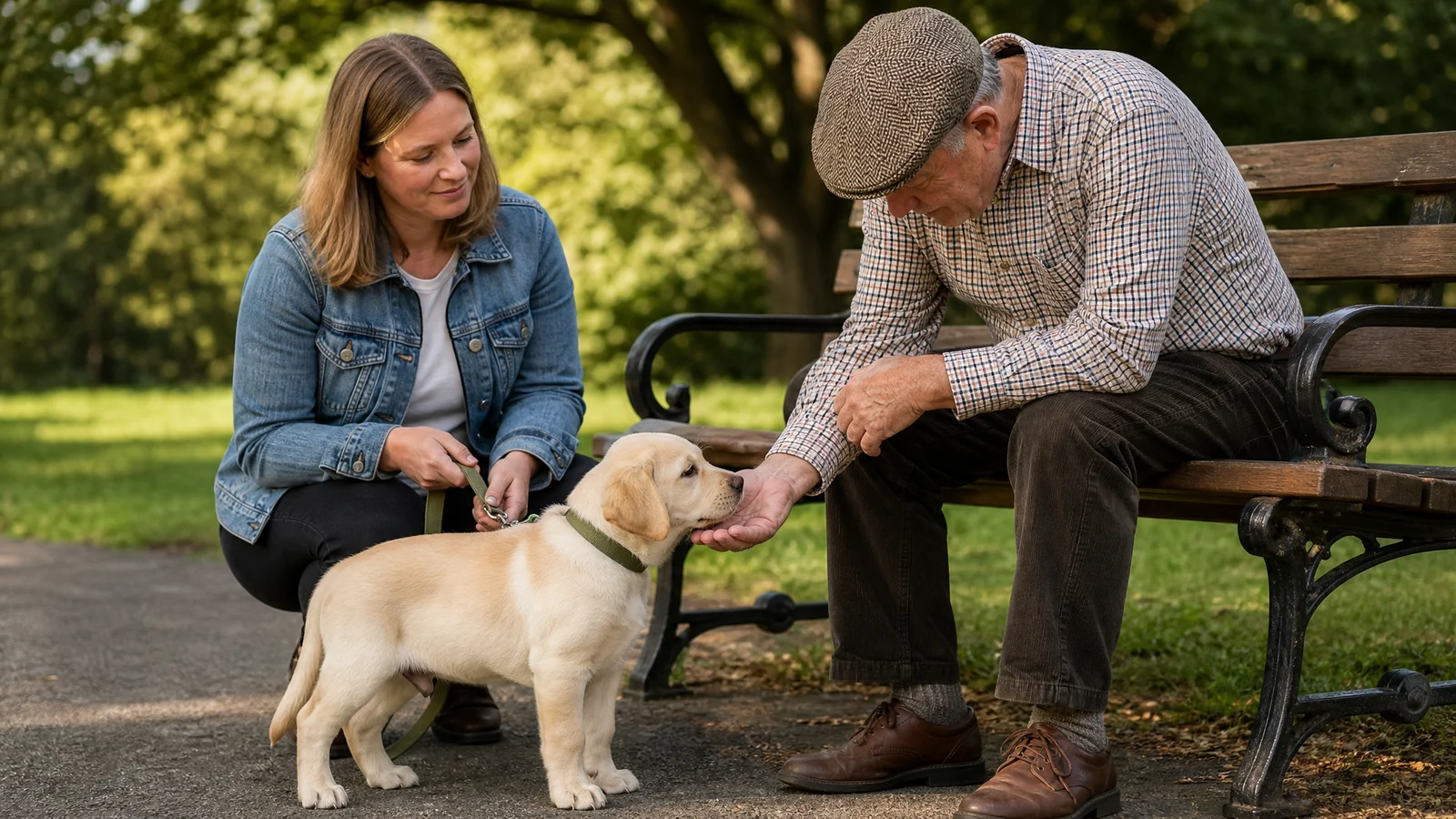 Exercise while growingSocializing a Labrador Retriever Puppy