 Labrador
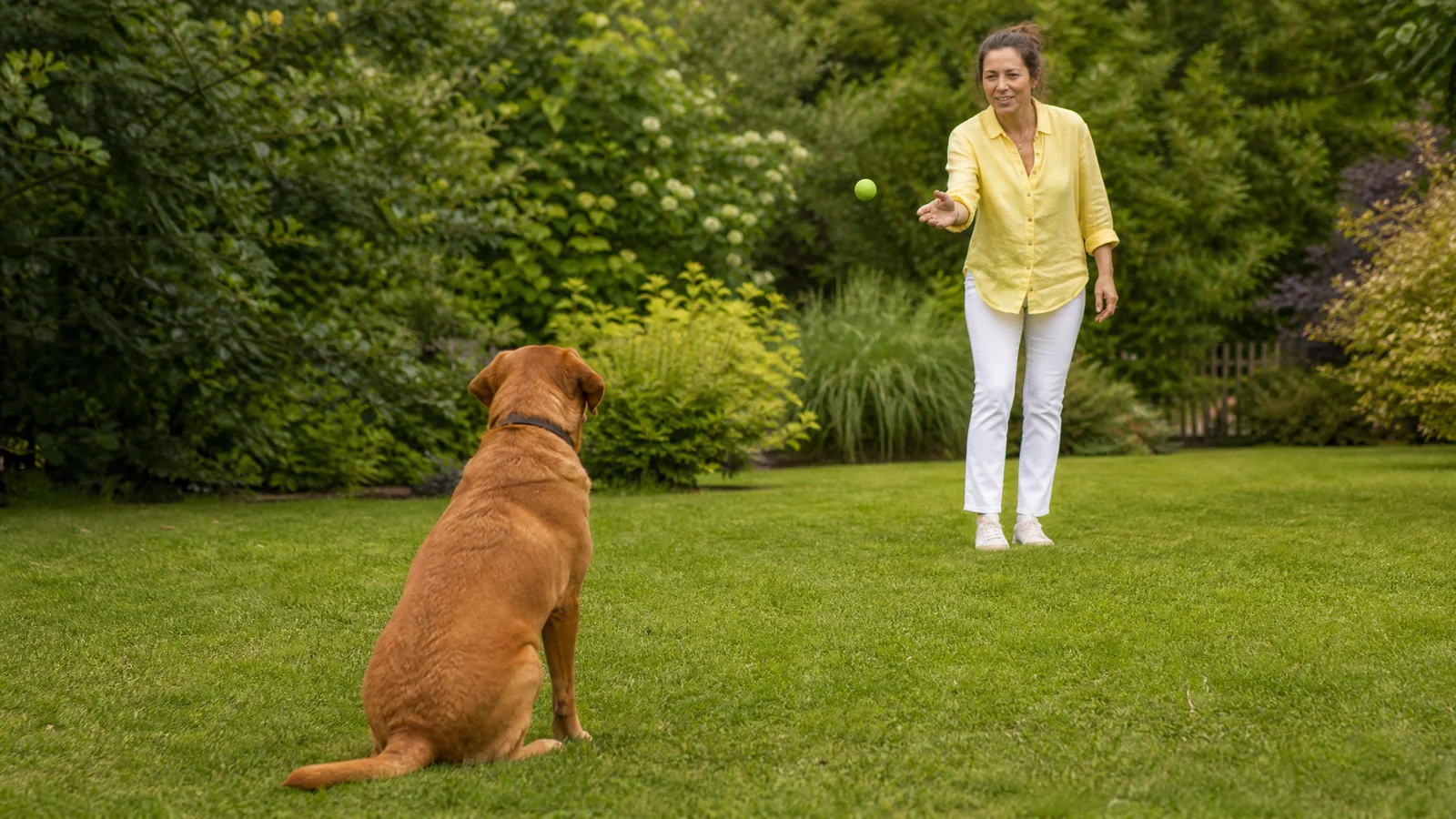
Some Labrador Retriever owners get a dog who sits at the open front door, quivering a little, until the word that sends them out. Others get a dog who hits the threshold at full speed, towing a leash and a startled owner behind. Same breed, same joy, and training makes a real difference.
We reviewed 483 Labrador Retriever owners' first-hand accounts, and some owners who trained consistently credit that work at least as much as age for a calm adult: early practice at the bowl and the door, a settle on a mat, and trades over finds. Left unbuilt, the bounce turns into bolting, counter theft and swallowed socks. Built well, it gives you a dog who can switch off on request.
This article looks at how a Lab's style differs from a Golden's, then walks through sit until released, puppy versus adult expectations, the mat settle and everyday rewards, so you can start teaching your Lab to pause today.
How Labrador Retriever Impulse Control Compares to a Golden's
A judge quoted by AKC says the people who work with both breeds find that Goldens think too much and work out their own way, whereas Labradors just go for it. She also calls the Lab the Peter Pan of retrievers, because they see the fun in every situation and never grow up. That is a generalization from people who know the breed, not a measurement, and your dog may differ. Still, anyone who has opened a door onto a Lab's wriggling welcome will recognize the picture.
The breed ratings back up the feeling. Labs score 5 of 5 for energy, 5 of 5 for playfulness and 4 of 5 for mental stimulation needs, the range where a dog needs a job or activity. Adults run from about 55 to 80 pounds, so all that enthusiasm arrives with real muscle behind it. A Golden may weigh the angles before bursting into a new situation. A Lab is often already through the gap.
A longtime Lab breeder and judge adds two points that shape teaching. An untrained Labrador is harder for the public to deal with than an untrained Golden, and Goldens love repetition whereas Labradors don't. That is reason to push back on the old advice to drill one exercise until it is perfect. With a Lab, a few quick waits, a game, then a settle will beat endless identical repetitions, and your dog stays keen instead of drifting off.
Sit and Release Impulse Control
The breed's parent club names teaching "sit" and keeping your dog seated until released as an important foundation. We would call it the core impulse-control exercise for a Lab. A plain sit is a pose the dog ends whenever they like, usually by launching at the nearest fun thing. A sit until released teaches that good things follow a pause, and that the pause ends when you say so. A bouncy dog can actually learn that rule.
Why the Release Word Matters
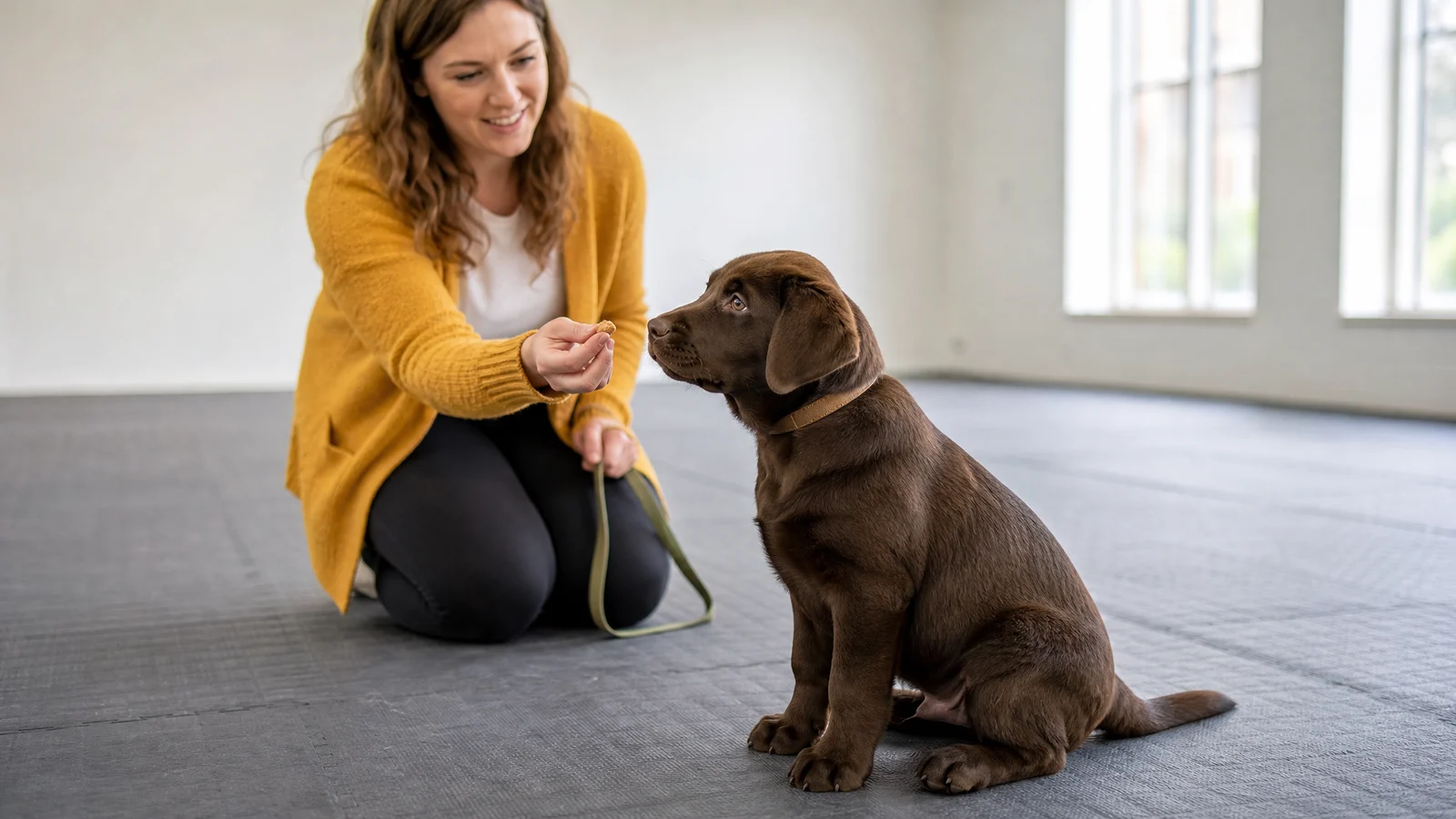
The release word is the real prize, more than the sit. Choose one cheerful word, say it every time, and follow it with something wonderful such as a treat, a toss of a toy or the start of the walk. A Lab who finds being let go thrilling will work hard to earn it. Some owners describe sit-stay-wait clicking after only three tries, so expect early steps to move quickly.
Building It Step by Step
Keep the early work tiny and generous. Owners who train with food, from kibble to snacks, say the dog's food motivation makes this easier, so use it. Work through the steps in this order:
- Ask for a sit, wait a beat, say the release word and reward right away.
- Stretch the pause a little at a time, rewarding the dog who stays put while you shift your weight.
- Add a step back, then a slow walk around your dog, returning to reward before you release.
- Move to the kitchen, the yard and the porch, one new place at a time.
- Vary what follows the release so the word itself stays exciting.
Waits at the Bowl and the Door
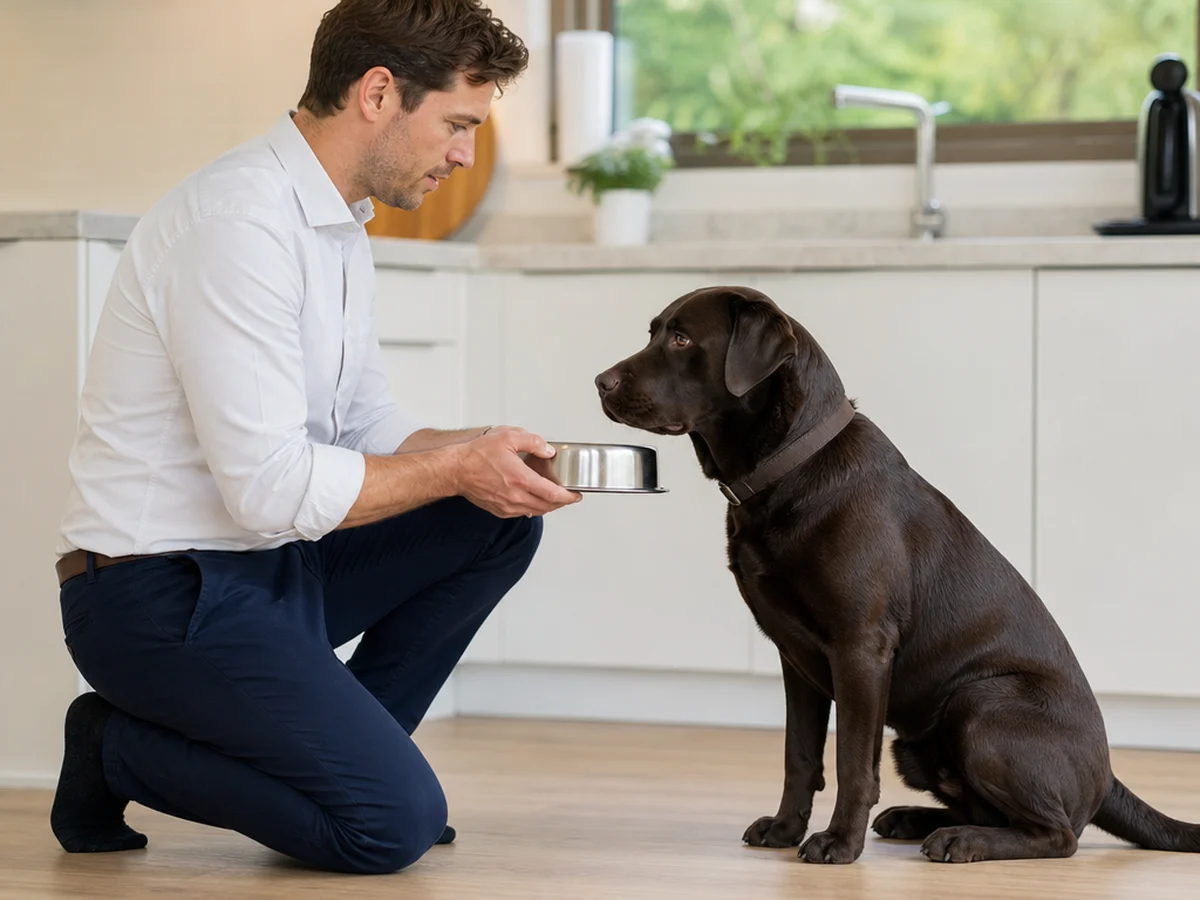
Meals and doorways are the two classrooms every household already has. At the bowl, lower the food in stages and release your dog to eat only when they are still. At the door, open it an inch, close it if your dog rises, reward stillness, and finally release them through the gap like a gift. Owners value waits at the bowl and the open door taught early, and we would add that a wait that holds until released keeps a fast dog away from roads and other dogs.
Learning the cue is not the hard part. Owners say the challenge is keeping it around people, other dogs and tempting scents, and puppies who are perfect in the kitchen may abandon a stay for a passing stranger. Raise difficulty slowly, pay well when the world is busy, and step back to an easier spot whenever your dog starts to wobble. Our guide to loose-leash walking applies the same pause-then-go idea outdoors.
Puppy and Adult Impulse Control
A Lab puppy has the same joy as an adult and a fraction of the brakes, so the two stages ask for different things from you. Where owners give ages, they say recall and focus around distractions improve slowly over time but are rarely called perfect. The age at which impulse control arrives varies a lot between dogs. Plan to teach it in the puppy, refine it in the teenager and keep practicing it with the adult.
What a Puppy Can Manage
Young puppies can learn a lot, but not for long. Ask for a sit, a brief wait and a release, pay at once, and finish while they are still keen. Several tiny sessions across the day suit a puppy better than one long one. Owners of young puppies also report pups who could not settle on their own and slept quickly once crated or penned for a nap, so rest is part of the plan. Our puppy training plan sets out the stages.
What a Grown Lab Can Do
An adult can hold a wait longer, from farther away, and with more going on around them. Add duration before distance, and distance before distractions, and change only one of them at a time. A grown Lab with years of bolting behind them needs a clean start: a high-value reward, a predictable routine, and no further chances for the old habit to pay off at the door.
Adolescent Wobbles
Expect a dip in the teenage months. The RSPCA explains that what looks like stubbornness in an adolescent is often a dog finding it hard to control their impulses. A young Lab who bolts through a door they waited at last month has not turned defiant. Shorten the exercise, raise the reward and keep your standard the same.
Settling a Labrador Retriever
A stay asks a dog to hold a position, and a Lab can hold one while every muscle quivers. A settle asks for something harder and better: a dog who lets their body soften and rests. Owners credit a place or bed cue and captured calm at least as much as age, and that is the part of the age story worth acting on.
Owners' answers about when their Lab calmed are scattered. About three years is the most common, but reports run from 7 months to 10 years. Some describe calming in two steps, a minority say their dog never really calmed, and owners with several Labs stress how individual it is, even between siblings. Telling yourself they will grow out of it is poor advice, because waiting is the weakest plan on the table.
Building Duration
Lay a mat on the floor and reward your dog for stepping onto it, then for lying down, then for staying down while you drop treats between their paws. Start with a few seconds, then let the treats arrive further apart, and build toward a whole family dinner.
Once your dog heads for the mat on their own, attach a name to it, so the word describes something they already do. Some owners use a "go" to bed cue so the mat becomes a destination, then call on it at the door and the table.
Capturing Calm
Whenever your Lab chooses to lie down, sigh and rest on their own, quietly drop a treat between their paws or murmur praise. Done often, that shows your dog what quiet looks like, and the mat becomes somewhere they already like. A treat after every calm greeting works the same way. Exercise sets the stage, since owners say their Labs relax at home only after enough activity, such as a morning ball game before guests arrive.
Some owners describe dogs who settled at home well before they could stay calm with visitors, so practice guests separately, with friendly helpers. The light-switch dog some breeders describe, ready for action and then happy to rest, comes from exercise plus taught calm, not from age alone. Our guide to jumping on people covers greetings in detail.
Rewards for Self-Control
A treat held at your dog's nose is a fine way to start and a poor way to finish. A Lab who only performs while food is visible has learned to watch your hand rather than to listen for the cue. Move quickly to rewards that come after the behavior, and let real life do the paying: the door opens, the ball flies, the bowl lands, the greeting begins. Practice in new places a little at a time, because the real world needs its own rehearsal.
Show Me and Trade
A Lab's mouth is always working. Owners describe walks as constant scavenging and report vet emergencies from swallowed towels, socks, rocks and sticks. Chasing a dog with a prize turns into keep-away, and a Lab will sometimes win by gulping.
So teach "show me" early: when your dog brings you something, offer a treat they love, take the item while they eat, and sometimes hand it back. Owners who played trade games from the first months say their Lab now gives things up willingly.
Add leave it and drop it early too. Owners who did say it prevented accidents with a dog who wanted to eat everything. They are honest about the limits: the cues work most of the time and have removed dangerous items, but they do not stop the dog finding things. Pair them with management, such as a ball to carry on walks and medication kept out of reach. Our guide to stopping a Labrador eating everything goes deeper.
This is general information about training and feeding routines, not medical advice. If your dog swallows something unsafe, or you have questions about their diet or any medication in the house, check with your veterinarian.
Short Daily Jobs
A 4 of 5 rating for mental stimulation means walks alone leave a gap. The ASPCA notes that dogs need to play, chase, smell, chew and scavenge, and that dogs without stimulation find their own, which shows up as unwanted behavior. The PDSA adds that training should be part of every dog's daily routine, because it keeps the mind active and builds the bond. For a Lab, that means short jobs sprinkled through the day:
- Scatter the daily ration in the grass or around a room and let that excellent nose do the searching, which owners already use to turn food drive into brain work.
- Ask for a wait or a mat settle before every meal, walk and game, so impulse control becomes part of the routine.
- Play a ball game with a release word, so the ball only goes when your dog is still.
- Teach a trick or two, remembering that balance tricks such as sit pretty can take a large Lab months to hold.
If your dog wants more than home jobs, point them toward a sport. Labs do very well in agility, rally, obedience, tracking and dock diving, and each rewards the same pause-then-go skill. Regular vet visits keep your dog fit for all of it. Our complete training guide shows where these skills fit in the bigger picture.
One Impulse Control Exercise Today
The bounce, appetite and joy that make a Lab such a loved family dog are exactly what cause trouble when nothing channels them. The answer is not to dim that enthusiasm. Teach your dog that pausing is the fastest route to what they want, then let them burst out into the fun. Unlike calm itself, that is something you can start teaching this afternoon at any age.
So choose the doorway your Lab rushes most often. Ask for a sit, open the door a little, and close it gently if your dog rises. When they hold still, open it wider, and release them through only on your cue, with a treat or a game waiting outside. Do the same at the next doorway you reach, and every one after.
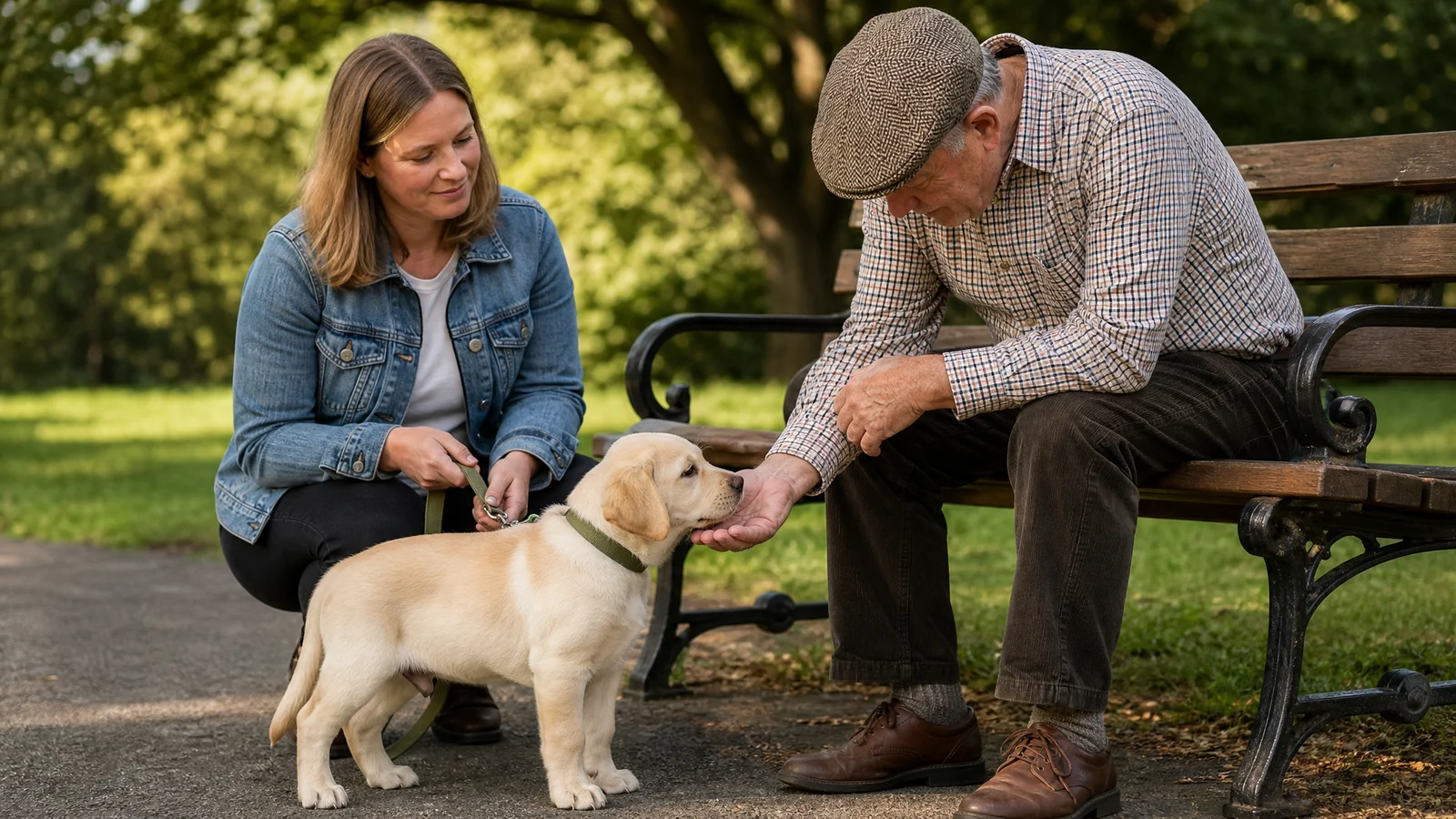 Exercise while growingSocializing a Labrador Retriever Puppy
 The teenage monthsLabrador Retriever Puppy Training: A Month-by-Month Plan to 12 Months
 Running off at the parkTeaching a Labrador Retriever a Reliable Recall