 Labrador
13 Labrador training topics
Every common Labrador challenge, with first steps and guides to read.
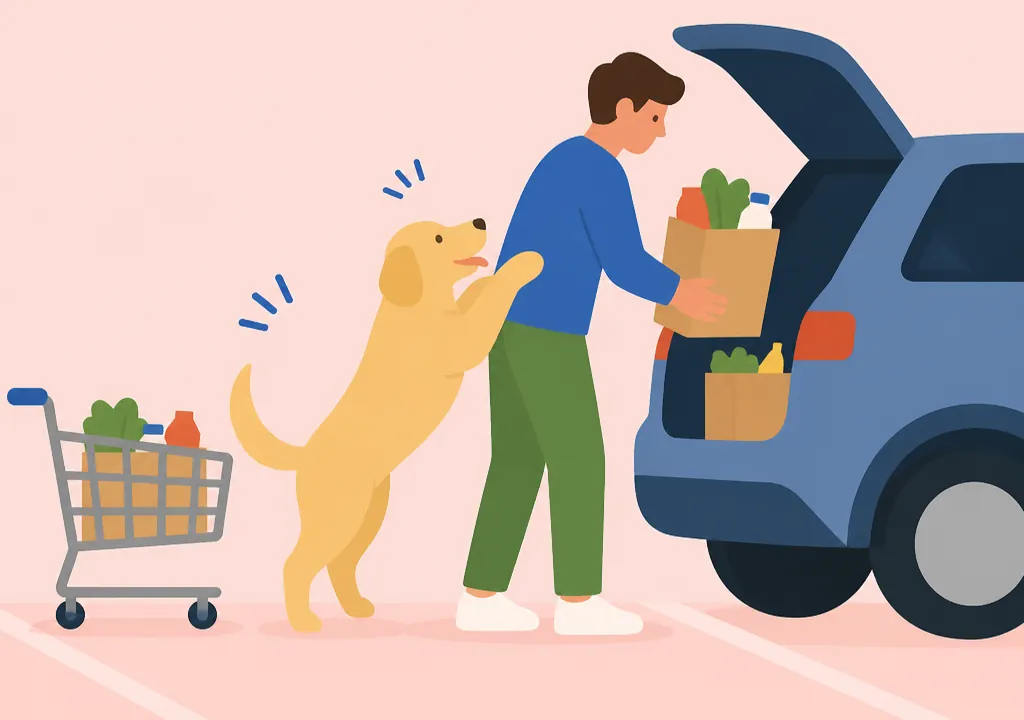
Jumping on people
Four paws down for a big, happy Lab.
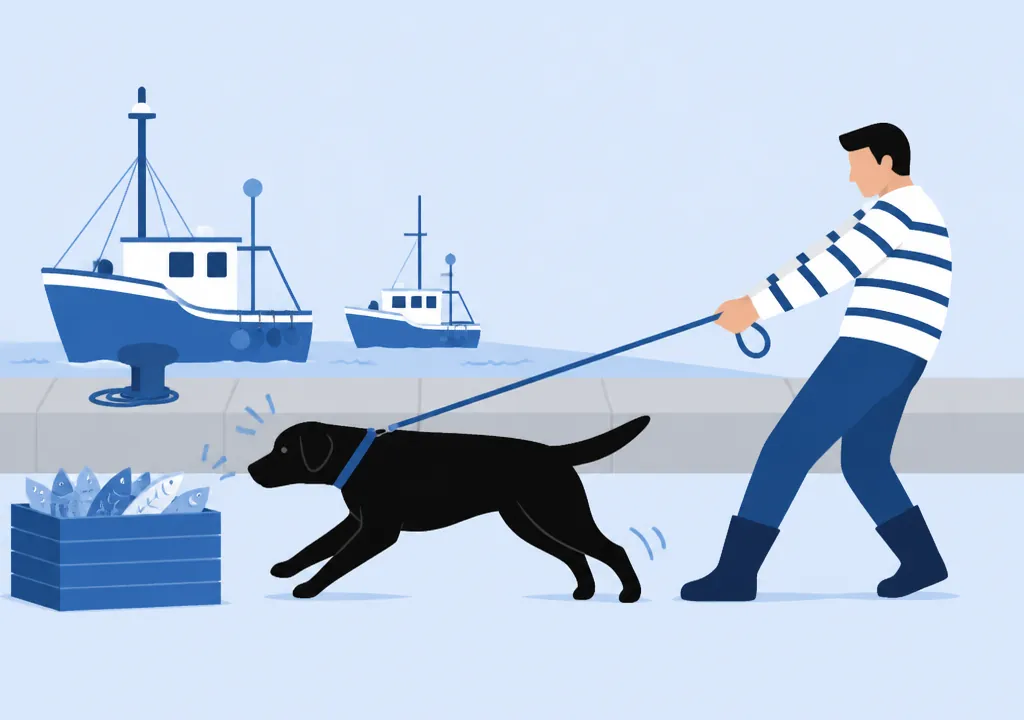
Pulling on the leash
Loose leash walks with a strong dog.
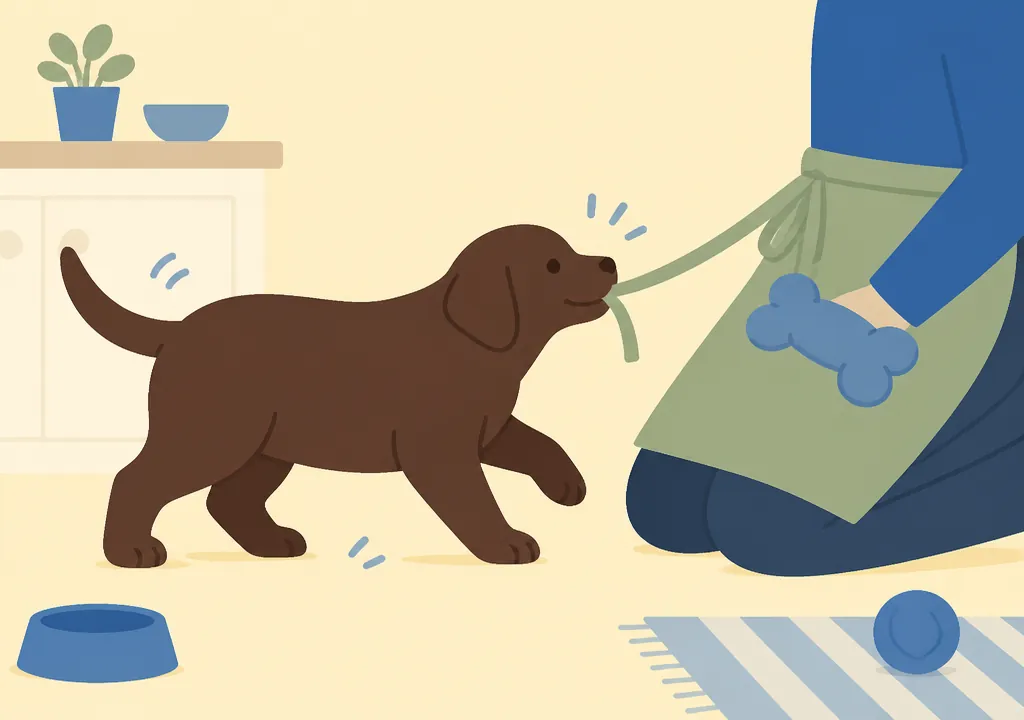
Puppy mouthing
Move sharp puppy teeth onto toys.
Many owners wait for the puppy to give a sign. You watch for sniffing and circling, you glance away for a moment, and the puddle is already spreading across the rug. Plenty of Lab puppies give no warning once play takes over, so the accident happens anyway.
The fix is a clock instead of a hunch. Take your puppy out the moment they wake, keep going out on a tight timed schedule while they are up, and pay for every success on the spot. We have worked with Labradors for a long time, and this routine wins because it swaps guessing for a pattern a young dog can learn.
Read the full guide: How to Potty Train a Labrador Retriever Puppy
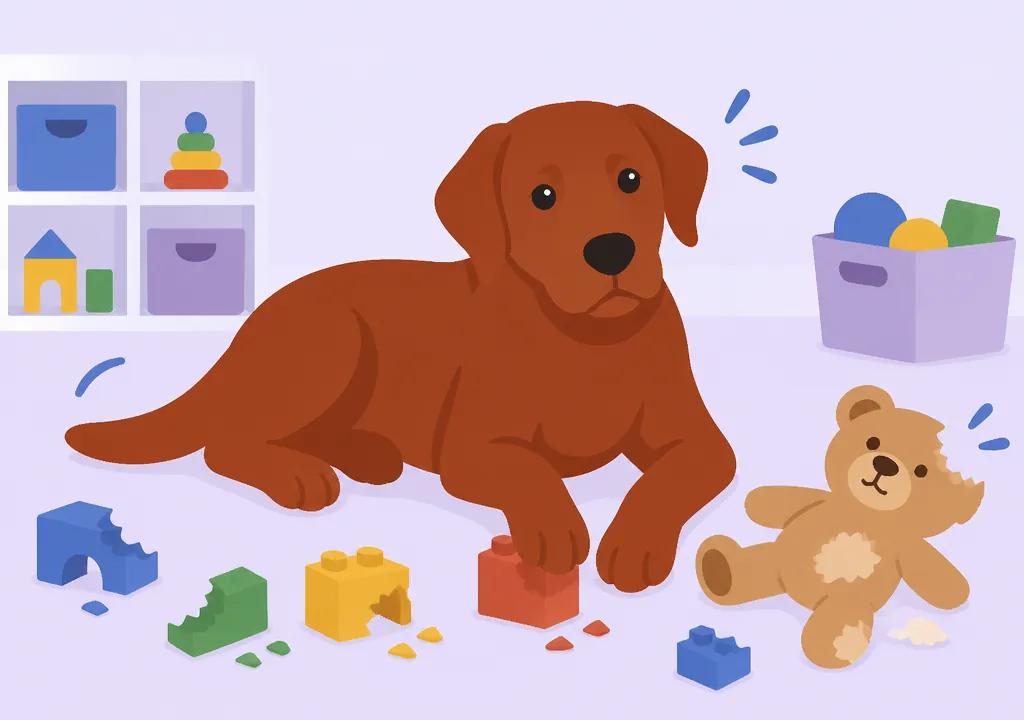
Destructive chewing
The right chews for busy jaws.
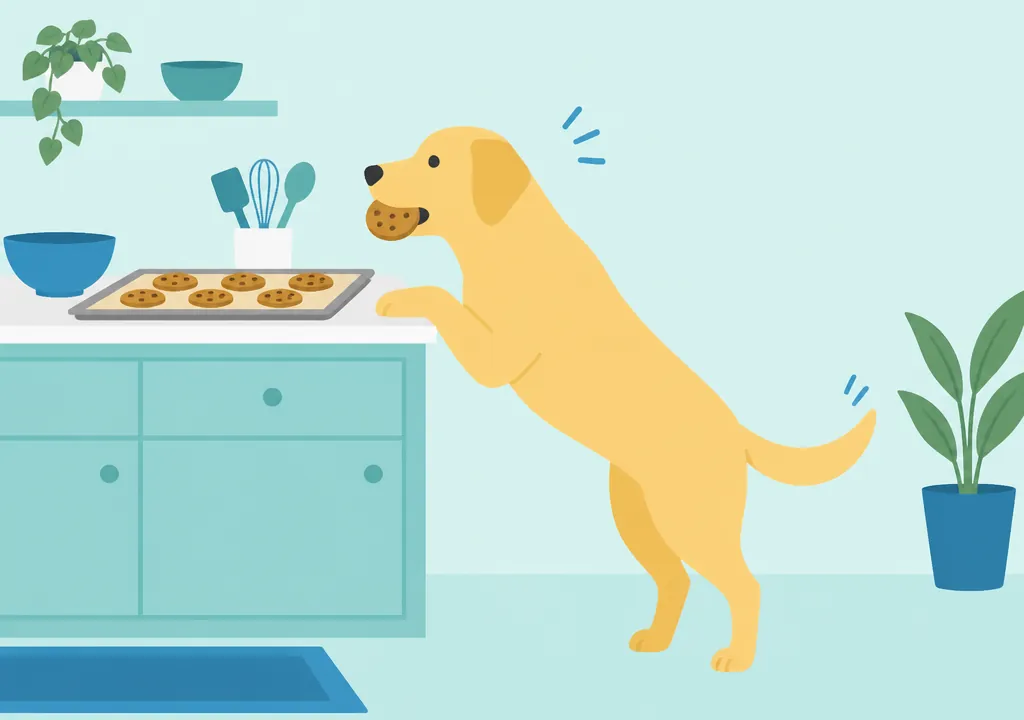
Counter surfing
Keep a famous appetite off the counter.
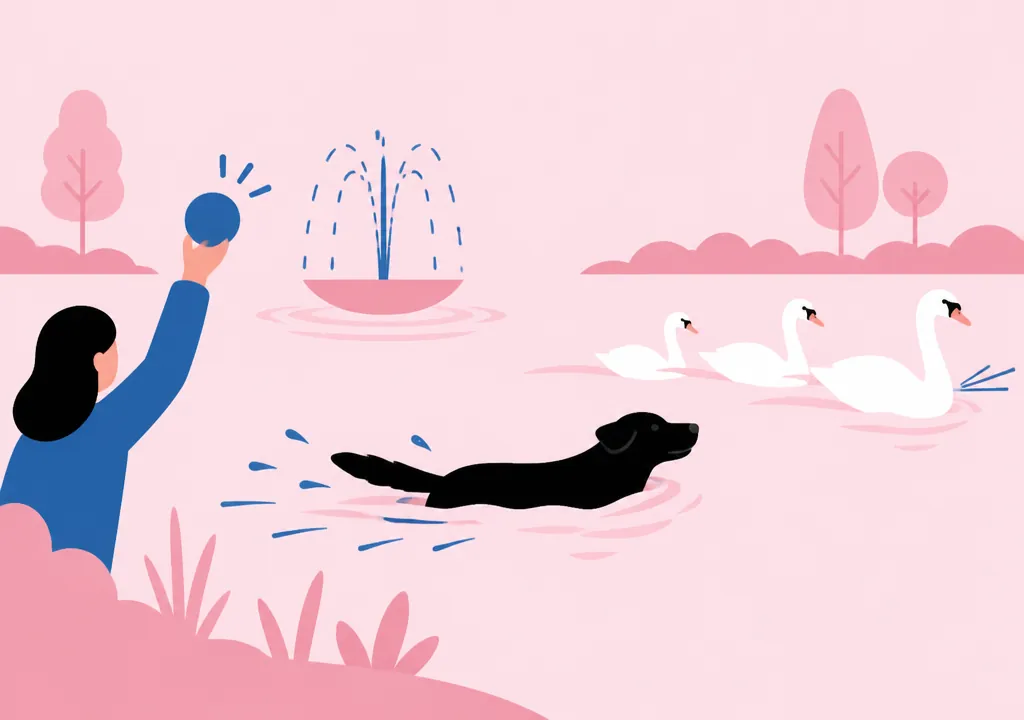
Running off at the park
Recall that beats every duck and friend.
The usual recall advice is brief: say the word once, pay well when the dog arrives, and never scold a dog for coming back. Lab owners agree it works, and many report that first lessons stick fast, with some puppies answering "come" within weeks of arriving. What they also describe is a dog who flies across the kitchen to them, then ignores them completely near a stranger, another dog or a pond.
For a Lab, this gap runs wider than for most breeds. On the standard temperament scales they rate 5 of 5 for openness to strangers and 5 of 5 as a dog who gets along with other dogs, and they were made for the water. A Lab who doesn't turn back to you heads toward roads, crowds and lakes with the same cheerful confidence. Built well, recall gives you a dog you can take almost anywhere.
Read the full guide: Teaching a Labrador Retriever a Reliable Recall
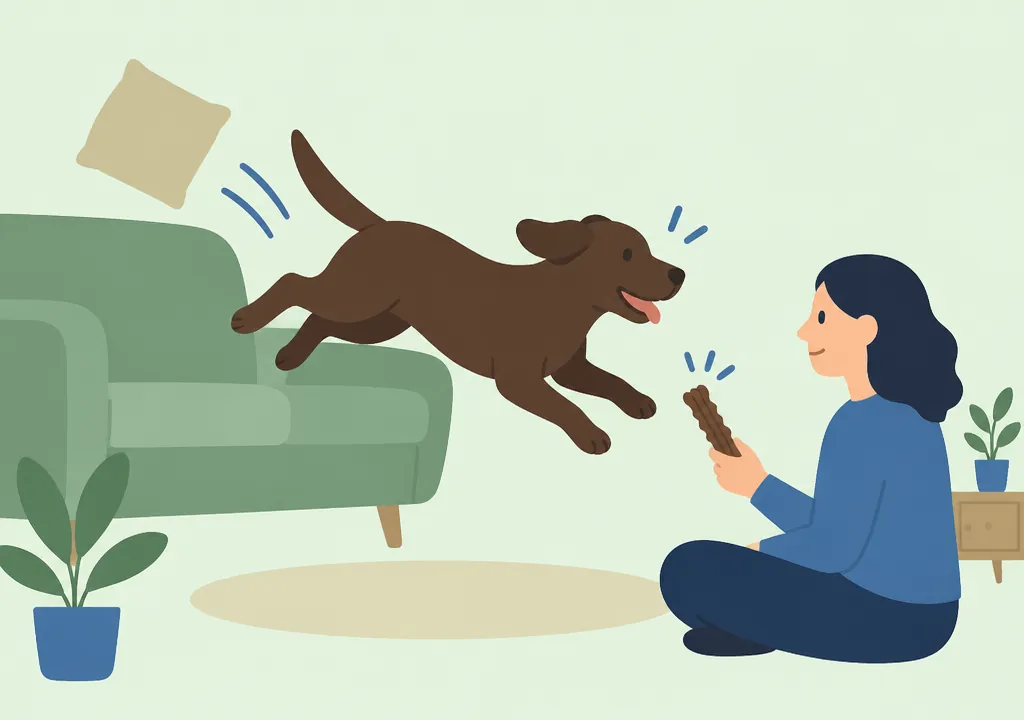
Zoomies and settling
An off switch for a young Lab.
Some Labrador Retriever owners get a dog who sits at the open front door, quivering a little, until the word that sends them out. Others get a dog who hits the threshold at full speed, towing a leash and a startled owner behind. Same breed, same joy, and training makes a real difference.
We reviewed 483 Labrador Retriever owners' first-hand accounts, and some owners who trained consistently credit that work at least as much as age for a calm adult: early practice at the bowl and the door, a settle on a mat, and trades over finds. Left unbuilt, the bounce turns into bolting, counter theft and swallowed socks. Built well, it gives you a dog who can switch off on request.
Read the full guide: Impulse Control for a Labrador Retriever: Wait, Settle and Focus
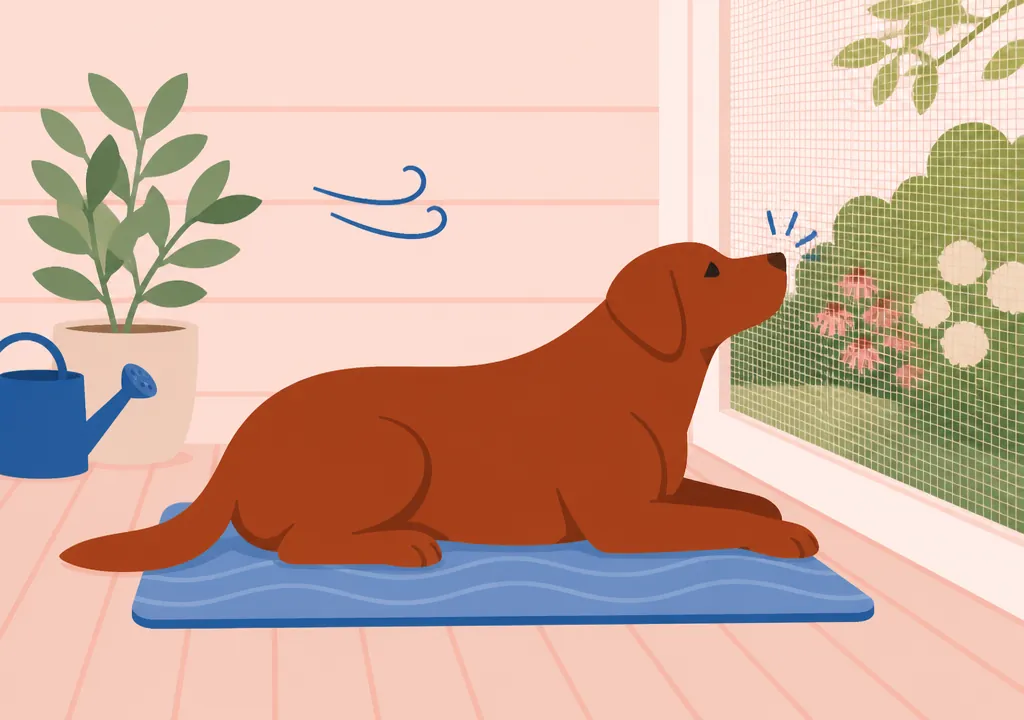
Time alone
Calm alone time for a social dog.
What size crate fits a Lab puppy, and how long can they stay in it? The stock answer is a crate just big enough to turn around in, plus a rule of so many hours per month of age. For a fast-growing, high-energy Labrador Retriever, both halves fall short. The first assumes a dog who stays one size, and the second ignores that Labs are people dogs, badly suited to long stretches alone.
Done well, a crate gives you quicker house training, easy travel and a dog who stays calm at the vet. Done badly, it becomes a parking spot for a dog who needed company. We specialize in Labrador behavior and training, and this guide covers the whole crate habit, from the first hours at home and meals inside to sizing, short spells after exercise, the den feel and calm handling at the clinic.
Read the full guide: Crate Training a Labrador Retriever and Choosing the Right Crate Size
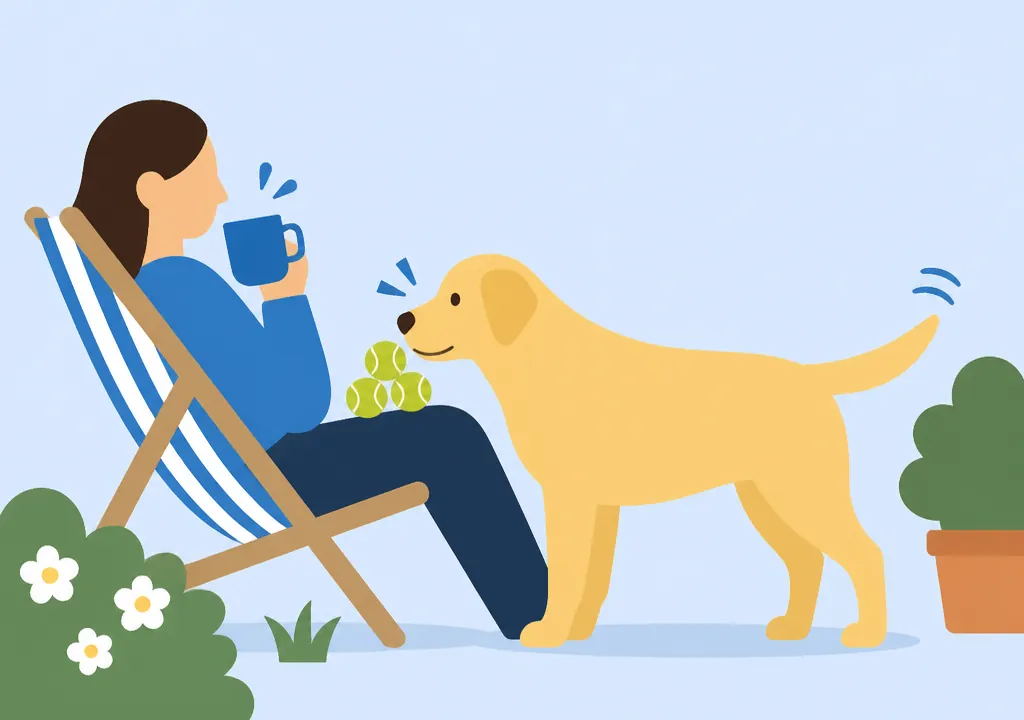
Ball obsession
Balance fetch with calm.
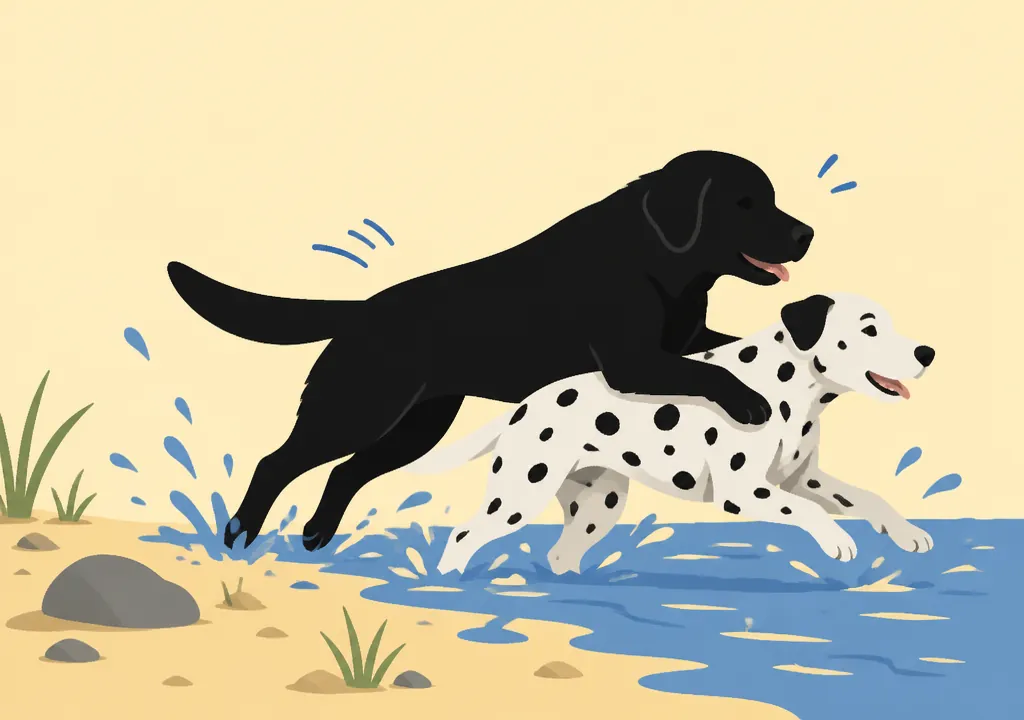
Rough play with dogs
Polite play at the park.
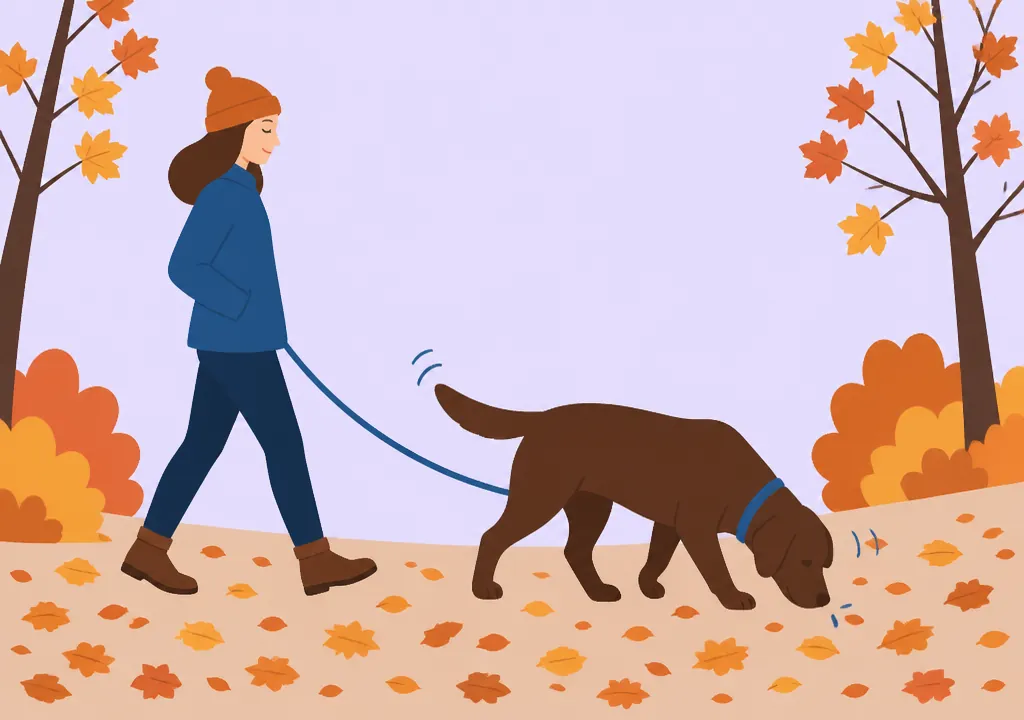
Nose down on walks
Walks where you both have fun.
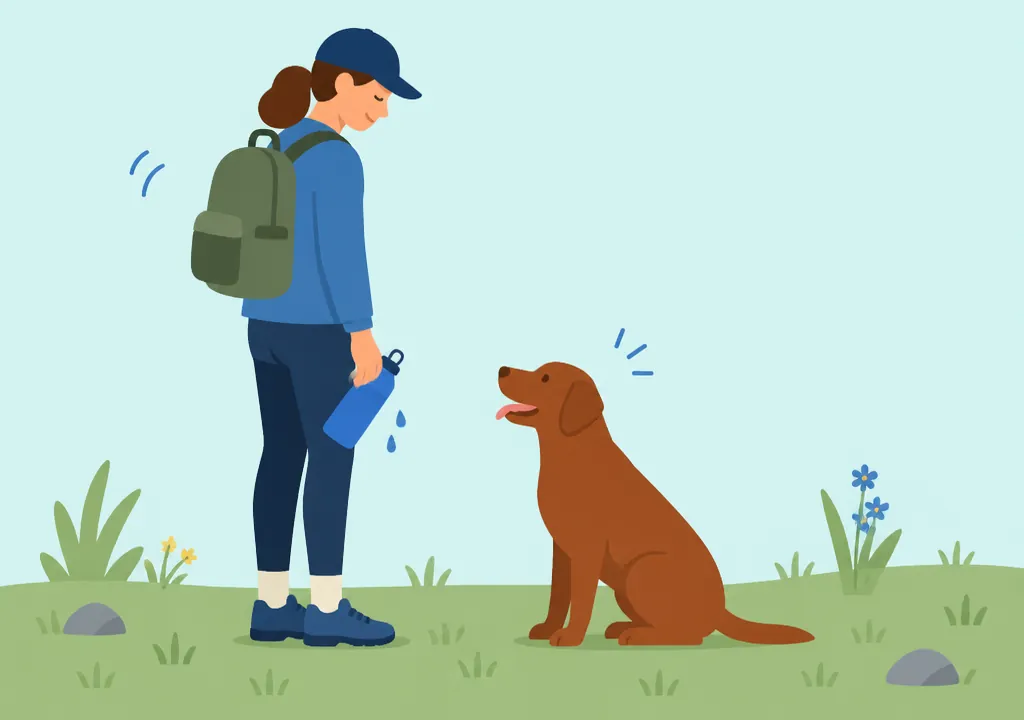
Exercise while growing
Protect young joints with the right mix.
Ordinary puppy advice says to coax a timid puppy toward confidence and friendliness, and for a Labrador Retriever that script points the wrong way, because the puppy is already friendly and the real job is teaching calm around people and dogs. A Lab who meets the world at full speed is endearing when small and exhausting once they are strong, bouncy and fully grown.
That is why we have spent many years specializing in how this breed learns to behave in company, and why we treat socialization as a habit of calm rather than a campaign for more enthusiasm. We'll walk you through how everyday home life does the first teaching, then the short outings that widen it, the early window and the classes that fit it, how to tell excited from calm, and the single greeting that ties it all together.
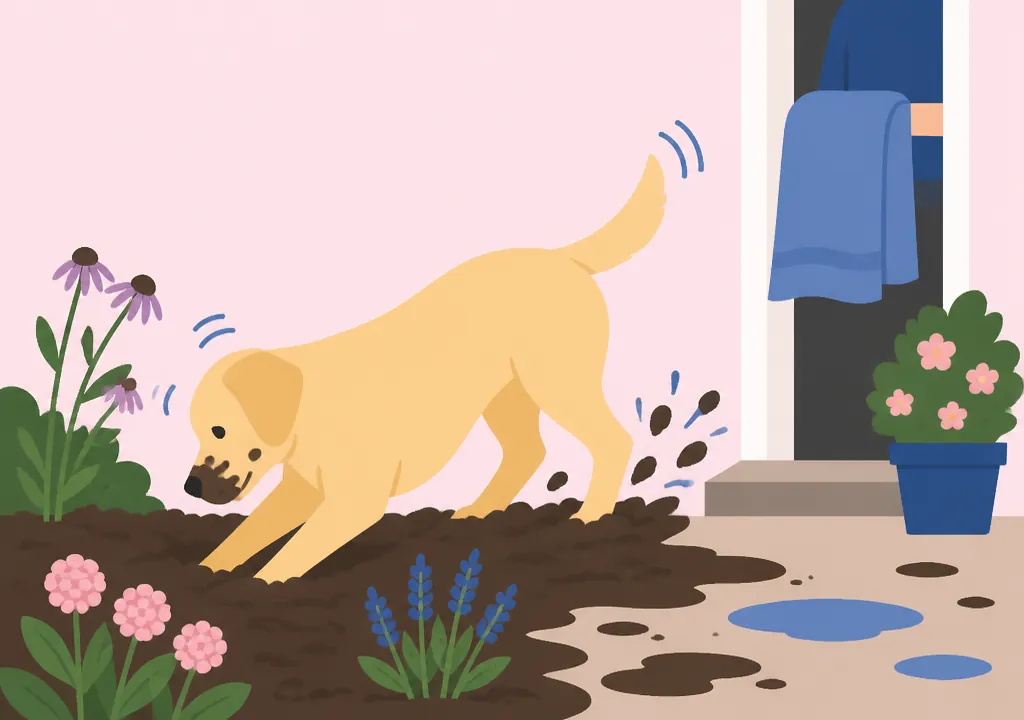
The teenage months
Stay patient while a young Lab tests limits.
Your Labrador Retriever puppy comes home at eight weeks, and every training question after that depends on how many weeks old they are. In the first days they need quiet reassurance and tiny lessons. Around four months they are teething and ready for class. By six months the walks can lengthen, and at twelve months jogging and adult food finally come into view.
Done well, this first year gives you a food-motivated dog who loves working with you. Done badly, the biting, chewing and grabbing of the teen months can leave good owners doubting they can keep the dog.
Read the full guide: Labrador Retriever Puppy Training: A Month-by-Month Plan to 12 Months