 Labrador
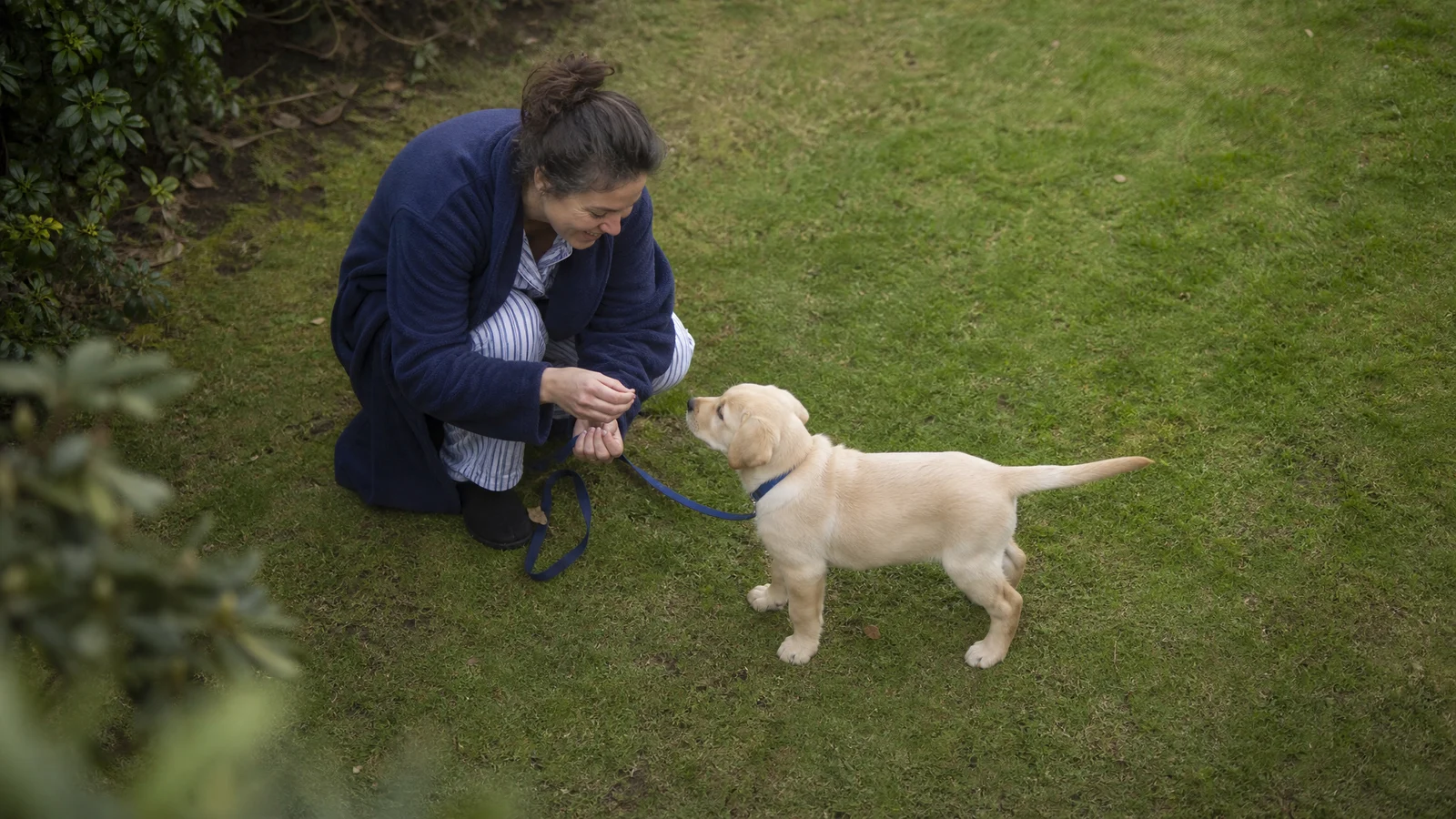
Many owners wait for the puppy to give a sign. You watch for sniffing and circling, you glance away for a moment, and the puddle is already spreading across the rug. Plenty of Lab puppies give no warning once play takes over, so the accident happens anyway.
The fix is a clock instead of a hunch. Take your puppy out the moment they wake, keep going out on a tight timed schedule while they are up, and pay for every success on the spot. We have worked with Labradors for a long time, and this routine wins because it swaps guessing for a pattern a young dog can learn.
In this article, we'll go through the beliefs that trip up Lab owners, from crates, accidents, treats and night trips, and close with a plan you can follow from the first day.
The Labrador Retriever Easy-Breed Myth
Plenty of owners expect a smart, eager Lab to work out the bathroom rules with little help. The eagerness is real, and it does make the breed easy to train. But house training a Lab still takes effort, and success depends on time, patience, consistency and regular outdoor potty breaks. Easy to train does not mean self-taught, so the belief fails.
What Comes Easy
Your Lab's wish to be with you does much of the work. Labs are people dogs, so they stay close, watch your face and repeat whatever earns a happy word or a treat. That makes your timing your strongest tool. Pay the second they finish outside, and the habit sticks because they are working with you rather than guessing.
What Takes Effort
Eagerness does not tell a puppy where the bathroom is. Owners describe plenty of slower cases: pups raised on pads who hold it outside and then go indoors, pups still having accidents at six months, upset stomachs that dragged on for months, and females who could not hold it long until close to a year.
How long it takes varies with previous habits, age and size, so nobody can promise you a day count. For a pad-raised pup, make the yard the only place that pays and limit indoor roaming until the habit flips. Some owners have an easy run. Plan for the longer road and treat a quick one as a bonus.
The Crate and Potty Myth
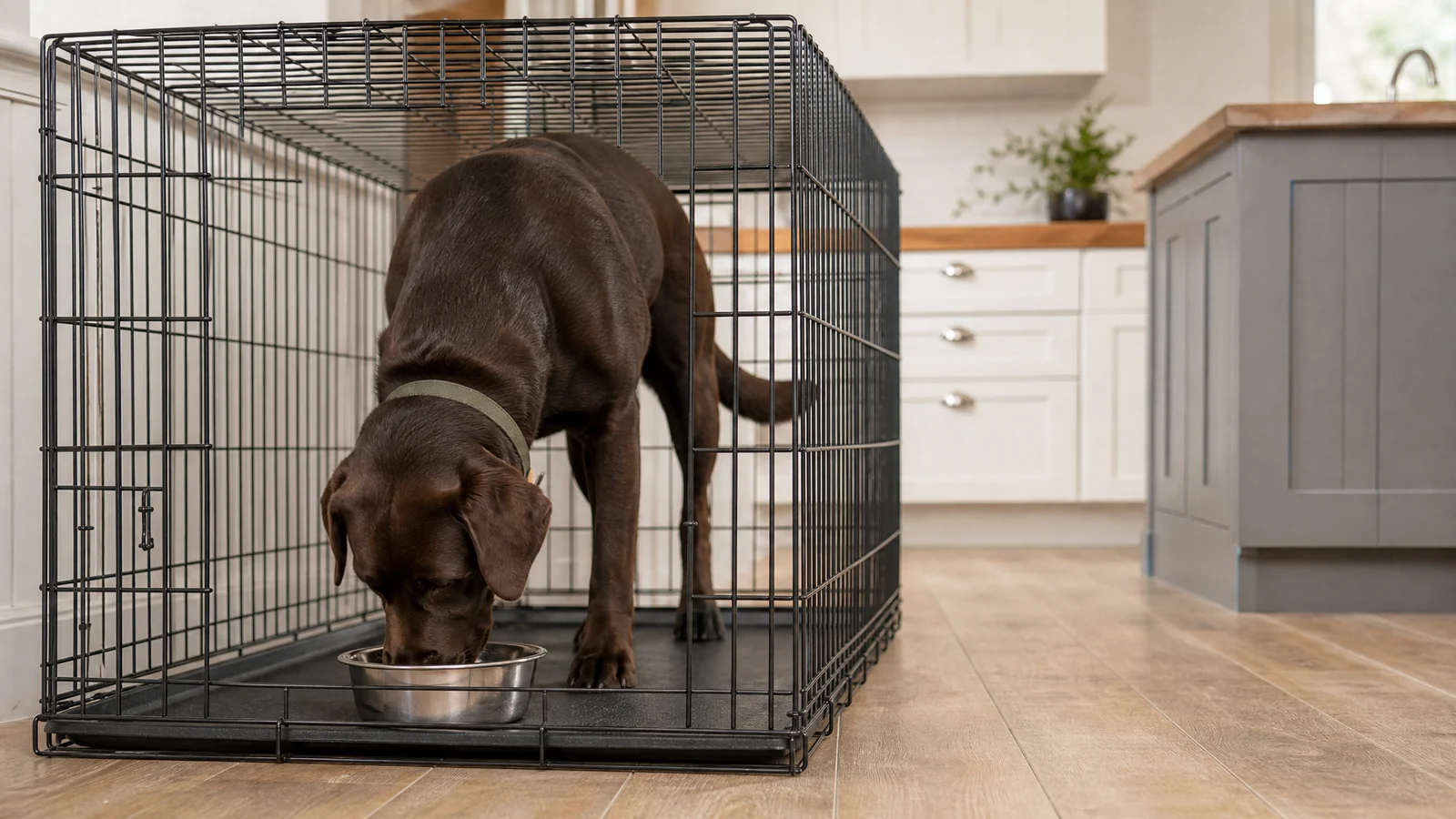
Some owners see a crate as unkind, and others call it optional if someone is home all day. We disagree with both. Puppies do not want to soil their bed, so confining the puppy to a crate when you cannot watch them makes house training easier. They wait until you take them out. That is why you teach the crate and the potty schedule together from day one, not one after the other.
Teaching Both Together
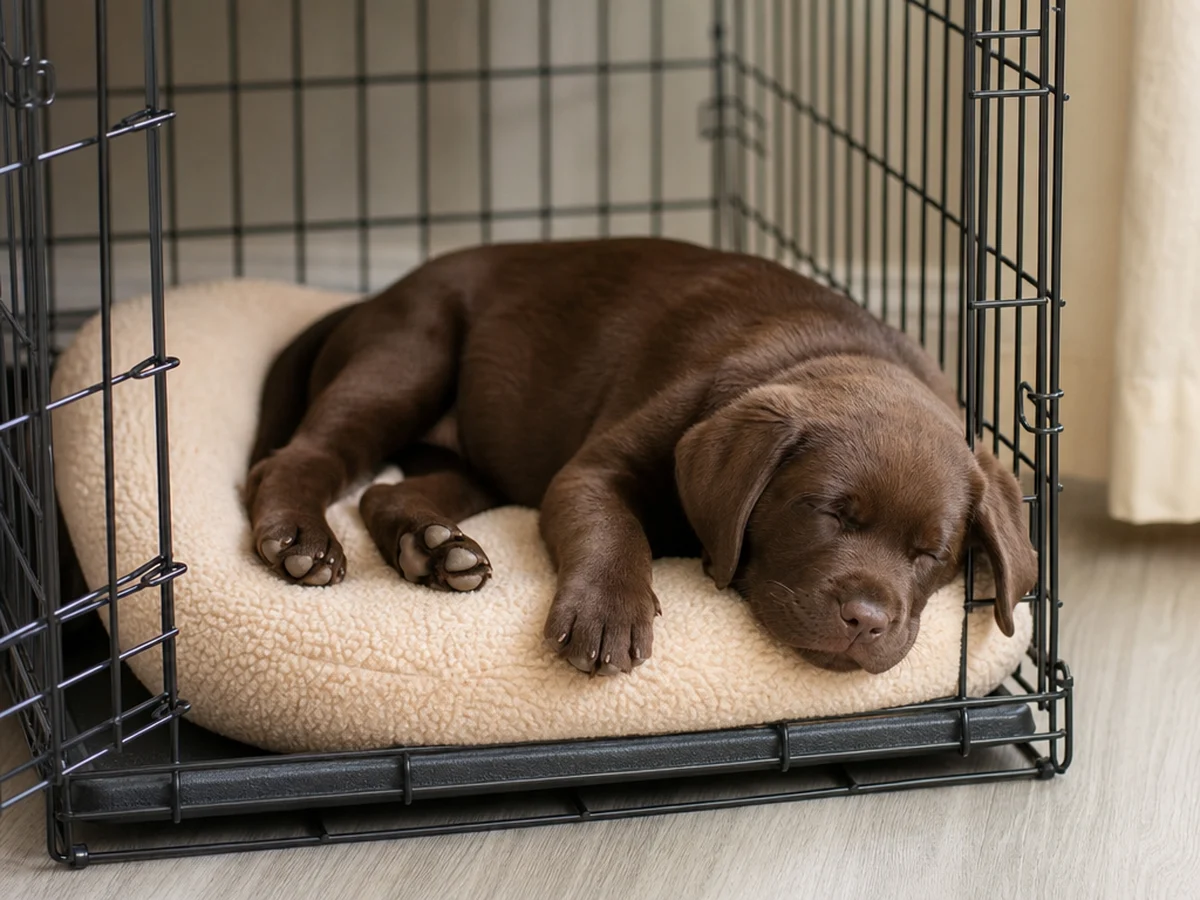
Start the day your puppy comes home. Feed meals inside the crate, then add short crating periods after exercise. A wire crate partly covered with a blanket gives a den feel. When the door opens, go straight outside and reward at the spot, so the crate always leads to a payoff.
Many owners report the crate becomes a place their dog chooses for naps. What got them there was meals in the crate, moving a sleeping puppy inside, rewards for quiet, stuffed toys and crate games. Feeding meals inside can also help a puppy who panics with the door shut. Our guide to adopting a rescue Labrador covers those first weeks.
When a Lab Dislikes the Crate
Some pups cry hard in a closed crate, and a few never take to one. They often do better in a playpen, a small space they will not soil, widened slowly as they succeed. Some dogs do the opposite and go only inside the crate. For them, shrink the space again and go back to frequent trips outside.
Keep the crate honest. It must never replace play and socializing, and Labs are not well suited to long periods alone. Build absences gradually with our alone-time training guide, and see crate training a Labrador for sizing and setup.
Handling Potty Accidents Calmly
Many people believe a puppy learns from how you react to the puddle. The belief fails, because a young puppy cannot link a mess to something they did minutes ago. What teaches is the setup around the accident: supervision before it, a calm interrupt during it, and a reward when your puppy finishes at the right spot. That suits a dog who is meant to live indoors with the family.
When the Accident Happens
If you spot your puppy starting, make a cheerful sound to pause them, scoop them up and carry them to the spot. If they finish there, reward right away. If you find the puddle later, say nothing and clean up, because the puppy cannot link it to something they did minutes ago.
Then treat the accident as information. Ask what you missed: a long gap, too much freedom, or a trip that turned into play before they went.
Cleaning Up Afterward
Put your puppy in the crate or pen while you clean up, then shrink their space for a while, the same small space the pup will not soil, so the next stretch is easier to supervise. Widen it slowly again as they succeed.
If you see frequent accidents despite consistent training, sudden incontinence, extra thirst, straining or discomfort, call your veterinarian before changing the training. Keep regular vet visits anyway, and mention any change in bathroom habits.
Labrador Retriever Potty Schedule Myth
Too few trips is an easy way to get puddles. Puppies have small bladders and big distractions. Lab breeders take puppies outside first thing once they wake and then again about every half hour, using treats as the reward to keep them motivated. It sounds like a lot because it is, and it works because your puppy gets chance after chance to be right.
Run every trip the same way and keep it business-first:
- Walk to the same spot each time, then stand still and be boring until they go.
- Reward the instant they finish, with a treat and calm praise, before you move an inch.
- Play or explore only afterward, so the order is always potty first and fun second. Some owners use an empty pen for this.
- If nothing happens, go back to the crate or small space and try again soon instead of letting them roam.
- Go out first thing after every wake-up, naps included, then keep the half-hour rhythm while they are up.
Some Labs need a little activity before they poop, and some refuse new places or the yard at first. Walk a short loop around the spot, and keep using the same one until they trust it. Adult dogs settle into patterns tied to walks and meal times, from once to four times a day.
Get the whole household on the same page. Agree on house rules before the puppy settles in: which door, which spot, who takes the next trip. Once a habit has formed, it takes more work to undo than it did to build, and a puppy who gets different answers from different people learns slowly.
The Potty Treats Spoil Myth
Some owners worry that treats will make a dog who only goes for a snack. The breeders' method uses treats as the reward, while Battersea prefers calm praise. Both can work. What matters is timing: the reward has to land right after your puppy finishes at the spot, not when you get back to the door. Food is a clear, fast payment, and it tells the puppy exactly which behavior earned it.
Treats are not forever. Once your puppy goes reliably, reward every second or third success, then drift toward praise alone. Make the pieces small and subtract them from the daily ration, because a puppy who earns a treat every half hour can pick up extra weight quickly. Skipping the treat on a good trip is fine once the habit is solid. Skipping it in week one is not.
This is general information about treats and feeding, not veterinary advice. Check with your veterinarian about how much your puppy should eat each day and how to fit treats into that amount.
Labrador Retriever Night Myth
Owners often assume a young puppy can hold it all night, then lose sleep when the crying starts. Many owners put the end of night waking between about 4 and 8 months, with a long tail on either side. A minority say it lasted for years. Plan for night trips for a while and aim to shrink them rather than expect none.
Owners say sleeping near people helps a puppy settle. Put the crate in your bedroom or beside the bed, add a worn T-shirt, or let an older Lab sleep nearby. When your puppy wakes and needs out, keep the trip dark, silent and boring: no play, no chat, straight back to bed. Owners say their pups learned night waking was no fun.
Build the evening so the night is easier:
- Pick up the water bowl an hour or more before bed.
- Feed dinner early in the evening.
- Make the last trip out just before you go to sleep.
- If your puppy wakes hungry, some owners fed a small night meal instead of waiting it out.
Some owners also report that a few nights of ignoring protest crying, or rewarding the first moment of quiet, ended it. Still go out for a real potty need, and save the quiet-reward trick for pups who are only complaining.
Potty Plan for Two Weeks
Everything above comes down to a routine your puppy can predict. Labs want to be near you and want to please, so your attention and a steady clock do most of the teaching. Use these two weeks to build the pattern, and expect to repeat a step if your puppy needs it.
Week one. Go out first thing after every wake-up, then about every half hour while your puppy is up. Use the same spot, the same door and the same calm word. Reward the second they finish, play only afterward, and keep them in the crate or a small pen whenever you cannot watch. Feed meals in the crate, fix the evening water and last trip, and keep night trips dark and quiet.
Week two. If accidents have been rare, stretch the gaps a little at a time and widen the space slowly, one room at a time. Give fewer reminders and let your puppy walk to the door on their own. Move treats to every second or third success, keeping praise every time. After any accident, go back to the previous step for a while.
A slow puppy is not a failure, and a quick one is not proof you can relax. Stay close, stay on the clock and reward what you want. That is what turns a people-loving Lab into a reliable housemate.
 Exercise and jobsHow to Teach a Labrador Retriever to Fetch and Return
 Time aloneCrate Training a Labrador Retriever and Choosing the Right Crate Size
 Exercise and jobsHow Much Exercise Does a Labrador Retriever Need?