 Labrador
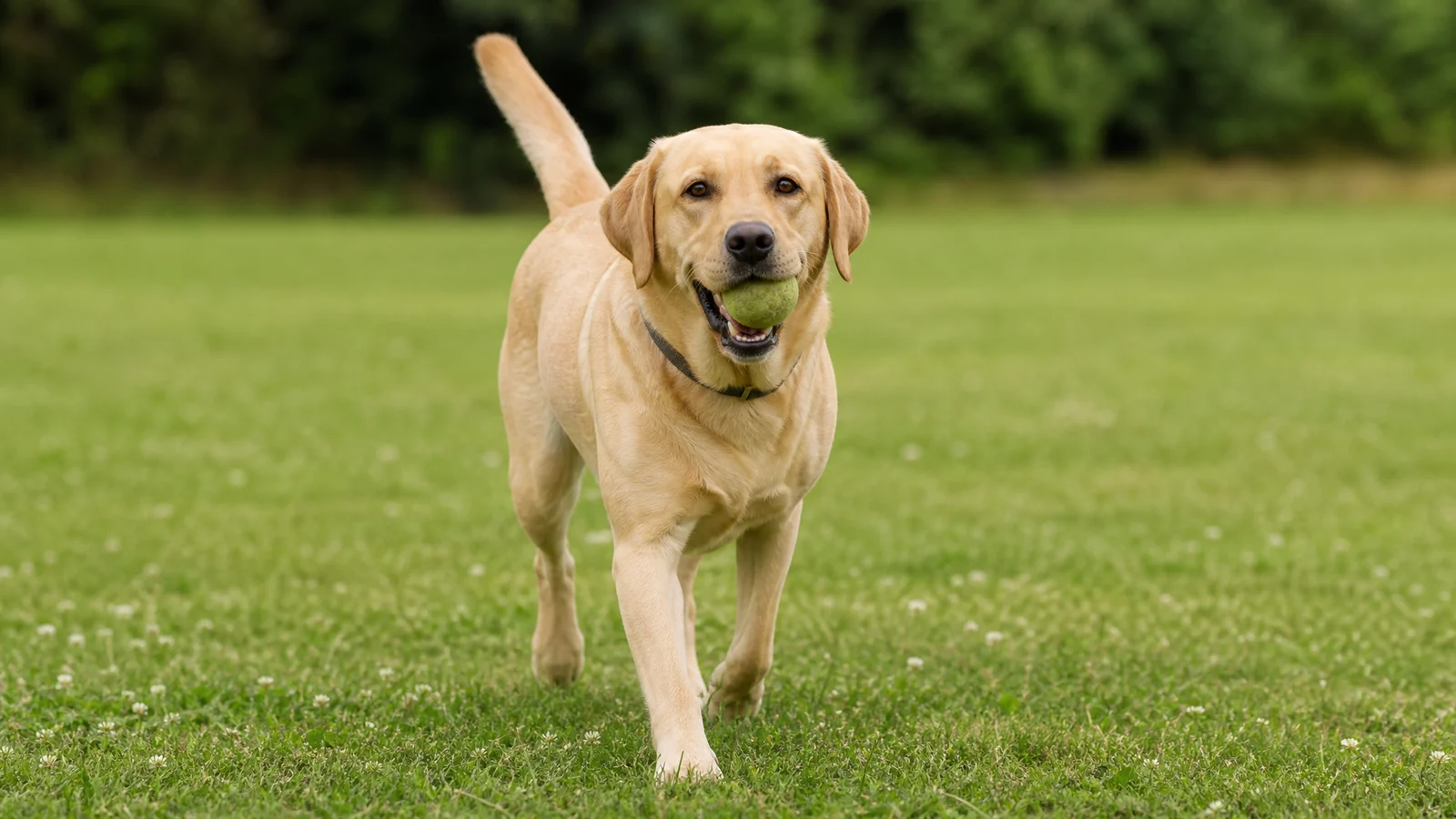
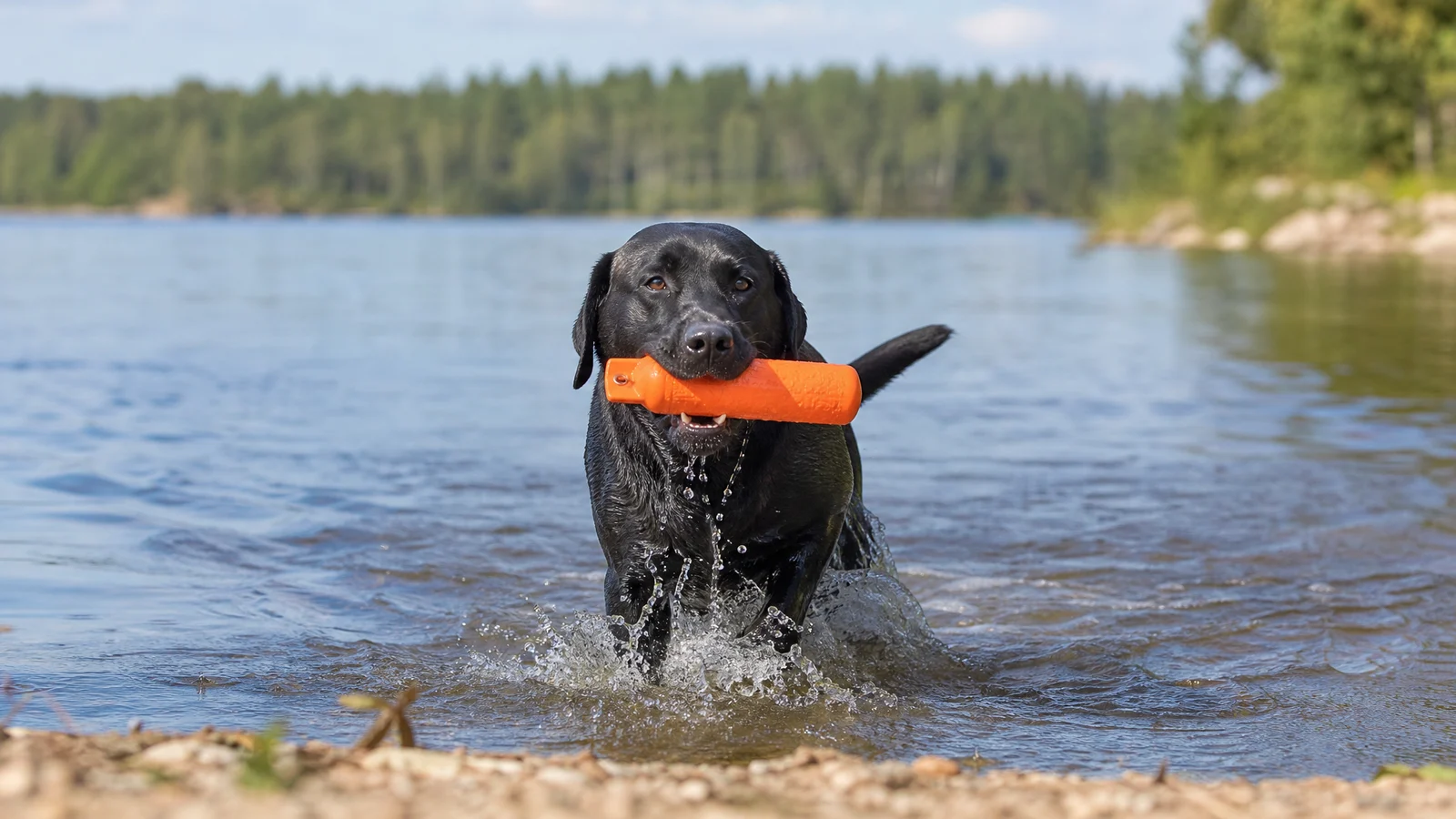
To teach a Labrador Retriever to fetch, start at eight weeks and spend your training time on the return and the release, not the chase. Retrieving is the breed's favorite activity, and the breed description calls for a soft mouth, so most puppies need little encouragement to go after a thrown toy.
That is why the finish matters so much. A Lab who learns that keeping the toy prolongs the fun will repeat the habit for years, while one who learns that bringing it back earns the next throw gives you easy, shared exercise for life.
Read on for four hypothetical households, covering a small apartment, a family with young children, a two-dog home and an owner with long workdays, then a section on rewarding a gentle hold and on how to judge your progress.
Apartment Fetch for a Labrador Retriever Puppy
Our first household is a puppy just home at eight weeks, living in an apartment with one long hallway. Space limits you less than you might expect, because a puppy this young tires well before the hallway runs out. A few short rounds on a floor with good grip are enough, and the habits you set now are the ones you will rely on through adolescence.
We reviewed 483 Labrador Retriever owners' first-hand accounts, and they describe two different starts. Some saw fetch appear on the first throw with no teaching at all. Others have partial retrievers who dash off with the ball, carry and chew sticks instead of returning them, or would rather play chase.
Treat that first throw as a starting point, not a forecast. Both kinds of puppy can end up with a dependable return, but the second kind needs the steps below spread across more weeks and more small wins.
Building the Return in Small Steps
Picture the finished behavior first: your puppy picks up the toy calmly, trots back and arrives at your feet. Then break that into small steps and reward each one in order. A marker word works as well as a clicker.
- Toss a soft toy a very short way and mark the moment your puppy picks it up calmly.
- Mark and reward the first steps toward you, even if you are still several feet apart.
- Reward arrival at your feet before you reach for the toy, so that coming close always pays.
- Make the next short throw the prize for a good return, then stop while your puppy still wants more.
Treats, Play and the Daily Ration
Play is a second reward for this breed, so the next throw can stand in for many of the treats. When you do use food, keep the pieces tiny and subtract them from the day's meals, because some Labs gain weight easily and a growing puppy should be neither over- nor under-fed.
If your puppy shows no early interest in fetch, treats and praise for each retrieve build the habit. Keep rewarding every return, and the game itself can become the thing your dog asks for.
Fetch Standoffs With Young Children
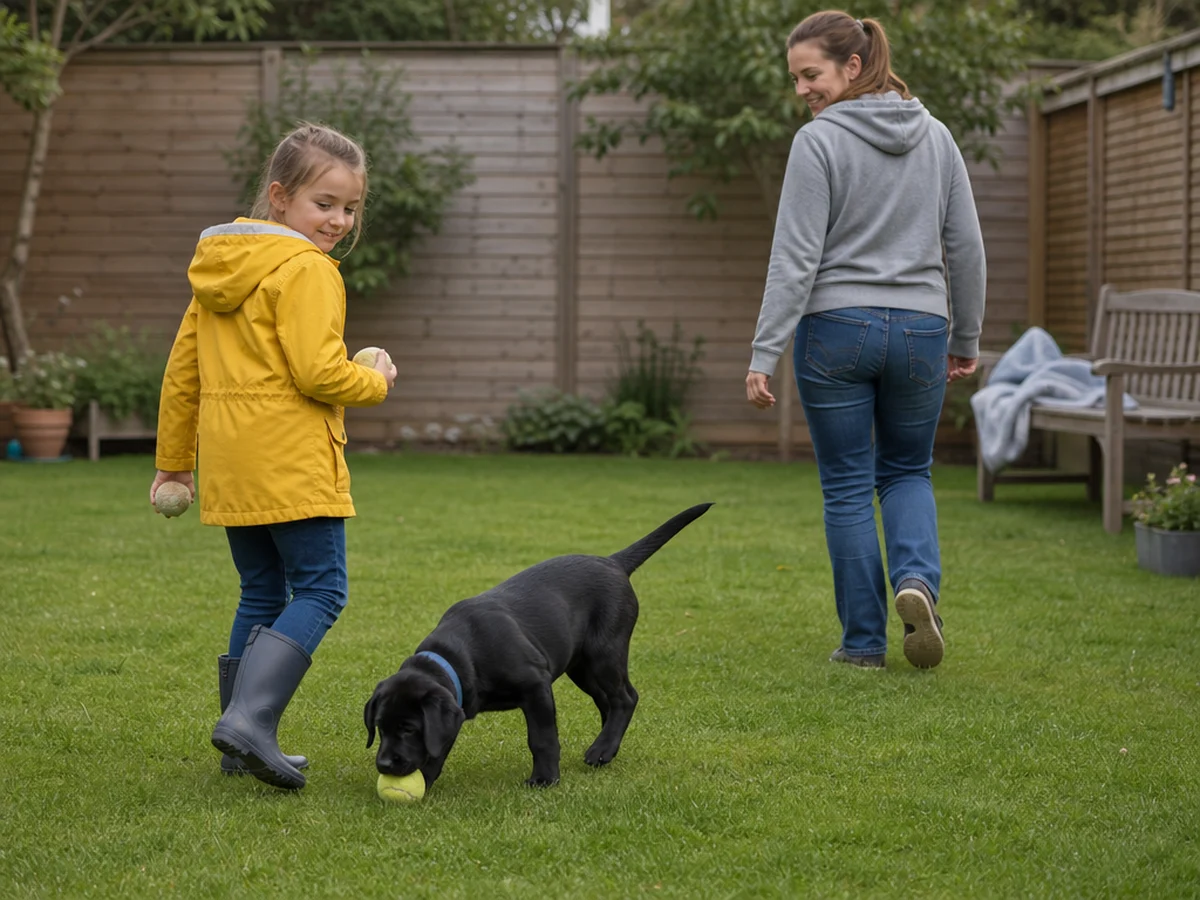
If you have young children, a ball that never leaves the puppy's mouth can become a daily standoff. Labs are good-tempered and kindly, and playfulness rates 5 of 5, so a game of keep-away is exactly what a child's excitement can start. A squealing child chasing a puppy who holds the prize is the setup that turns a handoff into a contest.
Trading Up Instead of Taking Away
Teach the release as a trade. While your puppy holds the toy beside you, show a treat or a second toy at nose level and wait quietly. The instant the mouth opens, mark it, hand over the reward and throw again.
Prying a toy loose may seem quicker, but taking items from a dog's mouth can teach them to guard what they hold or to bolt whenever you reach. Once the drop is dependable, add a word just before it and use that word only when success is likely. Carrying is what this breed was built for, so teaching what may be carried and trading for the rest works with the instinct.
Simple Rules for the Children
Young children will not run the training, but they can follow a short list. Overexcited children can also frighten a new puppy, so keep early rounds calm and supervised.
- Children stand still or sit while the puppy runs out, and they never chase a puppy who is carrying a toy.
- An adult asks for the release at first, and children hand over the swap toy only when the adult says so.
- A child who wants the toy back can turn away and become boring, which ends keep-away at once.
- The adult ends each round and puts the toy somewhere the puppy cannot reach.
Over the following months, children can take on small jobs as the puppy steadies, such as throwing on the adult's signal or delivering the reward. Add them one at a time so the release stays smooth for every pair of hands.
Two-Dog Fetch With a Guarding Labrador Retriever
Our third household has two dogs, one who loves the chase and one who hoards the prize. A single ball between them invites a scramble and teaches the quicker dog that running off with it wins. The fix is mostly management, set up before either dog feels the need to defend anything.
Separate Balls, Turns and Distance
Give each dog a ball of a different color or size and keep spares, so neither has to give up a favorite. Play with one dog at a time at first while the other rests at a distance or behind a gate. Turns teach both dogs that waiting is part of the game, and distance keeps a hoarder from feeling crowded.
Keep tug separate from fetch, because tugging rewards clamping down and makes the release harder to teach. Pick up every ball when the session ends so nothing is left lying around to argue over.
A new puppy should be introduced carefully to the dogs already in the house, with supervision so play does not get too wild. Feeding the older dog first and the puppy second, ideally in a crate, sets a calm pattern around food that carries over to toys.
When One Dog Starts Holding On
If one dog freezes over a toy as the other approaches, calmly call the second dog away and offer the holder a trade from a comfortable distance. Reward the drop, then return the toy when you can, so letting go never means losing it for good.
Setting changes behavior too. Some owners describe a dog who fetches nonstop at home yet ignores every other dog at the park, while others see a dog who prefers strangers as throwers. Rebuild the routine whenever the scene changes.
Fetch When the Owner Works All Day
Our fourth household belongs to an owner who is away for most of the day. Labs are not well suited to long stretches alone, so fetch cannot make up for hours of absence, and time alone should be built up gradually. What fetch can do is give the evening a clear shape, and short, focused sessions after you get home work better than one long game that runs until everyone is worn out.
An Evening Routine With a Shape
Build the evening with a beginning, a middle and an end. A walk with plenty of sniffing comes first, then a handful of focused rounds with a full return and release, then a settle on a mat with a chew. That tires the mind as well as the body and ends with a calm dog instead of a wound-up one.
Our guide to how much exercise a Labrador needs helps you plan the rest of the day around it. Weekend swims add variety, and teaching a Labrador Retriever to swim and get out safely covers how to begin.
Protecting Joints and Drive
Marathon games are often suggested for tiring a Lab, but we prefer shorter rounds. Repeated sharp stops and turns load the same joints again and again, and a dog who is still keen at the end will ask for more tomorrow. Labs are stoic and rarely limp for sympathy, so they may play on through discomfort, which leaves you to set the limits.
Choose grass over slick floors and throw low and rolling rather than high. In warm weather move the game to a cooler time of day, since some owners see dogs who fetch nonstop indoors and lose interest in the heat. Keep treat pieces small and counted in the day's food, because a healthy weight reduces stress on the breed's joints.
This is general information, not medical advice. Your veterinarian can tell you the right weight, treat amounts and play limits for your own Lab, especially during growth, so keep regular checkups on the calendar.
Rewarding a Gentle Hold During Fetch Returns
Every household ends up at the same quiet moment, between pickup and handoff. The breed standard describes an excellent nose and a soft mouth, a grip that carries an object without damaging it. In our reading, that quality deserves active reward rather than hope.
During the return, mark the moments when your puppy carries the toy without chomping and walks it to you. Reward that carry with a treat and the next throw. If a puppy rushes in chewing hard, hold the next throw until the grip softens, so the gentle carry becomes the fastest route back to the game.
If teeth land hard on your hand, ignore the puppy or move away for 10 to 20 seconds, then go back and play again. Gentle play continues and painful play stops. For stick carriers, swap the stick for a soft toy and a treat, and keep a proper chew toy handy, since chewing is a constant concern in a Lab's first year.
A solid return also supports your recall, so our guide to a reliable recall around dogs, people and water is a natural next step once the game is steady.
Judge progress by how each round finishes, more than by how far the toy flew. After several months of short sessions, these signs tell you the pattern is settling in:
- Your dog turns toward you as soon as they pick up the toy and returns promptly.
- The mouth opens at the release, the toy drops into your hand or at your feet, and the next throw follows right away.
- The grip is gentle, without hard squeezing, and other objects are traded instead of kept.
- Your dog is still eager when you stop, and you decide when the game ends.
Growling over the toy, stiffening when you approach, hard biting that does not soften with practice, or refusing to come back despite weeks of steady rewards all call for a qualified reward-based trainer. A sudden loss of interest in fetch, reluctance to jump or a change in how your dog runs can point to discomfort rather than stubbornness, so ask your veterinarian to take a look.
A good fetch is built on the return and the release, and a Lab who does both gets the activity they love in a form that suits your home. For the wider picture, see our complete Labrador Retriever training guide.
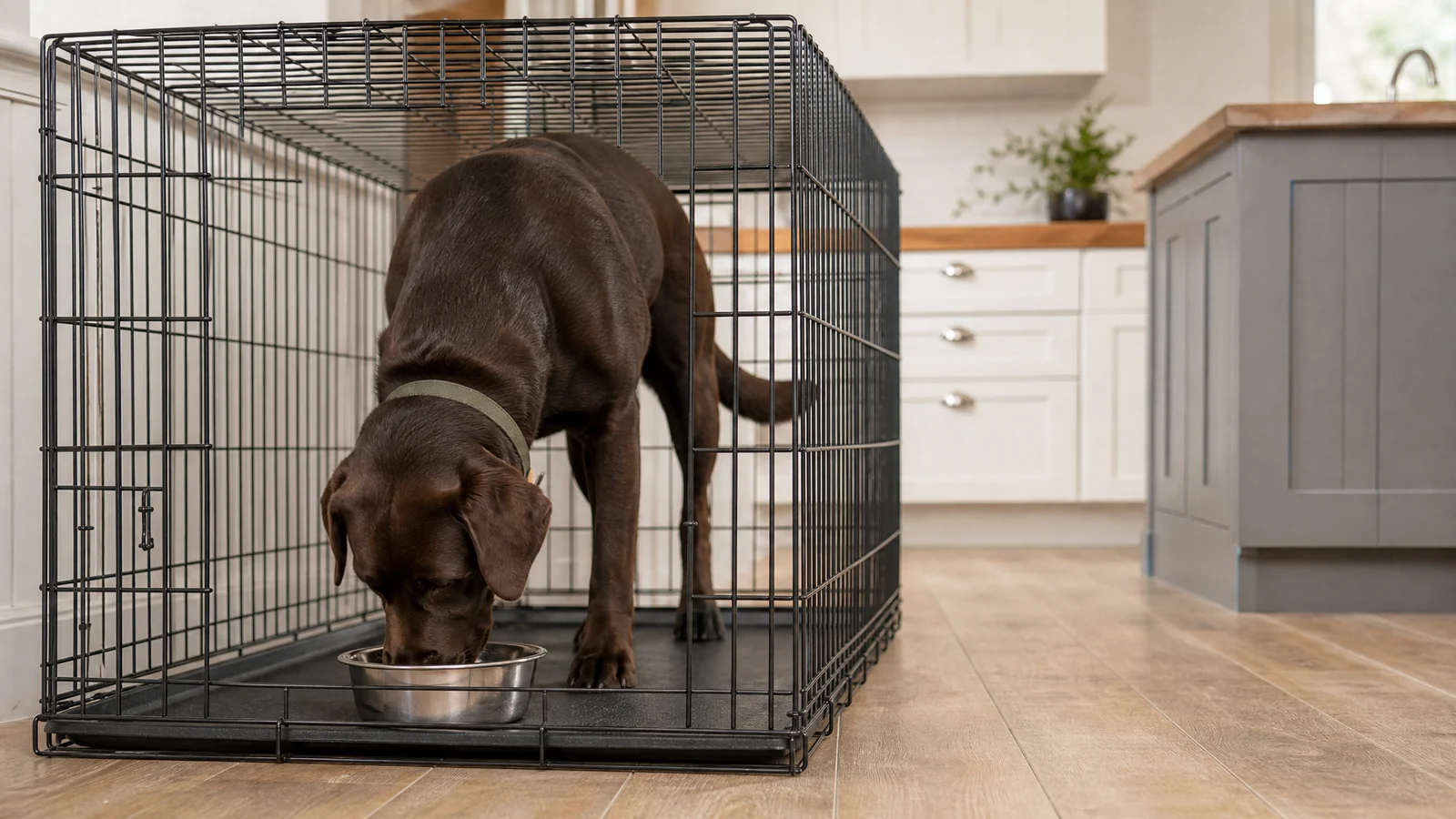 Time aloneCrate Training a Labrador Retriever and Choosing the Right Crate Size
 Exercise and jobsHow Much Exercise Does a Labrador Retriever Need?
 Zoomies and settlingImpulse Control for a Labrador Retriever: Wait, Settle and Focus