 Labrador
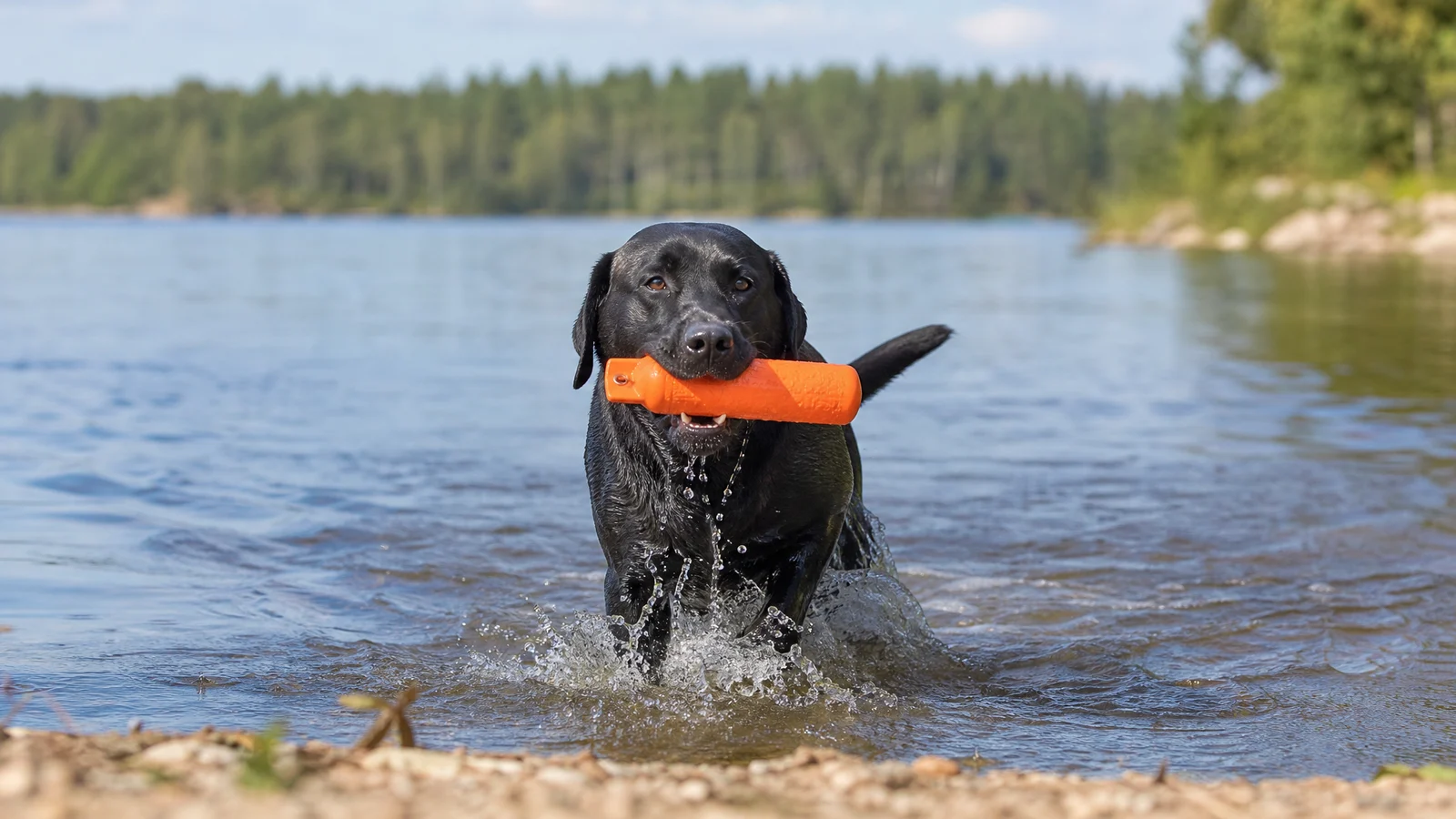
Ordinary dog advice says a daily stroll or two is enough, and for many pets it is. A Labrador Retriever bred to work all day needs far more, and when they don't get it, the first sign is behavior trouble, not tiredness. The breed was made to run, swim and work, and the energy to match is built in.
That changes the order of operations. Before you rework a training plan, check the exercise. A Lab with unmet needs finds outlets of their own, usually chewing and launching at guests, while a dog whose needs are met is the relaxed housemate owners describe. We reviewed 483 Labrador Retriever owners' first-hand accounts, and several of them link a listening, settled dog to enough exercise.
We'll walk you through why this breed differs and what an adult's day looks like, then the puppy limits that protect growing joints, how to read hyperactivity, destruction and restlessness, and a schedule that fits your week and your next two weeks.
Why Labrador Retriever Exercise Differs
General advice says most dogs need at least one to two walks a day, and for an average pet that is a sound floor. For this breed it is only the floor. The UK Kennel Club lists more than 2 hours per day for the Labrador, and energy sits at the top of a five-point scale.
The easygoing temperament is what fools people. Labs look laid-back on the sofa, so owners cut back, and the dog pays for it in the one currency available, which is behavior. A Lab who doesn't get enough exercise is likely to become hyperactive or destructive to release pent-up energy. That is why we treat exercise as the first check for nearly every complaint, ahead of new cues, gear or treats.
Here is the if-then version. If the trouble eases after a big outing and returns on quiet days, you have an exercise gap, not a training mystery. If it holds steady whatever the day looked like, the cause is more likely skills or arousal, and later sections cover that. Several owners say their Lab listens better and relaxes at home only after enough exercise, such as a morning ball game before guests arrive, long runs or daily off-leash time.
Dogs vary, so start generous and watch. Some owners of Labs they call English report calmer dogs, while other English-Lab owners describe a handful. Owners of American or field-bred lines often report very high drive, and a few report the opposite. Color stereotypes cut both ways in owners' own dogs, and a minority describe a Lab who is content with modest walks.
Decision one: make exercise your first behavior check, begin at the generous end, and cut back only when your own dog's evenings show they need less, never because of a coat color or a label.
Adult Labrador Retriever Exercise Routines
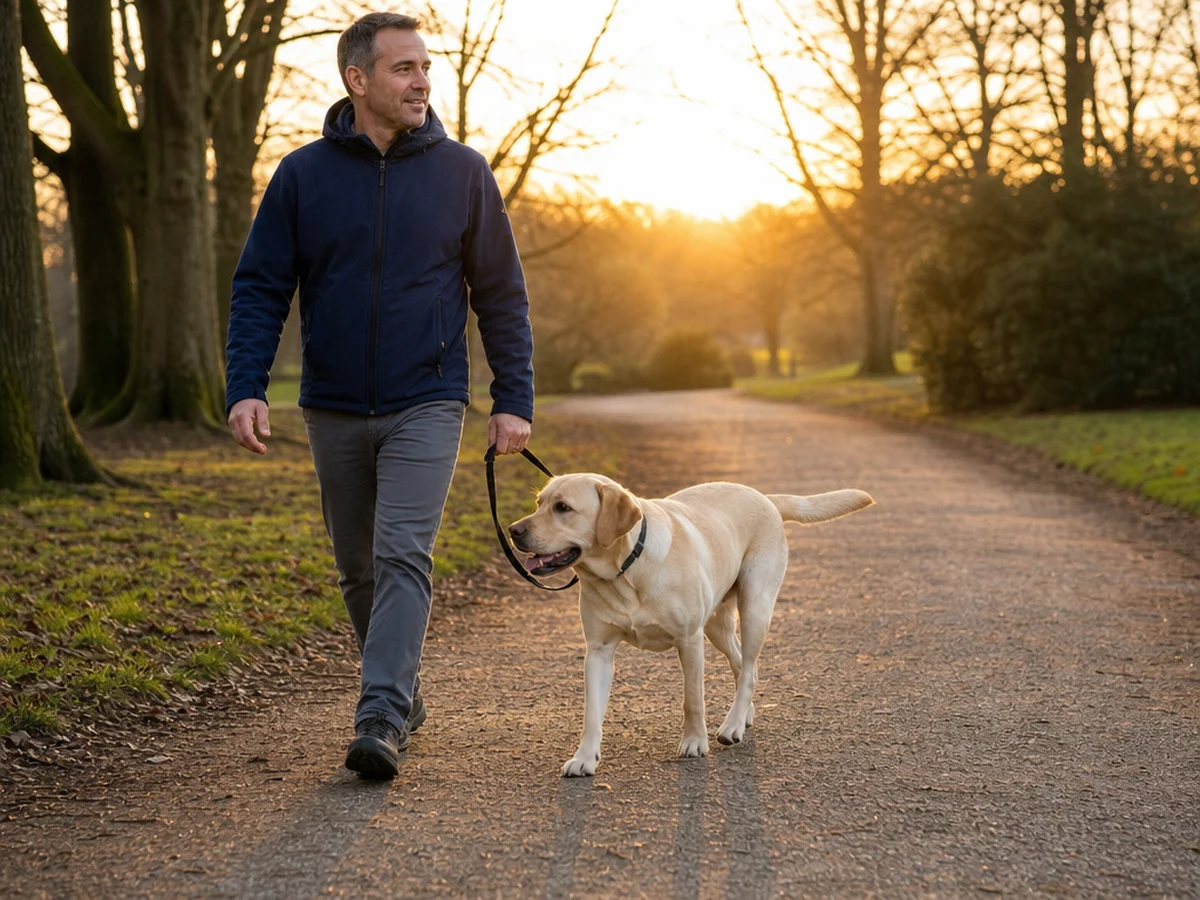
A healthy adult's day is built from what the breed was made to do: a long brisk walk, swimming and fetch. Together they should clear the two-hour mark in the listing above, though not in one block, and some owners anchor the day with an hour each morning. If you must choose, protect the walk first, add water or a ball second, and let sniffing run through all of it.
The Long Brisk Walk
Brisk means covering ground. If your Lab stops at every post, the walk is a sniff break, and if they haul on the leash, it tires you more than them. In the second case reward every loose stretch as it happens and work through our guide to loose-leash walking. Owners describe pulling that lasts well past puppyhood, from 1 to 6 years, strong enough to pull them over.
Then give the nose a turn. Letting a dog use their nose is stimulating and calming, so finish with a slow, loose-leash sniffing stretch instead of hurrying home. Owners who build in daily sniffing and safe off-leash time often say their evenings change.
Swimming Done Safely
Swimming is the breed's signature outlet, helped by webbed feet, a rudder-like tail and a waterproof coat. But Labs have to be taught to swim, and they should never be thrown into a pool or deep water with no way shown out. If your dog is new to water, wade in together and keep early sessions shallow.
Show the steps or the bank before your dog needs them, and supervise every swim. Eagerness will keep a Lab paddling past the point of tiredness, so you end the session, not them.
Fetch That Doubles as Training
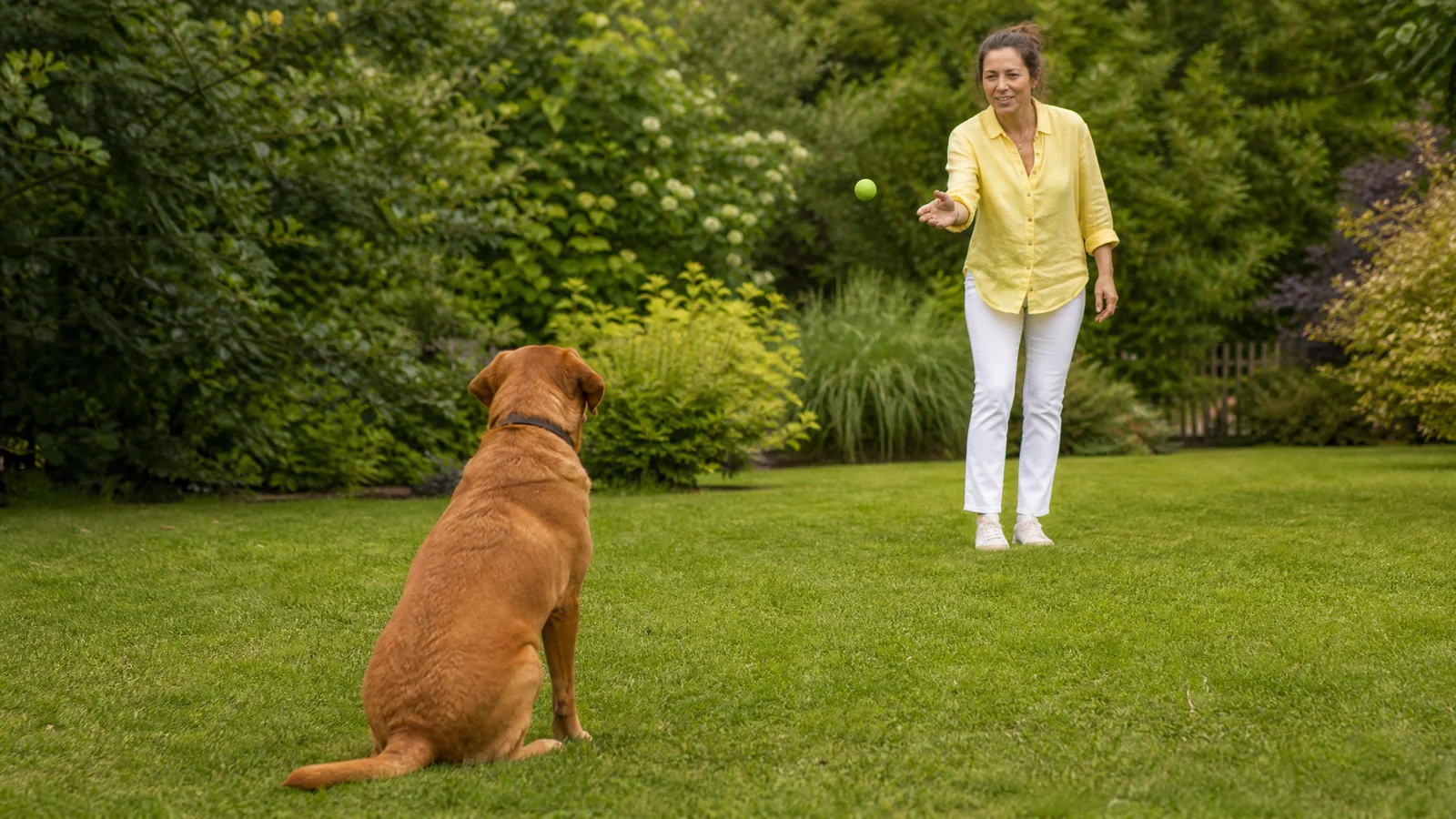
Fetch earns its place because it is practice. Recall, retrieve and release all happen inside the game, so pay for each return and each drop with praise, a treat or the next throw. Throw on soft ground, vary the distance, and stop while the ball is still the most exciting thing in the yard.
Scale it to the dog. If an adult suddenly slows, hesitates or seems stiff, stop the game and call your vet, because this breed is stoic and rarely complains. Hard running and retrieving are also a good reason to ask your breeder for the parents' exercise induced collapse (EIC) test results. Count treats toward the daily ration too, since a lean Lab has easier joints.
Many well-bred adults can switch between a long hike and an afternoon at home, but that describes a dog whose needs are met, not a promise for a young or under-exercised one. Decision two: build the day from one long brisk walk, one water or ball session and a sniffing finish, then adjust the amounts rather than the pieces.
Puppy Exercise Limits
Puppies reverse the adult logic, because enthusiasm runs far ahead of what growing joints can take. Labs are stoic by nature: they don't limp for sympathy or whimper to be noticed, and they won't tell you when it has become too much. A puppy still racing around at the end of a session proves nothing about their joints. Hip and elbow dysplasia occur in the breed, are at least partly inherited, and can take years to show.
Age Bands to Follow
The table below sets limits to work inside. The five-minutes-per-month figure is one breeder's rule of thumb, not a veterinary standard, so treat it as a starting guide and ask your vet about your own puppy.
| Stage | What to do |
|---|---|
| Young puppy | About five minutes of activity per month of age, kept short. Skip dog parks. |
| Around four months | Stairs can begin around now, not before. |
| Until six months | Leash walks stay short, then lengthen gradually, still without running or jogging. |
| Twelve months | Jogging becomes a reasonable option. |
| Eighteen months or older | Growth plates may not have closed yet, so keep hard impact modest. |
Fill the gaps between sessions with variety: short sniffing walks, gentle play and training games on soft ground. Owners of young puppies describe pups who could not settle on their own and then slept quickly once crated or penned for a nap, so schedule the nap after each outing instead of waiting for a wound-up puppy to wind down alone.
Protecting Growing Joints
Jogging, repeated jumping and long hard drills all wait. Advanced obedience sits in the same not-yet group, so keep early lessons short and low-impact, with no long sits on hard floors. Jumping-heavy sports wait too. A young Lab who looks fine is not proof their joints are ready for hard impact.
A lean body protects joints as well, so budget training treats inside the daily meals. Regular vet visits through growth give someone who can examine your puppy the chance to judge each next step.
This is general information, not medical advice. Check with your veterinarian about your puppy's activity limits, weight and feeding. If a puppy or young dog seems stiff or reluctant, or ever collapses after exertion, stop and call your vet.
Decision three: set sessions by the calendar, not by your puppy's enthusiasm, and spend the surplus energy on naps, sniffing and short training games instead of distance.
Behavior Problems and Exercise
When a problem shows up, run the same checks in the same order before changing anything else. Behavior is the gauge on your exercise plan, and in this breed it is an honest one. Each step below either points to an exercise gap or sends you somewhere else.
- Count yesterday's real exercise: the brisk walk, the swim or fetch, and the sniffing, not just the time your dog spent outside.
- Compare a busy day with a quiet one. If the trouble eases after a big outing and returns on quiet days, add exercise and reassess.
- Compare on-leash and off-leash behavior. A dog who is fine off leash but pulls or jumps on leash has a leash-skills gap, and extra miles will not close it.
- Note what sets it off. If dogs, cars or the dog park wind your Lab up, practice at lower intensity.
- If a young or adult dog is stiff, slow or reluctant, stop and involve your veterinarian.
Hyperactivity and Excitement
Owners describe intense excitement at walk words, with spinning and furniture jumping, and jumping up or launching at family from 7 months into adulthood, sometimes hard enough to knock the owner down. Exercise before visitors lowers the volume, but the skill is four paws on the floor, rewarded every time, as in our guide to stopping a Lab jumping on people.
Be wary of the saying that a tired dog is a good dog. Owners report that once other dogs, the dog park or cars had wound their Lab up, treats were ignored and tiring the dog first made no difference. Exercise lowers the baseline, and practice builds the skill.
Greetings matter too. Some owners link pulling and lunging to allowing on-leash hellos, so a sound habit is to skip them and reward calm looks at other dogs and people instead. Our guide to calm passing instead of leash greetings shows how.
Destructiveness
If chewing or digging clusters on quiet days, treat it as an exercise gap. Add the morning outing, then hand over a chewable or stuffed toy afterward so the mouth has an approved job, and reward your dog the moment they pick it up. If destruction continues on busy days, look at boredom, teething in a puppy, or a vet check.
Restlessness at Home
A Lab who paces or cannot settle after a good outing may need a better ending, not more distance. Finish walks with a slow sniffing stretch and give a mat or bed as the place to land. Owners describe dogs who settled at home well before they were calm with visitors, other people or dogs, so credit that progress separately.
A few owners credit consistent training, such as rewarding calm, a place cue and treats for calm greetings, at least as much as age. Decision four: when trouble appears, count the exercise and compare days first, and change the training only if the pattern says exercise is not the cause.
Matching Your Labrador Retriever's Day
A plan that works only on your days off will fail by Wednesday, so fit the amounts to your real week. The pieces stay the same: walk, water or ball, and sniffing. Only the timing moves around your hours, the weather and the dog in front of you.
Work Hours and Weather
If you leave early, put the biggest outing before you go and add a shorter sniffing walk when you return. If you are home all day, split the exercise into two outings. If guests are coming, run first. Owners find that a morning ball game or long run makes the dog listen and settle far better afterward.
Some owners report their Labs are mostly unbothered by winter walks, with paws the weak point, and a few dogs get cold when not moving, so keep them moving. In heat, move outings to cooler hours, offer water and rest in shade. On miserable days, switch to nose games, indoor fetch and short training sessions. Some owners avoid night walks because their Lab goes after rabbits and other wildlife.
Age and Individual Energy
Energy follows the individual more than any label. Owners most often say their Lab clearly calmed at about three years, but answers run from 7 months to 10 years, some describe calming in two steps, and a minority say their dog never really did. Read when Labradors calm down before deciding your dog is behind schedule.
If your dog sits at the quiet end, don't push them to match a chart. If they are wired, add before you blame temperament. As the years pass, remember the stoic nature: stiffness or reluctance is a reason to stop and check with your vet.
Decision five: pick the fixed point in your week, usually the morning outing, build everything else around it, and let your dog's age and evenings set the totals.
Next Two Weeks of Exercise
Treat the next two weeks as a test with a one-line log, so you adjust from evidence instead of guessing. A puppy stays inside the age limits above, and an adult starts from the mix described earlier.
Do the same thing each day: one long brisk walk at a steady time, finished with a sniffing stretch. By midweek add one swim or fetch session on top of the walk, not in place of it. Each evening, write one line on how settled your dog was at home, any chewing, jumping or pulling, and how they greeted people. Change nothing else.
Read the log and change one thing at a time. If evenings are calm, hold steady and start practicing loose-leash and settling skills, since a settled dog learns faster. If evenings are still wild, lengthen the morning outing or add a second sniffing walk. If anything looks stiff or flat, cut back and book a vet visit.
By day fourteen you should know your dog's real number and the slot in your day where it fits. Labs vary, so trust your log over any chart. Meet the breed's need for running, swimming, sniffing and a job for the mouth, and the chewing, jumping and restlessness have far less reason to appear.
 Zoomies and settlingImpulse Control for a Labrador Retriever: Wait, Settle and Focus
 Exercise while growingSocializing a Labrador Retriever Puppy
 The teenage monthsLabrador Retriever Puppy Training: A Month-by-Month Plan to 12 Months