 Labrador
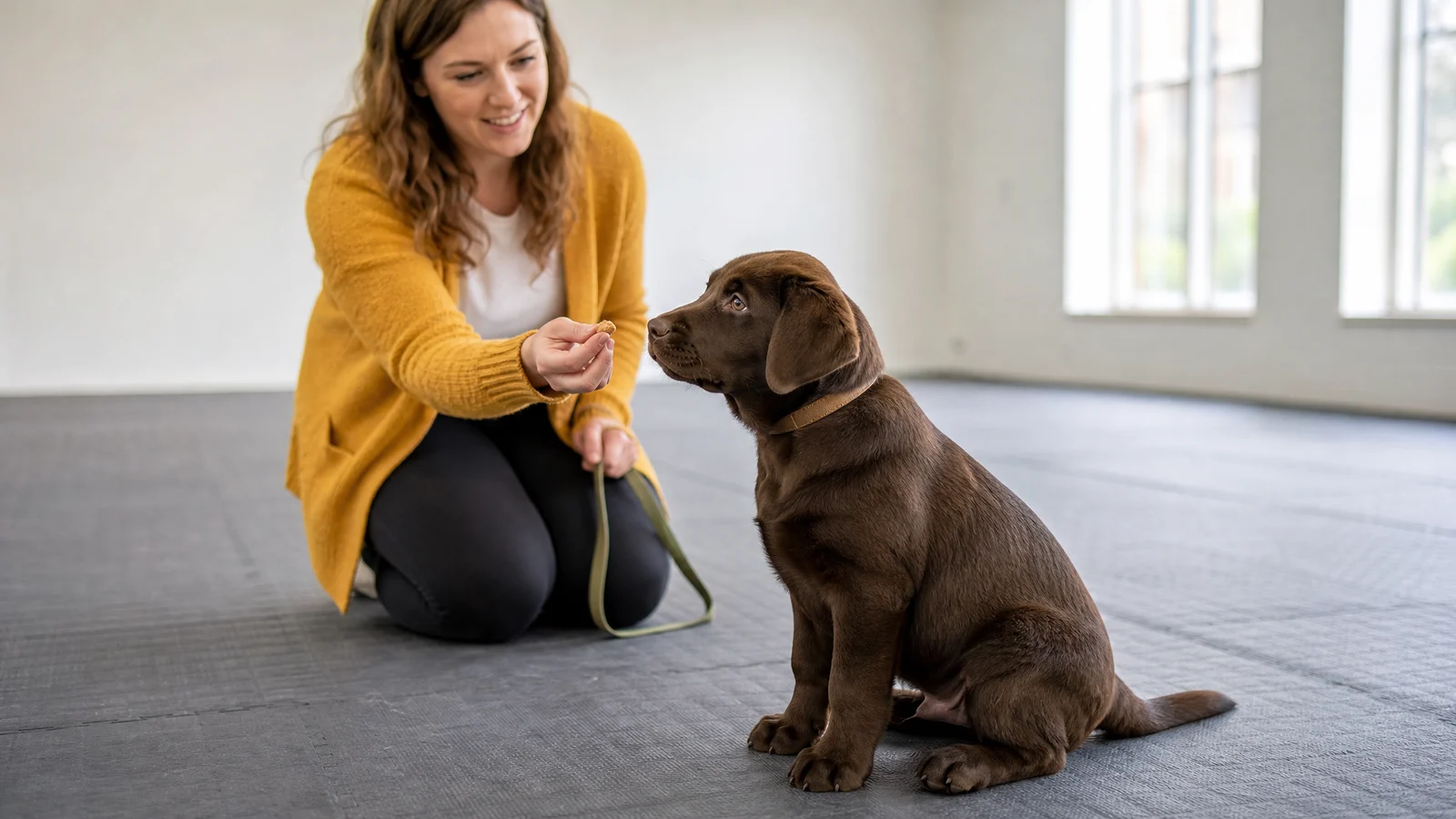
Your Labrador Retriever puppy comes home at eight weeks, and every training question after that depends on how many weeks old they are. In the first days they need quiet reassurance and tiny lessons. Around four months they are teething and ready for class. By six months the walks can lengthen, and at twelve months jogging and adult food finally come into view.
Done well, this first year gives you a food-motivated dog who loves working with you. Done badly, the biting, chewing and grabbing of the teen months can leave good owners doubting they can keep the dog.
This article looks at puppy training as a sequence of ages, so you can decide what to teach this month, what to postpone, and when the rough patches tend to ease.
Puppy Training Starts at Eight Weeks
The Labrador puppy timeline puts the safe age for leaving the litter at eight weeks, and we would be wary of any breeder who sells puppies before seven weeks. Once home, the first days are for settling, not for a full curriculum.
Settling in and When to Begin
The breed's parent club describes a newly homed puppy as insecure, away from siblings for the first time, and in need of reassurance and constant attention. Some owners describe these first weeks as exhausting or overwhelming. Keep lessons tiny and the house quiet.
Sources disagree on when formal training begins. One breeder and the club start obedience the day the puppy arrives, with a reliable recall first for safety near roads, dogs and people. The other breeder lets a puppy be a puppy for six months.
Our long work with Labrador behavior and training leads us to start at once, but small. Both breeders say strenuous activity and more advanced obedience should wait, so keep early lessons playful, brief and low-impact, with no repeated jumping and no long sits. Waiting six months mostly gives biting, grabbing and door-dashing time to harden into habits.
A Daily Checklist for Weeks Eight to Twelve
Work through these in short bursts spread across the day:
- Use part of the daily food ration as your reward pot. Labs are food-driven, so meals double as lessons, and a lean weight eases stress on the joints.
- Say the puppy's name in a bright voice and pay for every look back at you.
- Play the come game from a few steps away: call happily, reward generously, then release them to play again.
- Touch paws, ears and mouth for a moment each day with a treat, and keep a weekly routine for nails, teeth and ears.
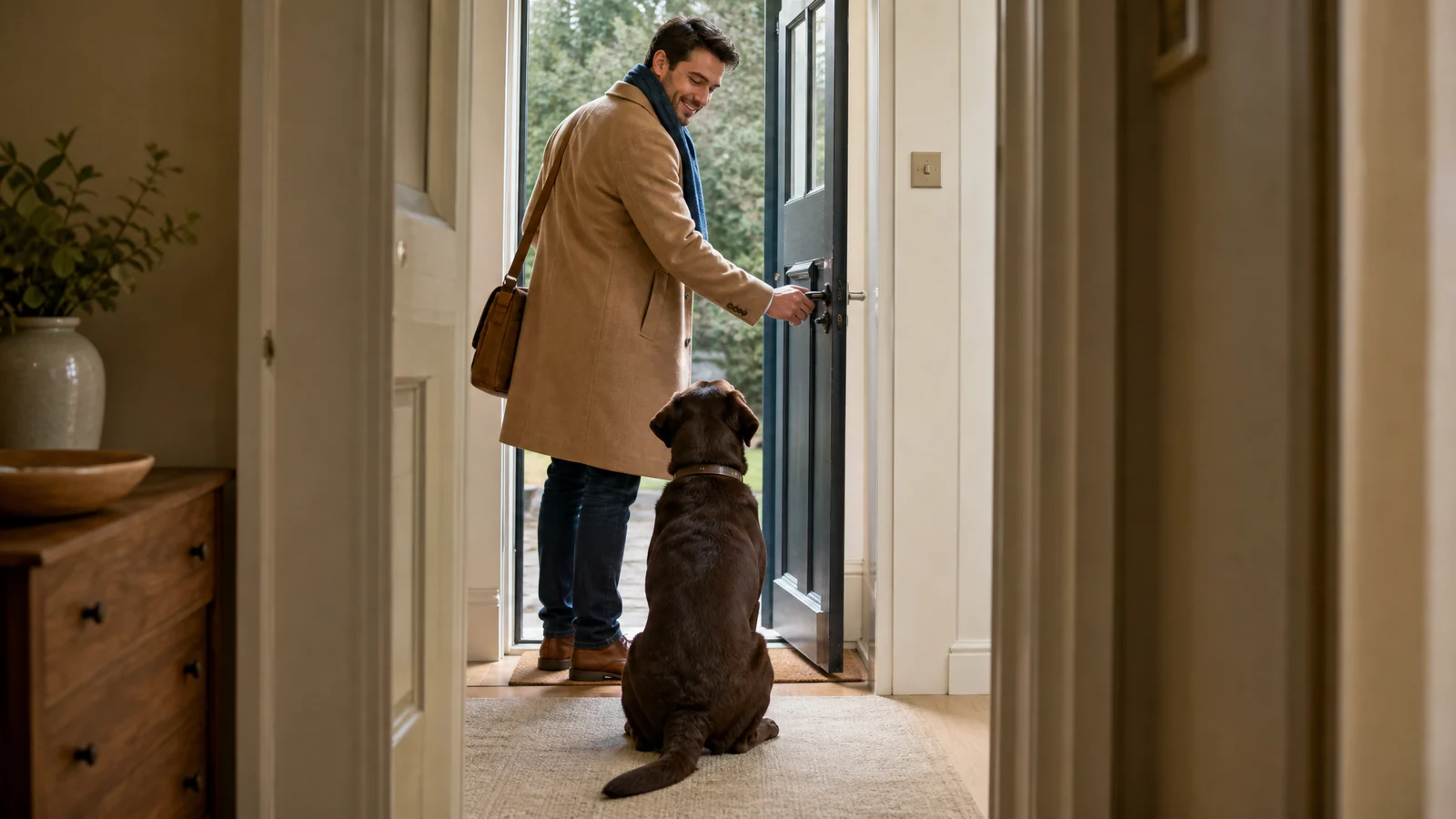
- Ask for a wait at the food bowl and at doors, then release with a cheerful word.
- Take the puppy out after waking, eating and play, and reward on the spot. Keep the crate in a quiet corner with something good to chew.
If Your Puppy Dodges Cuddles
Some puppies avoid cuddles and eye contact, and first-time owners often fear the puppy does not like them. Owners report affection arriving later, anywhere from a few weeks to a year or more. They credit hand-feeding, praise and petting after cues, treat-based eye-contact games and soft eye contact. A minority of Labs never become big cuddlers but are affectionate in their own way.
Early Exposure to the World
Use these weeks for gentle exposure to new people, sounds and surfaces. The best socialization window runs from 3 to 14 weeks. Shyness in an adult is severely penalized in the breed standard, so a young Lab who turns fearful is a reason to act early, with gentle exposure and a qualified professional, not to wait it out.
Four Months Opens Puppy Class Doors
From about four months, once the first round of puppy vaccines is done, you can build beyond the basics you started at home. Choose a class that requires every dog in the room to have their shots. Earlier options exist, since puppy socialization classes can admit puppies at 7–8 weeks when a vaccine was given at least 7 days ahead and the first deworming is done. Your veterinarian can say whether your puppy qualifies.
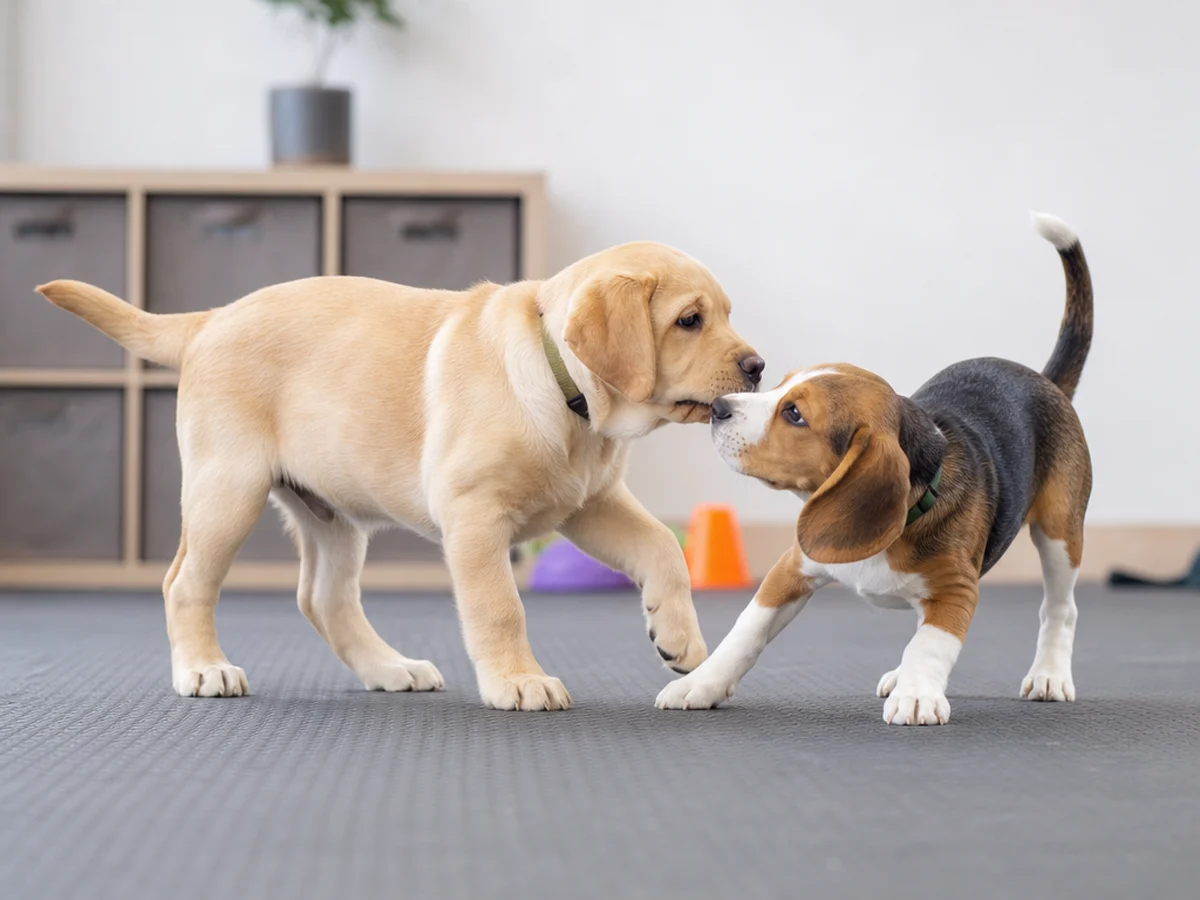
Owners who used group classes or a few private sessions say the biggest gain was learning how to teach. Classes kept training on schedule and gave practice near other dogs. Formats suit dogs differently. A Lab too excited to learn in a group may do far better in private lessons first, and board-and-train gets mixed reports, a good foundation for some and too strict for others.
When you visit a class, look for these things:
- Vaccination is required for every dog.
- Rewards come from food, play and praise, with small soft treats you can swap for pieces of the daily ration.
- Exercises are short and low-impact, with rest between them and no drilling of jumps or long sits.
- There is time to practice handling and recall near other dogs, because the hard part for a Lab is holding a cue among people, dogs and scents.
- The instructor coaches you as well as the puppy.
Expect food drive to behave differently away from home. Some food-obsessed puppies focus beautifully indoors, then refuse treats when cars are near. Start farther from the distraction, use a more exciting reward, and close the distance in small steps. A minority of Labs are fussy about kibble, so keep a few higher-value options ready for class days.
Teething Reshapes Puppy Training at Four to Five Months
Baby teeth loosen and fall out around four to five months. Glance in the mouth now and then, because a baby tooth the adult tooth is not pushing out properly is something your veterinarian should see.
Biting is the headline. Owners describe Lab puppy biting from eight weeks to about five months as relentless, with bruised arms, chased ankles and scratches lasting weeks. Most say it faded around five to six months as the adult teeth came in, though a few saw it continue much longer. The plan is to manage the mouth until it passes.
Many owners link the worst biting to an overtired or overstimulated puppy. Scheduled naps in a covered crate, or a short stretch on a tether beside you, helped them. Give attention when the puppy is calm, not when they are frantic.
Keep a basket of safe chews and rotate it weekly, and serve meals in a Kong or food puzzle. When teeth land on skin, stop the play calmly, offer a chew and reward the moment they take it. Teach trades early, along with leave it and drop it. Owners of Labs who want to eat everything say these cues prevented accidents.
The heavier chewing of floors, baseboards and furniture arrives in the months ahead, so treat these weeks as rehearsal.
Short Walks for a Labrador Retriever Puppy
Until about six months, leash walks stay short. After that they can lengthen gradually, but running and jogging stay off the list until twelve months. One breeder offers a rule of thumb of about five minutes of activity per month of age, and discourages dog parks at this stage. Stairs wait until about four months.
The reason is joints. Hip and elbow dysplasia occur in Labradors, are at least partly inherited and can take years to show, and growth plates may stay open until 18 months or older. A puppy who looks sound is not proof of joints ready for hard impact.
Weight matters here too, since a lean frame eases stress on the joints, which is why we budget treats out of the daily ration. Puppies grow fast, so check harness fit often. Owners report sizing up by about five months and using two sizes by nine months.
Fill the gap with brain work instead of miles: treat searches, food puzzles and short training games. Supervised swimming can burn energy later, but Labs have to be taught to swim and shown a safe way out of the water. Jumping-heavy sports wait, though puppy jumping foundations exist for when the time comes.
Labrador Retriever Adolescence From Six to Twelve Months
Owners name roughly 5 to 18 months as the naughtiest stretch, with floors and baseboards chewed, items stolen and constant supervision needed. Chewing is often heaviest from about six months to a year, especially when a puppy is bored or left alone, even with plenty of exercise.
Some dogs are frantic without a full routine, to the point that owners doubt they can keep them. For a few it eases by six months, and most say it turns between one and two years.
Fear can return as well. Normal fear periods can show up early, around 8 to 11 weeks, and come back once adolescence begins near 6 months. When your puppy balks, slow down and keep socializing at their pace. Sexual maturity has no set age, arriving anywhere from about seven months to 22 months, and one judge calls the Lab the "Peter Pan of retrievers" who never grows up. Plan for exuberance and wobbles across that whole window, not at one birthday.
What to Hold the Line On
Keep the same few rules every day. Give attention and petting when the puppy is calm. Ask for a wait before meals and at open doors until released. Trade for anything stolen. Owners say the hard part is not learning cues but holding them around people, dogs and scents, and adolescents still head toward dogs they like. Keep practicing recall even when ignored, and make it a game, such as hide and seek with a stay first.
What Gets Owners Through
Many owners credit tethering, scheduled naps, crate covers, a weekly chew box, a Kong or food puzzle at every meal, and play with steady adult dogs. Heavy chewing often appears when a Lab is bored or left alone, even after plenty of exercise. Structure beats exhaustion here, because a dog with a predictable day has less reason to invent their own jobs.
Do Labrador Retriever Puppies Ever Finish Training?
Not at twelve months, though that birthday opens two doors. Jogging becomes safe, and you can plan the switch from puppy to adult food, following the label. A Lab's joy and exuberance do not switch off on the same day.
Recall and focus around distractions keep improving slowly with age, but owners rarely call them perfect. Harder skills take longer. A balance trick like sit pretty can take about eight months for a large Lab to hold.
Keep short refreshers in your week: a recall game, a wait at the door, a settle on a mat, all paid from the daily ration. Keep reinforcing manners well past the first year. Dogs also differ. Owners with more than one Lab stress that each puppy was different, one naughtier than the last, another reserved where the others were cuddly, and a minority find theirs easier than the warnings suggest.
Book regular vet visits through the first year and beyond, so growth, teeth and weight are checked as your puppy changes.
This is general information, not veterinary advice. Check with your veterinarian about vaccine timing, tooth and joint concerns, your puppy's healthy weight, and when and how to move to adult food.
Next Puppy Questions After Month Twelve
The thread through the whole first year is the same. A Lab puppy is food-driven, exuberant and slow to grow up, so the best training meets those needs on purpose. Short rewarded lessons, daily chews and brain work, and exercise matched to age give extra energy and boredom a better outlet than your furniture.
Owners tend to ask these things next:
- Why is the chewing still going? Our guide to chewing, digging and destructive behavior picks up where the teething weeks leave off.
- How much exercise is right as they grow? Keep building gradually on the walking limits above, and let your veterinarian guide the details for your own dog.
- How do we get a dependable come near other dogs, visitors and lakes? Start with reliable recall training.
- What comes after the basics, including sit, stay and impulse control? Move on to Labrador obedience training, where waiting and settling get more practice.
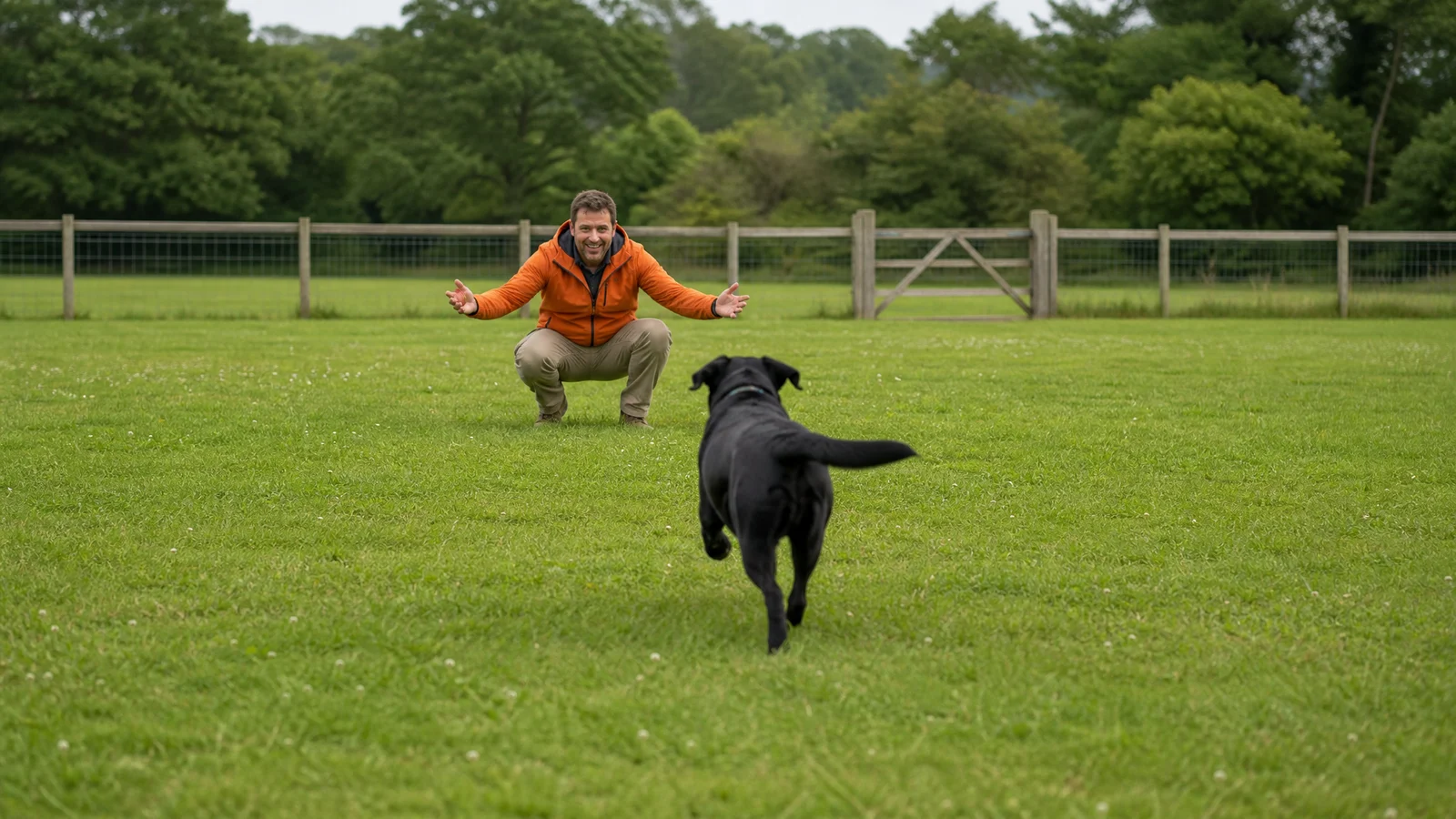 Running off at the parkTeaching a Labrador Retriever a Reliable Recall
 Training basicsLabrador Retriever Obedience Training: Sit, Stay and Come
 Training basicsLabrador Retriever Training: The Complete Guide for Owners