 Labrador
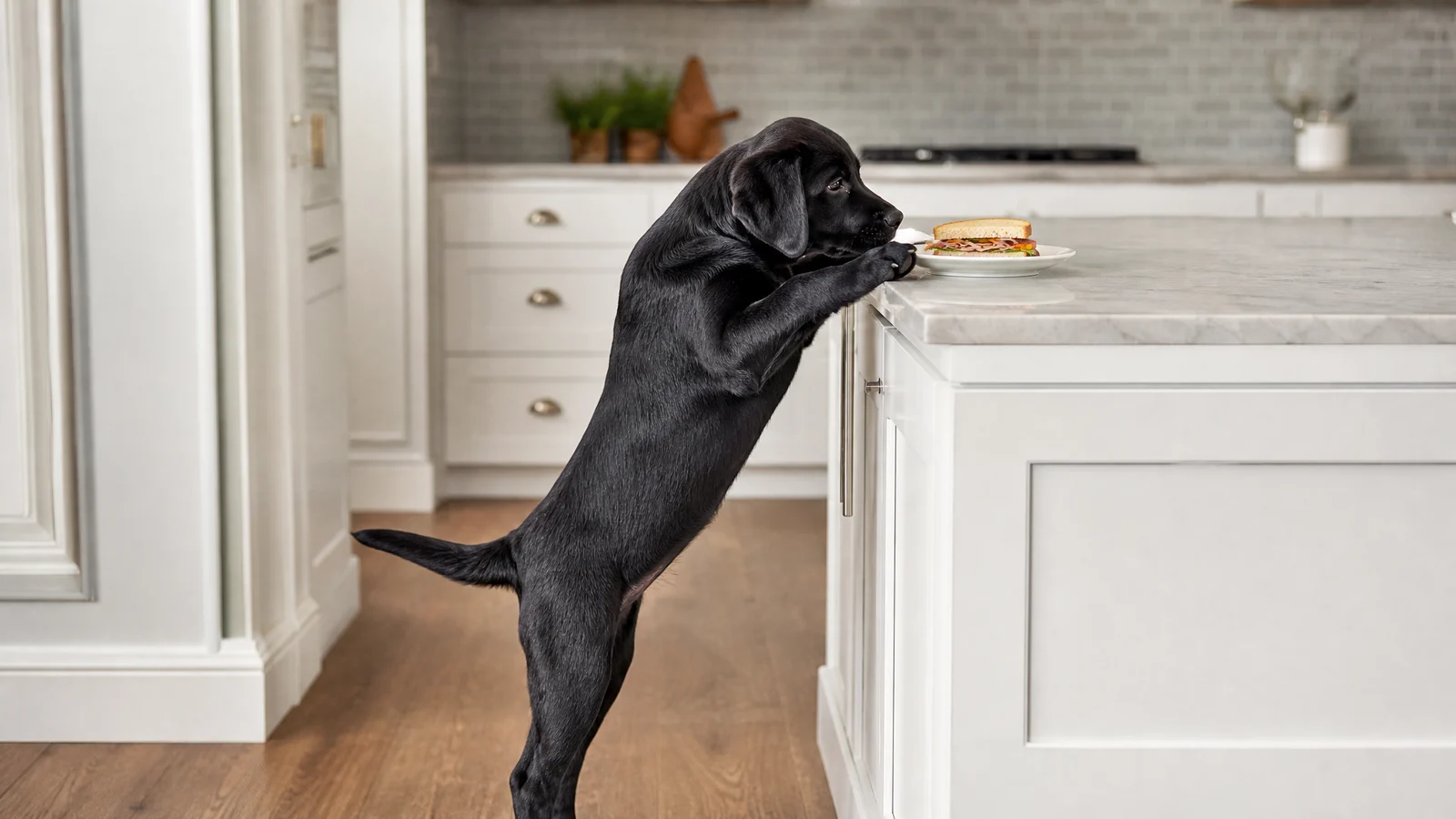
Your Lab puppy has both front paws on the counter edge. At the door, the same puppy is towing you toward a visitor.
A Labrador puppy 4 months old can still learn almost anything, but this is also when habits start to harden into the adult dog's defaults. Adult teeth are arriving, and your puppy has begun testing limits. That is good news, because a Lab learns fast and wants to please.
It also means every habit you shrug at now becomes a bigger habit later. The cute-puppy excuses for rude manners are wearing thin.
Read on for sessions that suit a Lab's dislike of drilling, where cues slip, and the four habits to build first. We kept it to what matters before the teenage months arrive.
Foundation Labrador Training in Short, Changing Rounds
Sessions come first because they decide whether any habit sticks. Labs love to please, and that eagerness can make you call a cue learned after a handful of easy wins. The Labs we've trained tend to sail through a new cue in the first few minutes, then drift once the same cue repeats with nothing new in it. That is a puppy mind asking for variety, not a puppy mind saying no, so the fix lies in how you plan a round rather than in asking louder.
Change One Thing Each Round
Keep each round short and give it one new twist, such as a different room, a new spot for you to stand, a different reward or a cue from a few steps away. The cue itself stays the same, so the puppy learns the behavior and not the setting. When a round feels flat, end it and come back later with a different twist.
Pay With What the Lab Already Loves
Food pays well for most puppies, but a Lab's day holds other paychecks. A greeting, a short game with a toy, a moment to sniff or the open door to the yard can all pay for a sit that came quickly. Mixing them keeps food from becoming the only reason to listen, and it puts a reward within reach in any room.
End While the Puppy Still Wants More
Stop a round while the puppy is still keen, before the drifting starts. A Lab who leaves wanting another round walks into the next one fast, while a Lab who was drilled until bored walks in slowly. If your puppy starts sniffing the floor, yawning or turning away, you waited one round too long.
Labrador Retriever Puppy Teething and Limit-Testing Before Six Months
Short rounds meet their first wall when the mouth gets busy and your puppy starts pushing on rules. Puppies this age sit in what Texas A&M's puppy timeline calls the juvenile stage, between 3 and 6 months of age, when they begin to test boundaries and learn to push limitations. Adult teeth should be fully in place by 6 to 7 months.
What matters for training is the swap. When a puppy grabs a shoe, a sleeve or a hand, offer a toy they like better, then praise the moment it lands in their mouth. Trade instead of prying, and the puppy learns that a Lab's urge to carry things has a job, because the item is a delivery to be swapped.
In our sessions with Lab puppies, mouthy greetings fade fastest when a toy is already in reach before the hands arrive. Keep a few chews in different rooms and rotate them, because a Lab's chewing does not stop the day the last baby tooth drops. Mention anything odd about your puppy's mouth, or a sudden change in chewing, at your regular vet visits.
Why Puppy Cues Slip Around Doors, Guests and Other Dogs
Limits get pushed hardest where excitement is highest, so four places deserve a plan. The part of a puppy's brain that handles self-control and social interactions is still developing, which is why adolescent puppies are often more impulsive, according to Cornell's teenage-years guide. Most puppies hit adolescence around 6 months, though it can start later, so your Lab is just ahead of that curve.
The table sorts the four trouble spots by what is going on and what to change. Find your worst moment first.
| Where it slips | What is going on | What to change |
|---|---|---|
| At the front door | The cue has only been practiced with the door closed. | Practice with the door shut, then cracked, and pay for the wait before you say the release word. |
| With guests | A visitor's hand is a bigger reward than your treat. | Ask guests to wait until all four paws are down, and pay the puppy first. |
| Around other dogs | Excitement outruns the cue. | Start farther away, pay for a glance at you, and close the gap a little at a time. |
| Near the kitchen | Food on counters and floors beats any reward. | Keep tempting items out of reach and practice away from meal preparation first. |
We've watched Lab puppies hold a perfect sit for the treat bag and lose it the second a visitor's hand comes down to pet them. That is why the guest row asks the visitor to wait. Pick the one row that matches your worst moment and fix only that this week, and see our Labrador jumping guide for greetings in full.
Puppy Obedience Training for a Labrador Puppy 4 Months Old
Every row in that table is repaired by one of four habits, and each protects you from a problem that gets harder as the puppy grows. We rotate through them across the week instead of drilling one at a time, so here is the menu.
- Sit, then wait. Ask for a sit before the food bowl, the leash and the door, then release with a word. Labs charge toward everything they want, and the pause gives your puppy a polite way to ask.
- Coming when called is the safety skill, so pay it with the best reward you own. Practice in the house first and keep the call joyful, because a puppy who dreads coming back learns to stay away. Our Labrador recall training guide walks through every step.
- Four Paws Down for Hellos. Labs are famously friendly to everyone, which makes greetings a core job instead of an extra one. Pay your puppy for keeping feet on the floor while people approach, and ask guests to wait for that moment before they pet.
- Handling practice teaches your puppy to accept touches on paws, ears and mouth with a treat following each touch. Teething and grooming both put hands near the mouth, so keep the first touches light and brief.
Each habit is a short round of its own, so a full week of rounds covers all four without a long session. The calendar around them lives in our Labrador puppy training timeline.
Puppy Classes, Outings and Leash Manners for a Labrador Retriever
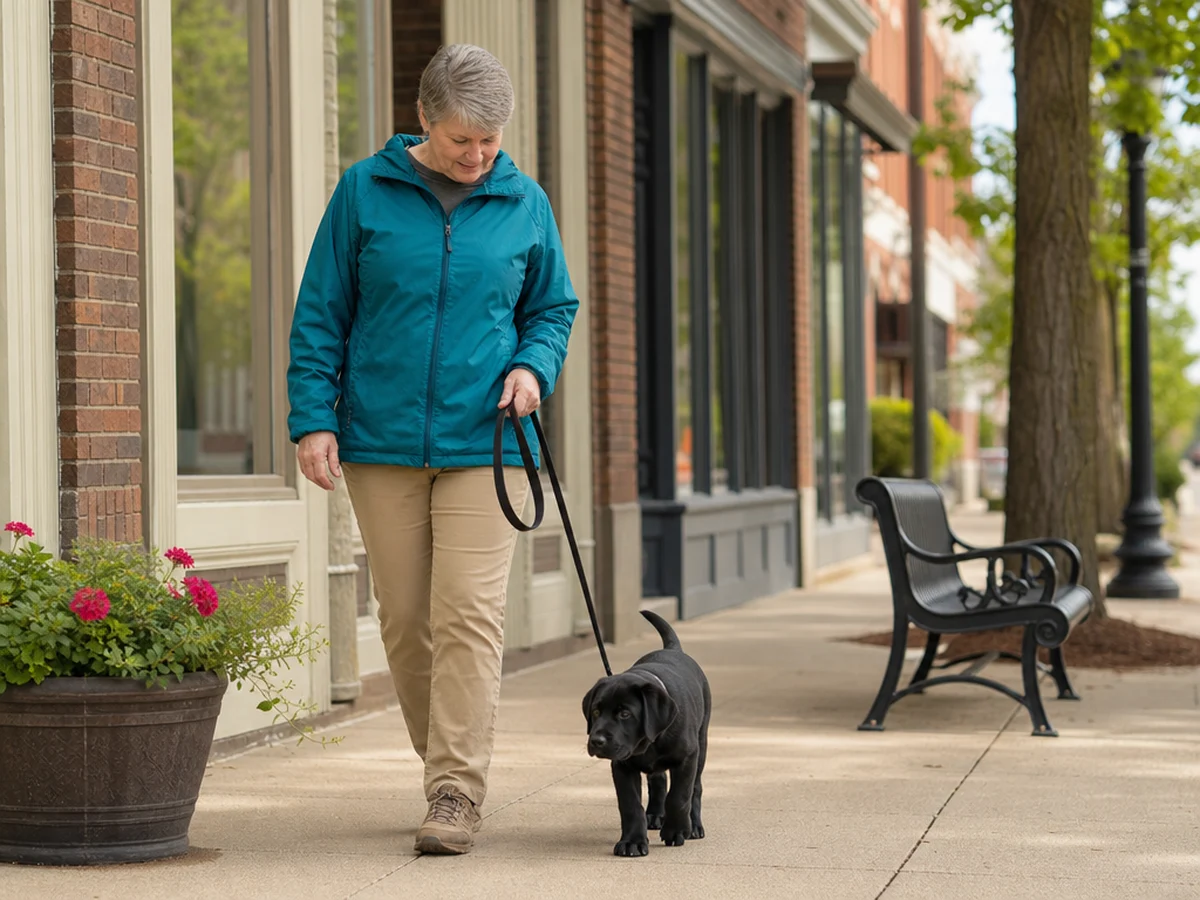
Habits grow faster with company, which is where a class and a few planned outings earn their place. The best window for starting socialization runs from 3 to 14 weeks, so your puppy is just past it, but the AVMA's socialization advice still holds. Keep rewarding calm or playful responses to social interactions, and let a puppy withdraw when something feels like too much.
Ask your vet when your puppy is cleared for classes and shared spaces, then visit a class without your puppy first. Look for an instructor who pays dogs for good choices, keeps groups small enough to see every puppy and lets an overexcited puppy sit out a round. A Lab who wants to greet every puppy in the room needs a class that rewards calm, not a free-for-all.
Plan outings the same way, adding one new surface, sound or place at a time and giving your puppy room to look before you ask for anything. On walks, pay for staying near you and use a sniff as the reward. Ask your vet how much walking suits a growing puppy, and see our guide to loose-leash walking for Labs for the step-by-step.
Common Questions About Labrador Retriever Puppy Training Now
Three details trip up Lab owners at this age, and none of them fits neatly under the headings above. Each answer sticks to reward-based steps you can start today.
How do I check my Lab puppy's mouth?
Touch the lip for a second while a treat arrives, then build up slowly to lifting it so the puppy learns that fingers near the mouth predict food. Stop and go back a step if your puppy pulls away. If a baby tooth seems stuck beside its adult tooth, or the gums look sore, call your vet.
What if my puppy is too wild for class?
Move farther from the group, pay for a glance at you and let your puppy sit out a round when the room is too much. Some puppies need a few visits before the excitement settles, so ask the instructor how they handle puppies who need distance.
Why does my Lab keep bringing me things?
Carrying things to people is what Labs were bred to do, so socks, shoes and the TV remote all get delivered. Thank your puppy, trade for a treat or a toy, and give the item back only when it is safe, so delivering stays a game and not a fight.
Final Words on Teaching a Lab Puppy to Switch Off
Many of the problems at this age are tired-puppy problems, such as the mouthy greeting at dinner, the wild burst after class and the cue that vanishes by evening. Switching off is the skill owners forget, so teach stopping on purpose.
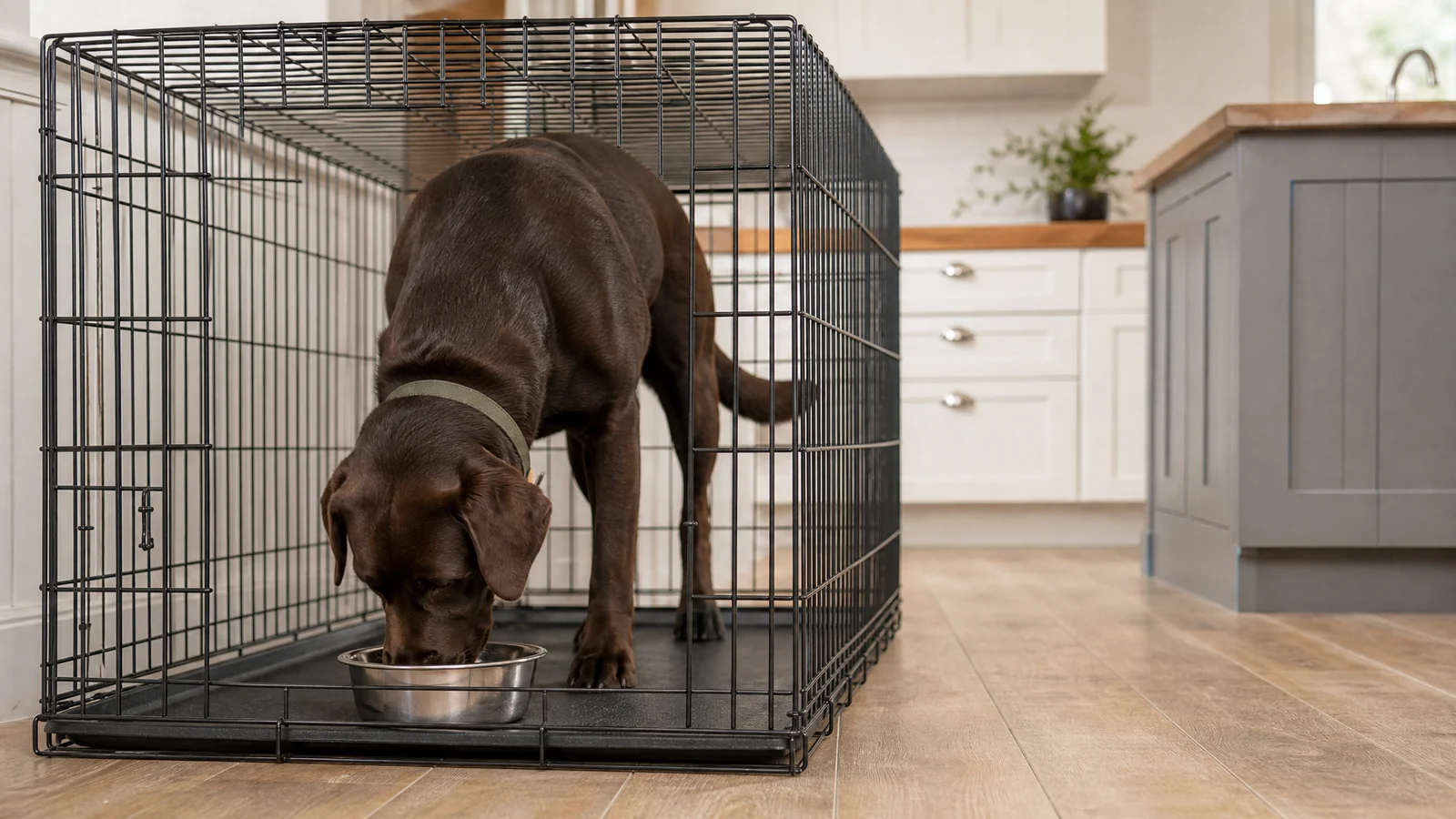
Put a mat or a crate with a chew in the same spot every evening, pay your puppy for lying down on it, and let the day end there. A puppy who can switch off is ready to learn again tomorrow.
 Puppy trainingCrate Training a Labrador Retriever and Choosing the Right Crate Size
 Exercise and jobsHow Much Exercise Does a Labrador Retriever Need?
 Training basicsImpulse Control for a Labrador Retriever: Wait, Settle and Focus