 Labrador
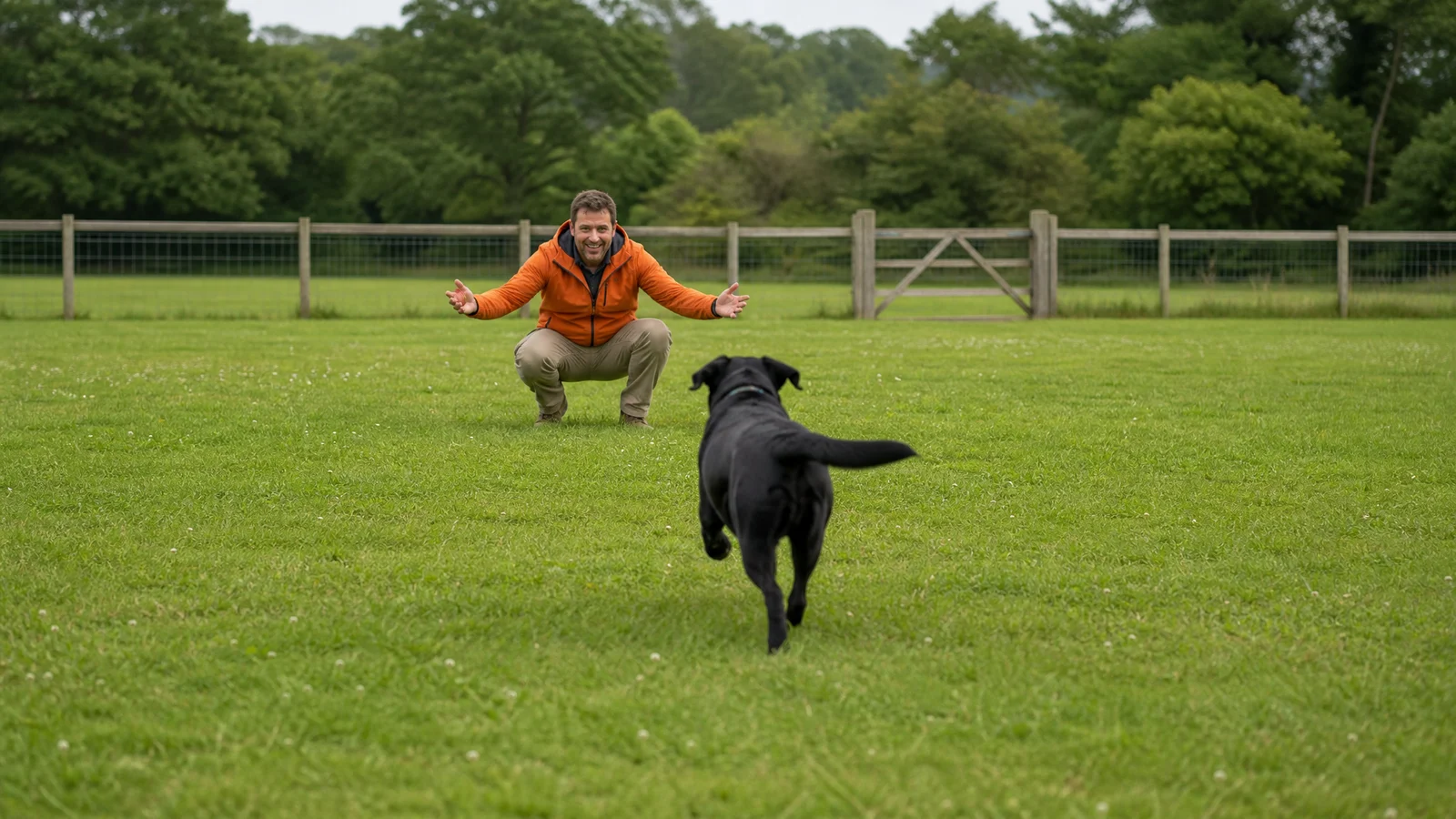
The usual recall advice is brief: say the word once, pay well when the dog arrives, and never scold a dog for coming back. Lab owners agree it works, and many report that first lessons stick fast, with some puppies answering "come" within weeks of arriving. What they also describe is a dog who flies across the kitchen to them, then ignores them completely near a stranger, another dog or a pond.
For a Lab, this gap runs wider than for most breeds. On the standard temperament scales they rate 5 of 5 for openness to strangers and 5 of 5 as a dog who gets along with other dogs, and they were made for the water. A Lab who doesn't turn back to you heads toward roads, crowds and lakes with the same cheerful confidence. Built well, recall gives you a dog you can take almost anywhere.
Below, you'll find seven working principles, including how to pick rewards that outbid distractions, how to proof the cue in steps near people, dogs and water, and where off-leash freedom is wise and where it is not.
Start Recall the Day Puppy Arrives
The Labrador Retriever Club's 2026 flyer puts a reliable recall first, beginning the day the puppy comes home, using "come" or "here" for safety around roads, other dogs and people. We would rank it above sit, down and every trick. It is the one skill that can protect a dog after everything else has gone wrong, so it earns the earliest and most careful teaching.
Two terms will keep us precise. By cue, we mean the single word you say. By recall, we mean the whole chain that follows: hearing the word, turning, traveling to you and stopping close enough to touch. Choose one word and reserve it for this job. If everyone in the family uses it casually, it fades into background noise.
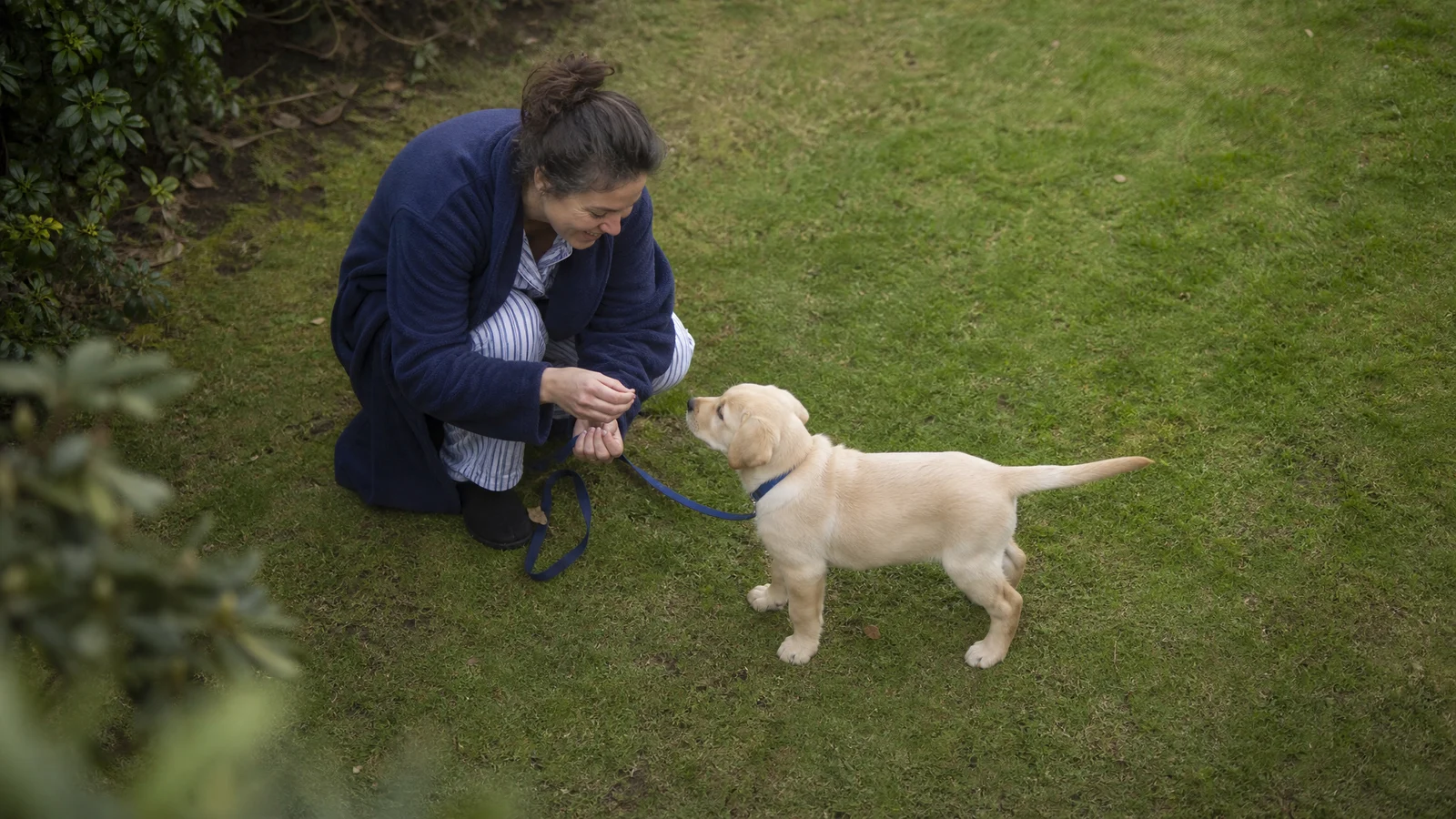
Start when the puppy is already moving your way. Say the word once, then mark the instant they reach you with a short, consistent sound such as "yes," which tells them exactly what earned the treat. Deliver the reward at your knees, so arriving close is what pays. Owners say Lab puppies pick this up quickly, sometimes as early as 7 weeks. That speed is the trap, because it is tempting to stop once the kitchen version works.
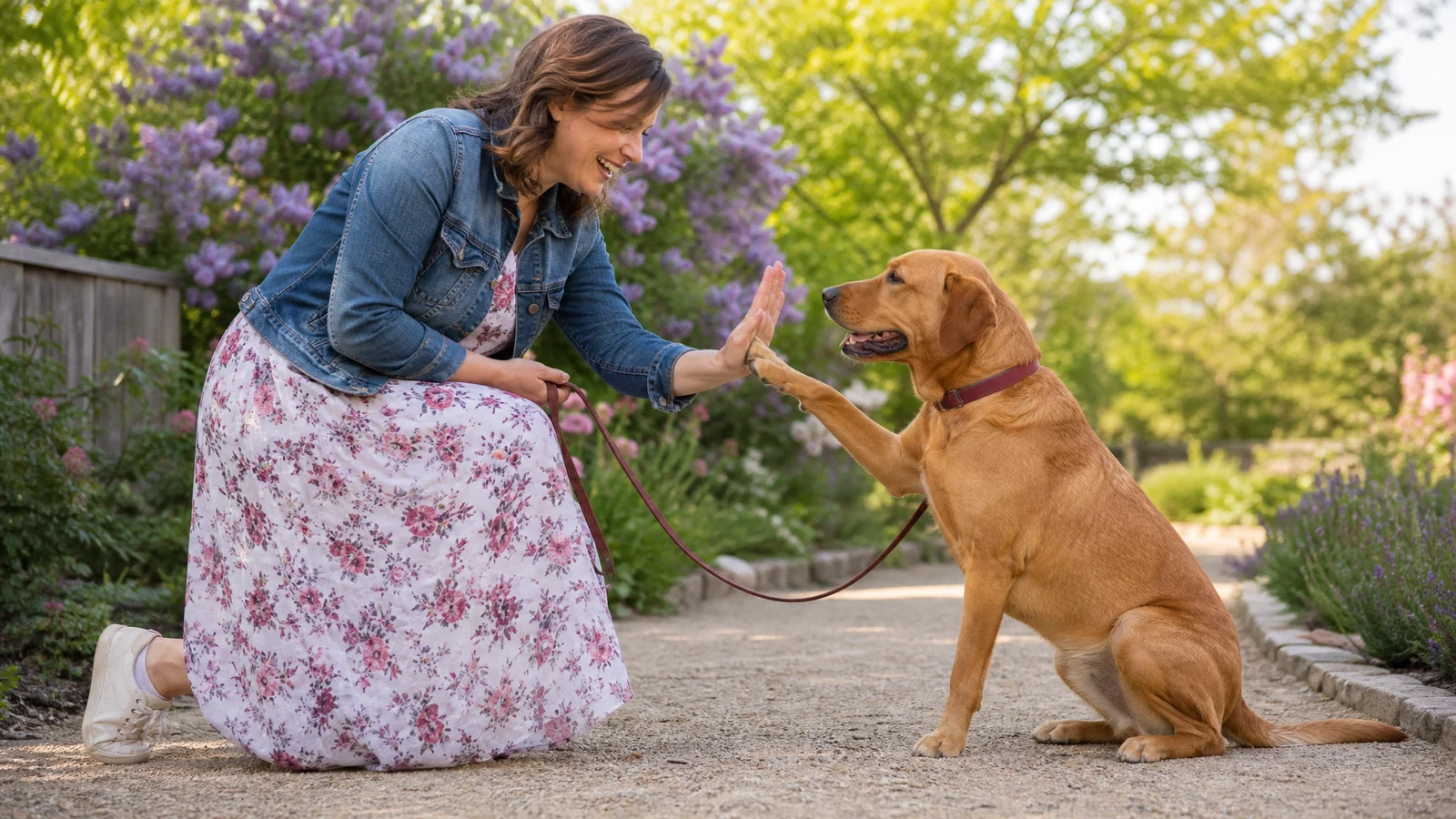
Keep sessions short and varied. Labradors tend to dislike drilling one exercise over and over, so several quick calls scattered through the day beat one long practice. Recall also sits beside the other early skills in our Labrador training guide.
Rewards That Make Recall Beat Distractions
Every distraction has a price, and your reward has to outbid it. A reinforcer is anything a dog will work to get, and the dog, not you, decides how much any reward is worth. Battersea advises using a reward they truly want and don't get all the time, ideally one kept for recall alone. For most Labs, that means something far better than what lands in the food bowl.
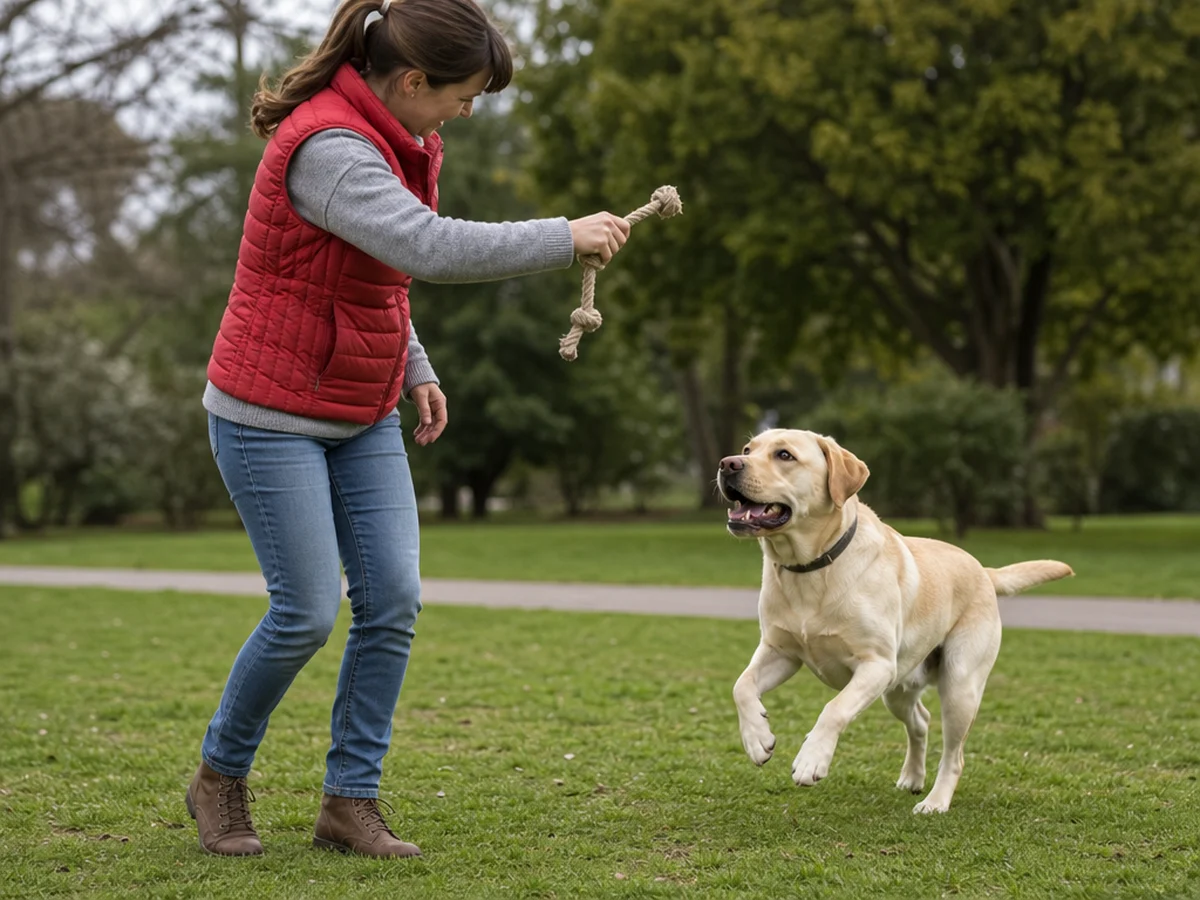
Food is a strong tool but not a universal one. Owners of food-mad Labs report that treats get ignored once the dog is wound up by another dog, the dog park, traffic or cars, and that tiring the dog beforehand made no difference. Food covers the lower steps of training. The higher steps need more.
Build a Ladder of Rewards
Sort rewards by strength and match each to the temptation you expect. The aim is that the best thing you own is always a little more exciting than the best thing around you.
- Plain treats or meal kibble do the job indoors, in the living room, with few distractions.
- Soft, smelly treats suit the yard, where scents and movement start to tug at the dog.
- A jackpot kept for recall alone, such as a favorite tug, a ball chase with you or a handful of something the dog never otherwise gets, is for the hardest moments.
If your Lab gulps down everything within reach, our guide to Labs who eat everything covers the trade and leave-it skills that keep treat work tidy and safe.
Play Hide and Seek From a Stay
Owners who turned recall into a game often name hide and seek as the favorite. Ask for a stay, or have a helper gently hold the dog, then slip behind a door or tree and call once. The dog searches, finds you and the celebration begins. Labs enjoy locating their people, so arriving becomes the exciting part. When a dog ignores a call, the owners who succeed keep practicing at an easier distance instead of simply calling louder.
Why Do Dogs, People and Water Beat Recall?
The answer sits in the breed's temperament. On the standard temperament scales, a Lab scores 5 of 5 for openness to strangers, where the top end means everyone is a best friend, and 5 of 5 for being good with other dogs. A person or dog in the distance isn't a threat or a mild curiosity to these dogs. It is a prize, and it competes head-on with whatever you are offering.
People and Dogs
Owners describe the same pattern again and again. Puppies drop a game to chase passers-by, and adolescents still go off after dogs they like. Some Labs cross a whole field to say hello and come back only after greeting everyone. Owners say the hard part is not learning the cue but holding it around people, dogs and smells.
Others behave well off leash at a park or on a trail but jump at people and dogs once clipped on. Greetings are therefore part of recall training. Early, calm exposure helps, and our piece on socializing your puppy shows how to build that foundation.
Water and Mud
Water is the other great magnet. Labs have a thick waterproof coat, webbed feet and a tail that works like a rudder, and swimming is one of their favorite activities. Many owners describe dogs who whine near water, bolt to it off leash, swim in icy sea or dive into every mud hole. Treat any shine, puddle or pond as a distraction at the very top of the scale.
Labrador Retriever Recall Near Water Needs a Long Line
Proofing means practicing a skill in gradually harder settings until it holds up in real life. Because water sits at the top of a Lab's difficulty scale, you reach it last. Start with a long training lead, which lets the dog roam a little without being fully loose.
Best Friends' general advice is to lengthen the leash over time, up to a 20 to 30 foot line, as the dog's skills improve. Nobody has tested this near water for Labs in particular, so treat it as a sensible borrowing.
Climb the Distraction Steps
Move up only after the dog succeeds several times in a row at the current step. If they stumble, go back one rung and rebuild.
- Inside the house, with few distractions and your best treats.
- In your fenced yard, adding toys, scents and family members moving around.
- On a long line in a quiet outdoor spot, with people passing at a good distance.
- On the long line with other dogs in view, starting far away and closing the gap slowly.
- On the long line near water, beginning well back from the edge and working closer.
Use the Swim as the Reward
Clip the line to a harness, call once and pay with food on arrival. Then release the dog to splash. Using a swim as payment is our own reading of how much this breed values water, not something a source has tested. The logic matches any jackpot: the thing the dog wants most becomes the wage for coming back, instead of the thing that competes with you.
Teach the Way Out First
Water needs care for its own sake. One breeder notes that Labs have to be taught to swim and shown a safe way out of a pool, and she starts at about three months. Teach the exit before you rely on instinct, and supervise every swim while the dog is growing.
Can a Labrador Retriever Recall Hold Off Leash?
Honestly, in the places that matter most, not reliably. The club wants a Lab on a leash when walking with you and in a fenced yard or run when outside. The general advice from Best Friends goes further: don't ask a dog to come off leash until the recall is perfect on it. Owners say recall around people and dogs improves slowly with age but is rarely called perfect, and no source names an age when it becomes dependable.
Where Off Leash Is Wise
Choose enclosed spaces, such as a fenced field or your own secure yard, where roads, strangers and open water are out of the picture. Dog parks split owners. Some visit at quiet times, while others skip them and use scent work or open fields. Keep the fence in place regardless, since Labs without enough exercise may escape a yard. Recall training never replaces it.
Where It Is Not
Friendliness is the risk, because a dog who returns only after greeting everyone may greet the wrong thing. Keep the line on in these situations:
- Anywhere near roads, even quiet ones, because one sprint toward a friendly face can end badly.
- Beside unfenced ponds, rivers or the sea, where the pull of water is strongest.
- In places where unknown dogs or strangers may appear, since a Lab's first instinct is to go and say hello.
Call for Recall Only When You Can Win
We have trained Labs for many years, and recalls that fall apart usually do so the same way: the dog was called when nobody could do anything about the answer. Think of recall as a bank account. Every happy return is a deposit, and every ignored call is a withdrawal. Call only when you can follow through, and the balance grows.
That is the real value of the long line. If the dog hesitates, you can take up the slack, move toward them with an upbeat voice and reward the arrival as if it were their idea. You don't need to repeat the word. Each repetition while the dog ignores you teaches them your word is optional, and a call that costs nothing soon becomes noise.
If you can't reach the dog and have no line on, skip the cue. Crouch and clap, run the opposite way, or squeak a toy so that following you looks more exciting than the distraction. Whatever delayed the dog, coming to you should always end with something good.
A Labrador Retriever Recall Is Never Finished
Expect recall to be maintained, not completed. Adolescence tends to bring dips, and sexual maturity may arrive as early as seven months or as late as about 22 months, with no set age. A dog who came beautifully as a puppy may go through a stretch of selective hearing. Owners who got through it kept practicing even when ignored, dropped back to easier steps and kept the games alive.
The long view is encouraging. Where owners give ages, they describe a slow, steady gain as dogs mature, even if few call the result perfect. Keep a few high-value rewards in daily life, such as a special tug, a swim after a good return or the best treat in the house, and use them for recall alone. Regular vet visits also help keep your Lab at a healthy weight, which keeps food rewards working.
Above all, remember what shares your home. A Lab who loves everyone and every body of water will always feel the pull of the world. Your job is to stay more interesting than that pull, to protect them with a line and a fence while the skill matures, and to make coming back the best part of every outing.
 Training basicsLabrador Retriever Obedience Training: Sit, Stay and Come
 Training basicsLabrador Retriever Training: The Complete Guide for Owners
 Puppy mouthingHow to Potty Train a Labrador Retriever Puppy