 Labrador
Ordinary puppy advice says to coax a timid puppy toward confidence and friendliness, and for a Labrador Retriever that script points the wrong way, because the puppy is already friendly and the real job is teaching calm around people and dogs. A Lab who meets the world at full speed is endearing when small and exhausting once they are strong, bouncy and fully grown.
That is why we have spent many years specializing in how this breed learns to behave in company, and why we treat socialization as a habit of calm rather than a campaign for more enthusiasm. We'll walk you through how everyday home life does the first teaching, then the short outings that widen it, the early window and the classes that fit it, how to tell excited from calm, and the single greeting that ties it all together.
Socialization in Household Life
Most of a Lab puppy's socializing happens at home, long before any outing, and it works because it is repeated and ordinary: a doorbell, a vacuum, a child dropping a spoon, a visitor shrugging off a coat. This breed is meant to be included in family life, so train the routines with the whole household rather than leaving one handler to carry them, and let the puppy learn that a busy house is simply a place where, after the commotion, they lie down on their bed.
Meeting People at Home
Visitors are the first real test, because a Lab's instinct is to launch at anyone who walks through the door. Ask guests to hold off greeting the puppy until every paw is back on the ground, then to say hello quietly, and keep a small jar of the puppy's own kibble by the entrance so that you can reward calm the moment it appears.
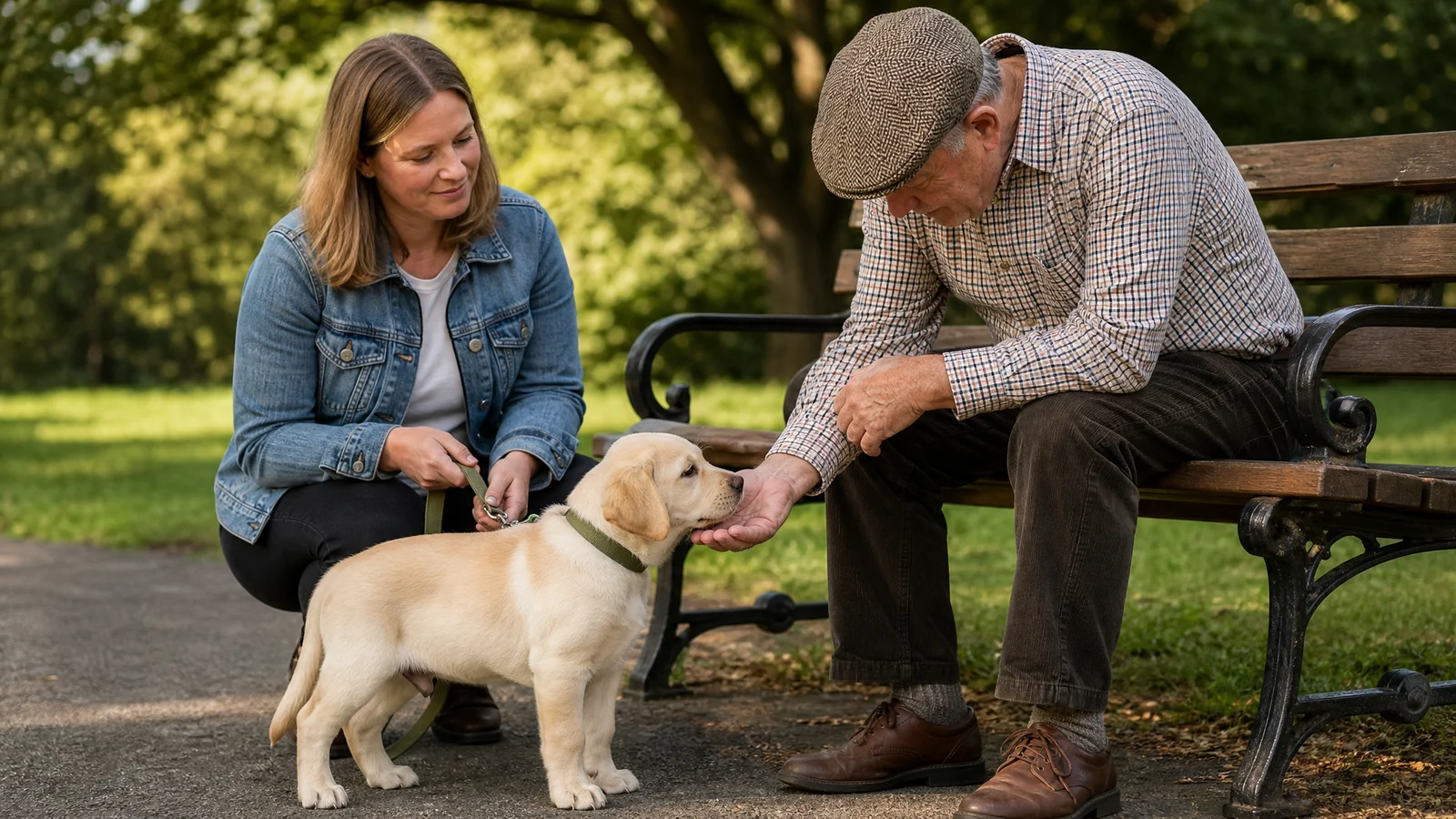
Children need coaching as much as the puppy does. The parent club warns that overexcited children may scare a new puppy or neglect them, especially after a chewed present or an accident on the rug. Labs are patient with kids, but their size and excitement can overwhelm small ones, so teach children calm, short interactions, let the puppy walk away when they have had enough, and supervise every session.
Everyday Sounds and Routines
Dishwashers, vacuums, slammed cupboards and TV laughter all pass through a Lab's day, and the easiest way to make them boring is to pair them with food. Many owners train with the meal itself, using kibble from the daily ration so the puppy gains no extra weight, and our guide to training treats without weight gain shows how to stretch it. A minority of Labs are fussy about kibble, and for them a few bits of a favorite food work better for the noisy moments.
Handling and Cuddles
Spend a few seconds each day running your hands over paws, ears, mouth and collar, followed by a treat, so that grooming and vet exams feel familiar later. Some puppies dodge cuddles and eye contact in the early weeks, and first-time owners often fear the puppy simply does not like them.
Many owners report that affection arrived later, anywhere from a few weeks to a year or more, and they credit hand-feeding, praise and petting after cues, and patient treat-based eye contact. Puppies differ from one another, and a reserved Lab is not a failed one.
A resident dog is part of this early handling too. Introduce the puppy carefully, feed the older dog first and the puppy in a crate, and supervise so play does not get too wild and the older dog stays kind.
Socializing Through Daily Outings
Once home life is steady, short and planned outings stretch the puppy's world to new places, surfaces and people, and the plan matters more than the mileage. A Lab will happily take in everything at once, which is exactly the problem, so you are the one who decides how much and how fast.
Where to Go
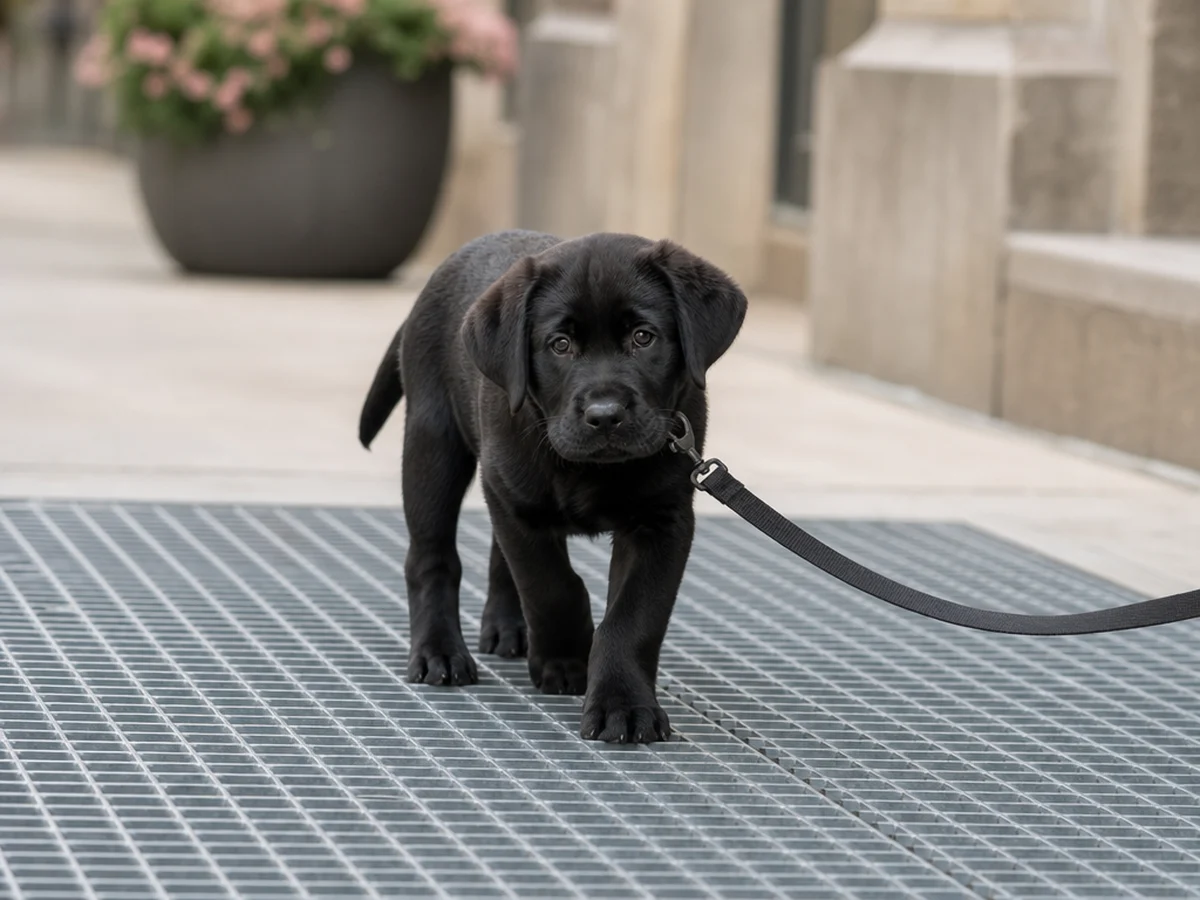
While vaccines are still being completed, stay with controlled settings: your own yard, a friend's home with a healthy, vaccinated adult dog, a parked car beside a quiet street, and the entrance of a pet-friendly shop once your veterinarian agrees. Watching a bicycle, a stroller or a delivery truck from a calm distance, with kibble on offer, teaches more than being pushed into the middle of them.
Dog parks deserve a plain word, because the usual advice treats them as essential. A breeder we trust discourages them for young puppies, and owners are split about them later: some go at quiet times, while others never go and rely on open fields and scent games. Treat the park as optional, since a Lab can learn manners from classes and steady adult friends without one.
How Long to Stay
Young puppies enjoy walks but tire quickly and may simply stop, hoping for a ride home. Keep outings short, leave while the puppy is still curious, and carry on at home with a nap. Several owners link their young Lab's worst biting to being overtired or overstimulated, and an outing that runs long is the commonest way to create it.
How Many New Things
Offer only a few new things at a time and let the puppy set the pace. Puppies move through normal fear periods at roughly 8 to 11 weeks, then return in adolescence from about 6 months, and the right response is to keep going but gently. A food-loving puppy who refuses treats near traffic is giving you information, so add distance until the food is accepted again.
The Labrador Retriever Puppy Window
Behind all this sits a window, and a Lab's strength makes it worth respecting. Puppies are at their most open to taking in new experiences between 3 and 14 weeks, so that is the ideal moment to begin.
For this breed, early socialization and puppy classes are called vital because of their physical strength and high energy, and the usual advice is to introduce the puppy gently to many kinds of people, places and situations between 7 weeks and 4 months. Incomplete or improper socialization in this period makes fear, avoidance and aggression more likely later on.
Why Friendliness Still Needs Work
Friendliness does not exempt a Lab from any of this. One breeder calls socialization "number one" and describes Labradors as people dogs, which is a way of saying they need steady, daily company. From about four months, after the first round of vaccines, you can move into a class, and it should require every dog to have their shots. Visit before you enroll to see that it is organized and safe.
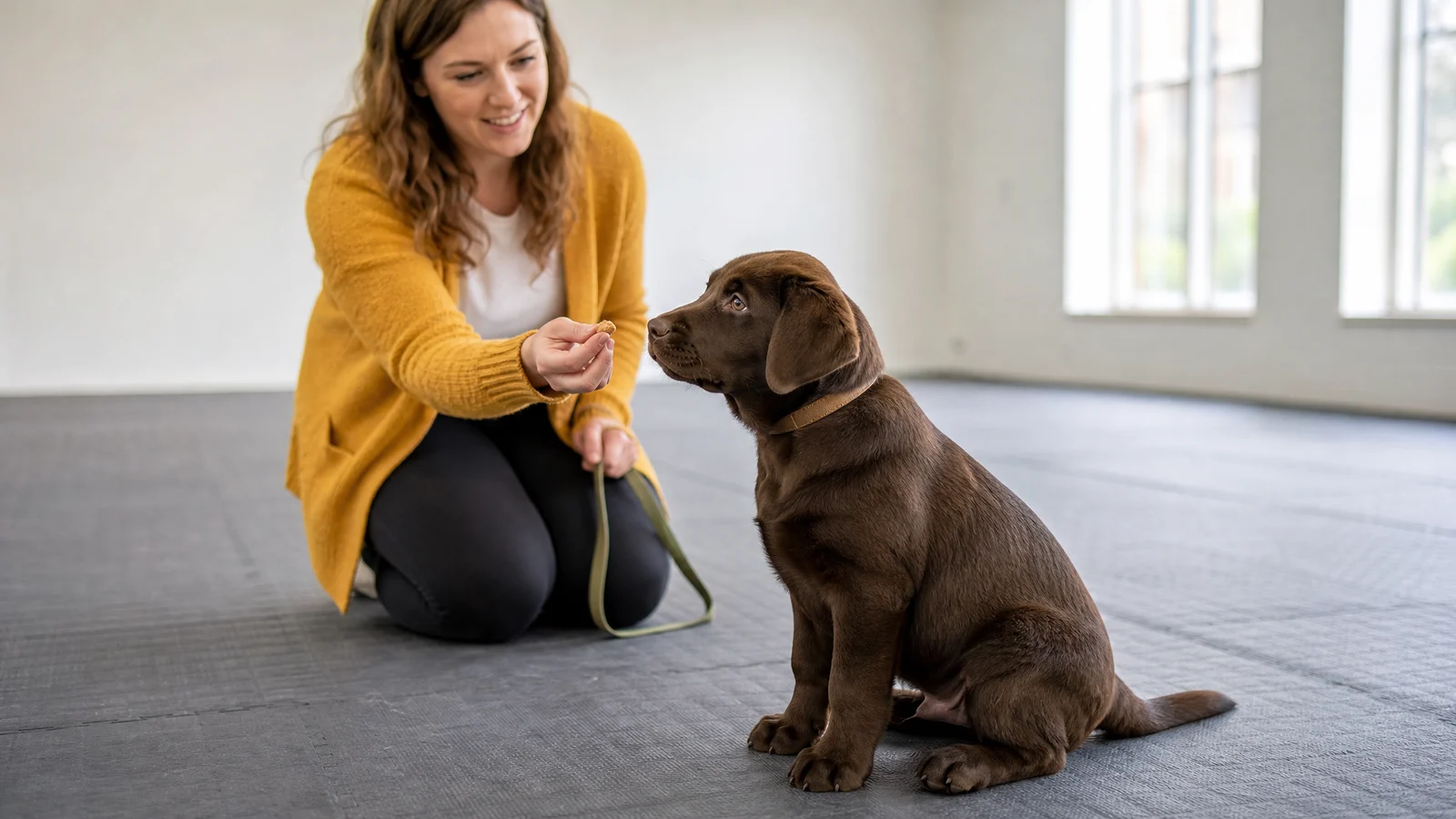
Owners who used group classes or a few private sessions say they mostly taught the owner, kept training on schedule and gave practice around other dogs. Some Labs are too excited to learn in a group and do much better with private lessons first, then a class later. Our guide to Lab obedience training covers what to practice between sessions.
This is general information, not veterinary advice. Ask your veterinarian when your puppy's vaccines allow outings and classes, and keep regular checkups going through the first year.
Calm Labrador Retriever Body Language
Because the goal is calm, you need to see calm and its opposite clearly, and with Labs the two can look alike for a moment before they split. Our work with this breed has shown us again and again that owners who learn to read the earliest signs can redirect the puppy before a greeting turns into a scramble.
Signs of Overarousal
An overexcited Lab is rarely being naughty. They have simply run out of room to think, and the signs tend to arrive together.
- A whole-body wiggle with a sweeping tail, in a puppy who cannot stand still long enough to hear a cue.
- Jumping up, mouthing hands and sleeves, or grabbing the leash and clothing.
- Turning down food they would normally take, because excitement has overwhelmed appetite.
- Hauling toward every person or dog, and whining or barking when held back.
An overtired puppy can look exactly like this. If sitting does not help, a short nap in a crate or a spell on a tether with a chew often resets things, and owners credit both for getting through the worst biting.
Signs of Calm
Calm looks soft: a loose body, relaxed ears and mouth, a sit or a down without being asked, and a glance back at you that says the puppy is checking in. Treats are taken gently and the puppy can look at a person and then look away. Reward these moments often and quietly, with kibble dropped between the paws, because the calm you pay for is the calm you will see more of. Our guide to Lab impulse control builds on it.
A long-time owner describes typical Labs as "light-switch dogs," ready for a hike but equally happy to stay home. That is a breeder's description rather than a rule, and whether your own Lab settles that easily depends on exercise, training and age.
The Calm Greeting That Ties Socialization Together
Everything above narrows to a single instant: someone approaches, the puppy sees them, and the next second decides whether the habit is a wiggling lunge or a polite sit. Rehearse it in small pieces until it is easy, with a friend who understands the plan.
- Begin far enough away that the puppy notices the person but can still take food, and wait for a moment of quiet before anything else happens.
- Ask for a sit and reward it, then let the person step closer one pace at a time, stepping back together whenever the puppy lunges.
- When all four paws are on the floor, the visitor gives a brief calm touch under the chin or on the chest while you mark and reward.
- Release with a cheerful word, allow a short happy greeting, then call the puppy away and reward the turn.
- Repeat with a steady adult dog, ending the session before the excitement climbs.
The same rehearsal matters with dogs, because Labs often want to greet every dog and person in sight and will cross a field to do it. The club puts a reliable recall first of all the cues for exactly this reason, and a game of coming back for a treat and then being sent to say hello again is a kind way to build it. Play with steady adult dogs is something owners often credit for teaching manners faster than anything else.
Long-Term Socialization Payoff
Expect the road to be uneven. Owners name the months from about 5 to 18 as the naughtiest stretch, with chewing, stealing and constant supervision, and most say it turned between one and two years. Calm-only attention, food puzzles at mealtimes, a weekly chew box and play with steady adult dogs are what they credit for getting through. Recall and focus around distractions improve slowly and are rarely called perfect, so patience is part of the plan.
By two to three years, a well-socialized Lab looks quietly sociable. They greet with a sit or at least a wag from the floor, settle under a café table, let other dogs pass without a fuss and come back after hello.
The parent club says that with proper training and socializing, Labradors are wonderful family companions, and this is what that sentence looks like in a living room. Shyness or aggression in an adult is outside the breed standard, so if it appears, look at socialization and ask a qualified professional for help, instead of shrugging it off as the breed.
Upkeep is light, and it is easier than the early work:
- Keep a few outings each week to different places, mixing quiet spots with busier ones.
- Keep rewarding the polite sit at greetings, with treats fading to now and then, and renewed whenever excitement creeps back.
- Keep regular veterinary visits and, if old habits return, a refresher class or a few private sessions.
Put in that early work, and the grown dog repays it for years: a Lab who loves company and carries it calmly.
 The teenage monthsLabrador Retriever Puppy Training: A Month-by-Month Plan to 12 Months
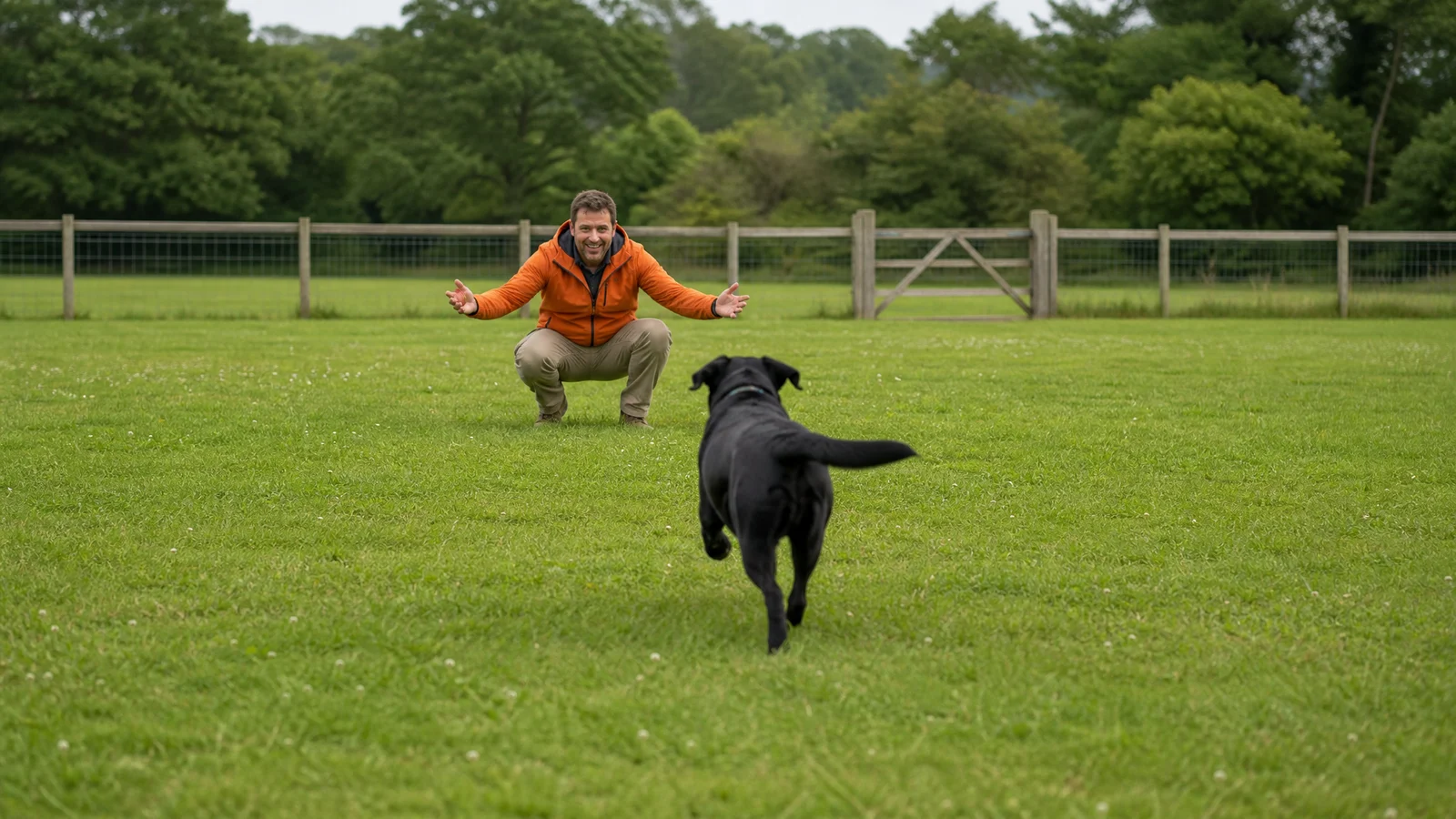 Running off at the parkTeaching a Labrador Retriever a Reliable Recall
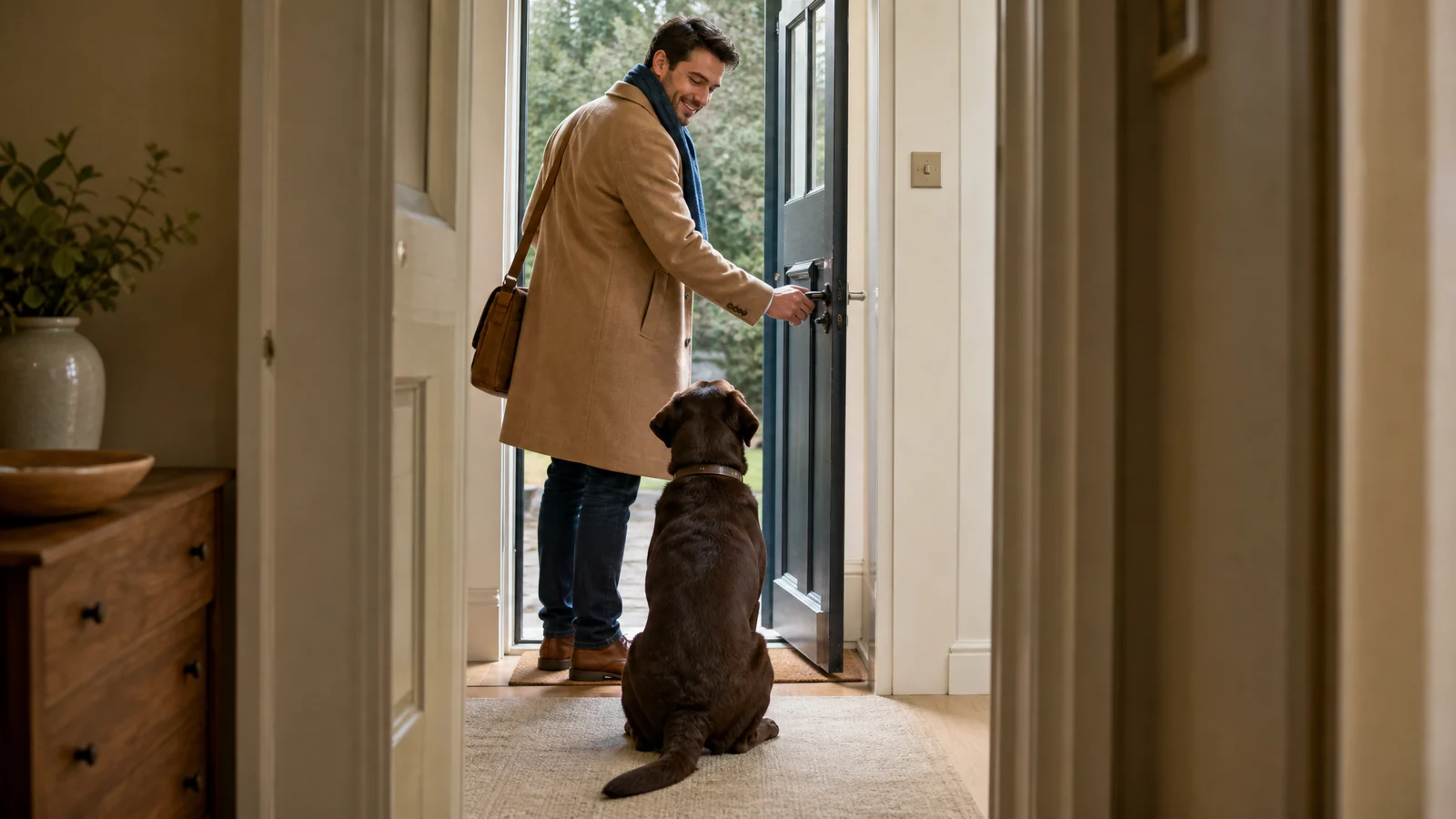 Training basicsLabrador Retriever Obedience Training: Sit, Stay and Come