 Labrador
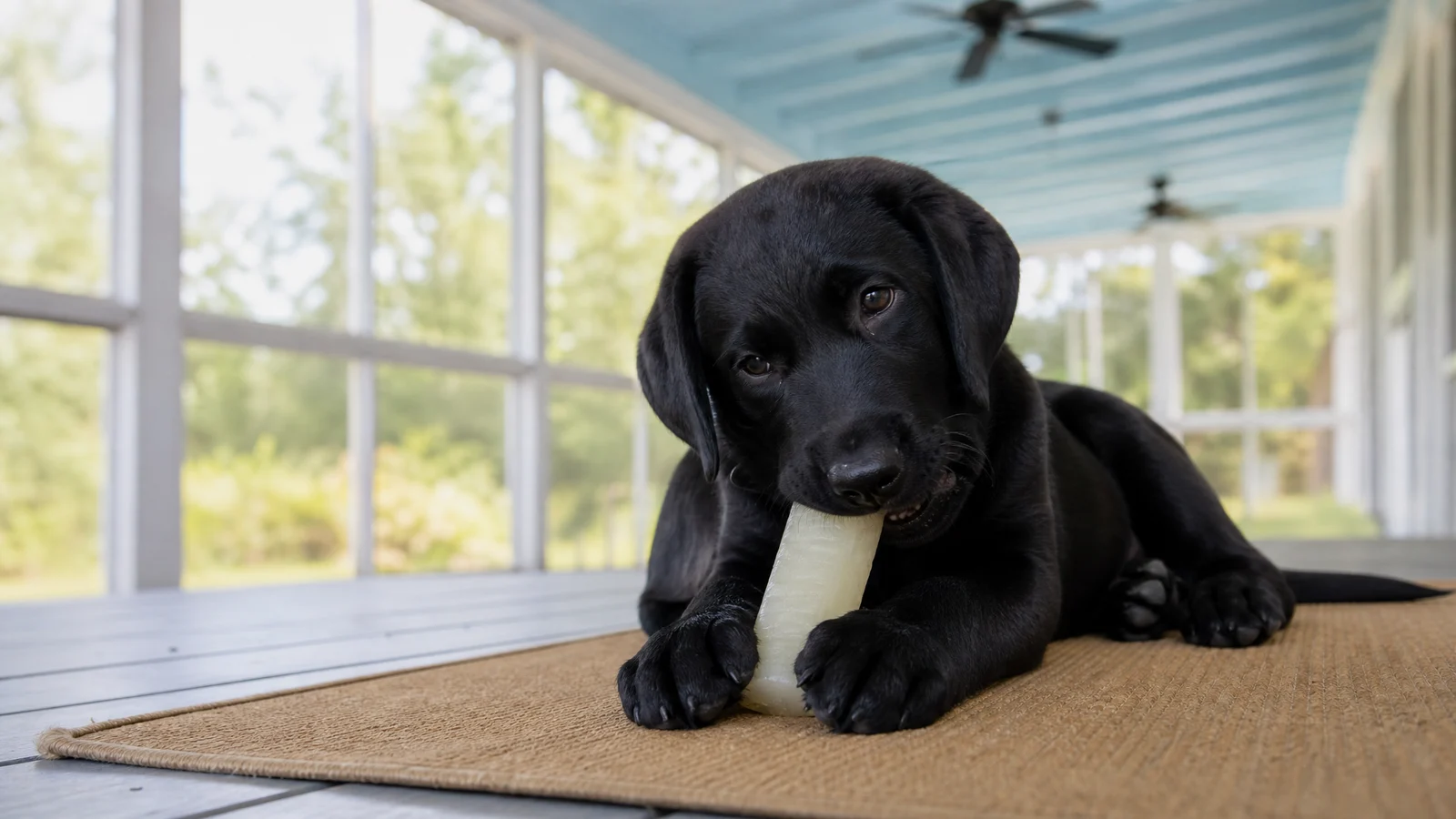
At three to four months, a Lab puppy's gums and manners get tested together. Labrador puppy teething is usually the reason your hands and sleeves suddenly look like toys.
The cause sits partly under the gums and partly in the breed. Adult teeth are pushing through, which makes chewing feel good, and a retriever's mouth is built for picking things up and carrying them to people. Put those together and the nearest person becomes the best chew toy in the house. The same weeks are also when a friendly Lab is still learning how the world works.
We wrote this for the weeks when sore gums, new manners and a very friendly puppy all arrive at once. You'll learn about the 13-week peak and the retriever's carry habit, the three moments a Lab's mouth lands on people, a chew kit that runs from the freezer to a carry toy and the trade lesson that keeps puppy obedience training going while the mouth is sore.
Why Labrador Puppy Teething Aims at People
Start with the calendar. For puppies in general, the adult set begins to come in somewhere between 12 and 16 weeks, and the gums may be a bit sore while it does. Biting tends to peak at about 13 weeks, and a full set of adult teeth is typically in place by 7 months of age. A Lab at three to four months sits in the thick of it, so the mouthiness is ordinary development rather than a flaw in your puppy.
What makes this stage feel different on a Lab is where the mouth points. A Lab is a retriever, so picking things up and bringing them to a person is part of the breed's design, and sore gums add fuel. The Labs we've trained tend to grab the nearest object the moment a visitor walks in, carry it straight over and start chewing once they arrive, which is how a carried dish towel becomes a chewed one.
So the real question is not whether your Lab will chew. It is what their mouth finds first.
Greetings, Play and Tired Evenings During Labrador Puppy Teething
Once the timeline is clear, it is easy to see why some grabs will land on a person, because people are what a Lab wants most. Puppies use their mouths to explore, to play and to learn how hard is too hard, so a few contacts a day are part of the deal.
What changes the odds is when the contact happens. Three moments account for most of it, and each one has its own fix.
Hands and Sleeves During Rough Play
When a game heats up, a puppy's mouth speeds up with it. Let the game pause as soon as you feel teeth on a hand, give everyone a few calm seconds and bring a toy to the puppy's mouth before play starts again. The pause shows that teeth stop the fun, and the toy shows what keeps it going. Mark the instant the mouth closes on the toy and pay right then. It rarely works the first time, because an excited mouth is hard to slow, so expect to repeat it.
Tired Evenings and the Overtired Mouth
In our sessions with Lab puppies at this age, the grabbiest stretch tends to arrive when the puppy is tired but still wound up, often after a big outing or a lively visit. Skip the extra game at that point and offer a chew kept just for winding down, in the pen or on a mat with you nearby. A puppy who gets to rest wakes up with a gentler mouth.
Puppy Socialization Before the Window Narrows
A Lab at this age is also near the end of the socialization window, since the critical period for socialization narrows at 12 weeks old and ends sometime between 12 and 18 weeks of age. A sore mouth is a reason to keep the meetings calm, not a reason to skip them.
The Lab puppies we meet at this age greet strangers with their whole body and then their mouth, so we keep each introduction brief, ask visitors to wait until all four paws are down and hand the puppy a chew once the hello is over. Our Labrador puppy socialization guide has the full plan, and the steps to stop a Labrador jumping cover the greeting itself.
Chew Choices for a Teething Labrador Retriever Puppy
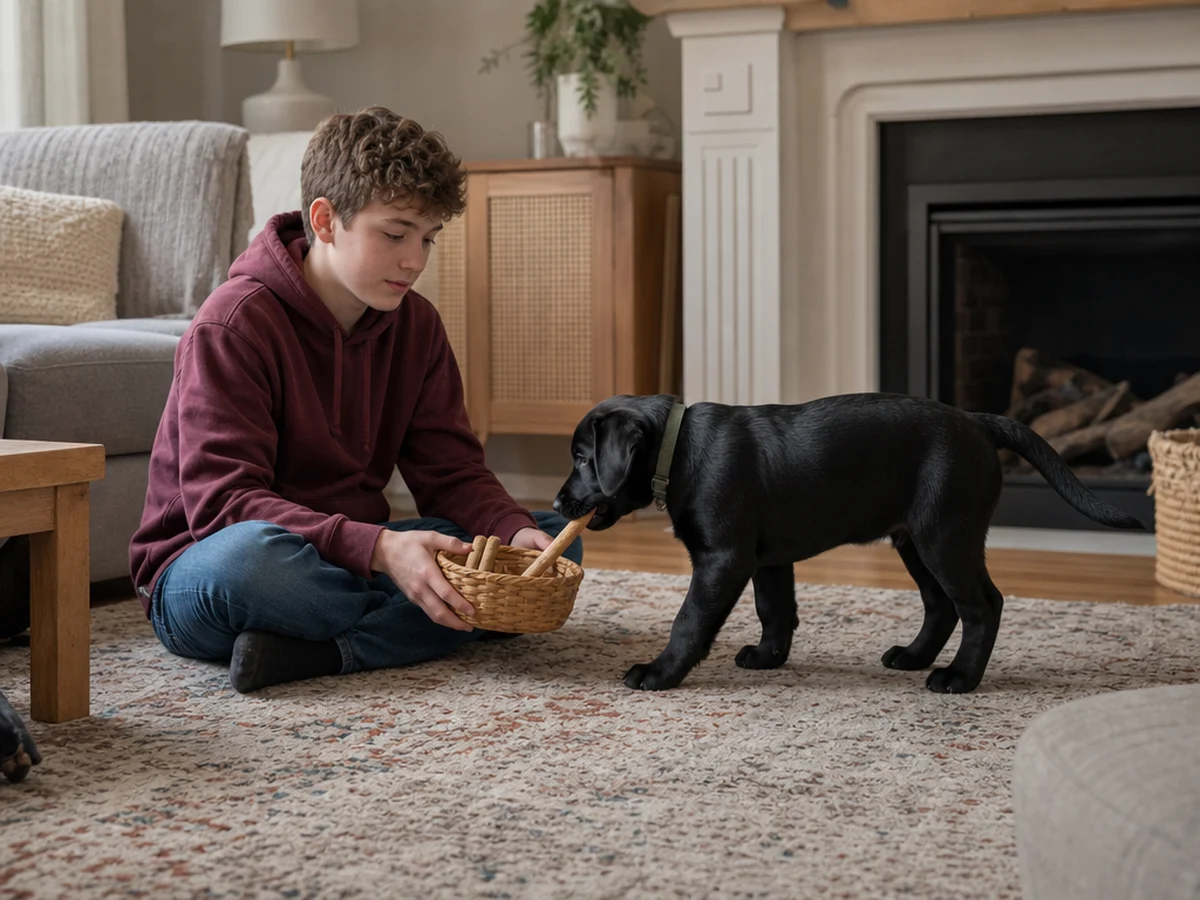
Those three moments are where the chew basket earns its place, and the part you control is what sits within reach. Keep a frozen rubber toy ready, since freezing a rubber toy is the easy way to get cold rubber that soothes their gums, and supervise so no piece is chewed off and swallowed. Teething lasts about six months and usually brings some discomfort, which is why chewing makes sore gums feel better.
A Lab asks two things of a chew, relief for the gums and a job for the mouth. A good supply meets four Lab moments, namely sore gums, rough play, carrying to people and winding down.
- Something cold. Rubber that has spent time in the freezer takes the edge off sore gums, and handing it over at the first sign of grabbing gives your puppy relief and a better choice in one move.
- A soft rope or plush for rough moments that lives within arm's reach of the couch and the front door, so play never starts with your hands as the only toy in the room.
- A carry toy. Retrievers love to bring things, so keep one soft toy that is for carrying and handing over, and pay generously whenever it arrives in your hand instead of on your sleeve.
- A settle chew for downtime that only appears when your puppy is winding down in the pen or on a mat with you in the room, which teaches that chewing can mean rest as well as relief.
Handing the Chew Over Early
Hand the right item over before the grab, not after it, so the toy is the first answer and never a consolation prize. Bring up your puppy's mouth at their regular vet visits too, since the vet can check how the teeth are coming in.
Puppy Obedience Training Built Around the Trade
The carried, chewed object hands you the first lesson, so lessons do not have to wait for the last baby tooth. A Lab puppy is eager to please and learns fastest when the work is short, easy to win and paid right away.
The lesson the teething weeks teach best is giving things up. Every grab is a chance to rehearse a trade. Practice it when your puppy is calm, with a chew you chose, before you need it for a real grab.
- Offer the chew and let your puppy settle with it for a few moments.
- Show a treat at nose level without reaching for the chew, and say your trade word once as the mouth opens.
- Mark the open mouth, give the treat and hand the chew straight back, so letting go pays and never costs anything.
- Repeat with a slightly better chew, then a household object you do not mind losing, and move on to a real grab only when the trade goes smoothly several times in a row.
Practiced in that order, the trade teaches your puppy that an open mouth is the quickest route to something better. The full steps for sit, wait and the rest live in our Labrador Retriever obedience training guide, and the month-by-month Labrador puppy training plan shows where the trade fits as your puppy grows.
Odd Corners of a Teething Labrador Retriever's Week
The trade routine handles most grabs. Four puzzles come from a Lab's habits more than from the teeth, and they involve appetite, company and the crate.
What if the chew beats the treat?
That is a good problem for a food-loving Lab, and it tells you the chew is the better pay. Trade for something better still, such as a favorite toy or a special treat, and give the chew back afterward so letting go never costs anything.
Can visitors hand my Lab treats?
Yes, and it makes a good practice round. Ask guests to hold the treat low and wait until your puppy's front paws are down, so a calm hello earns the food and a lunge earns nothing. A guest who cannot manage that can drop the treat on the floor instead.
What if my Lab chews the crate bars?
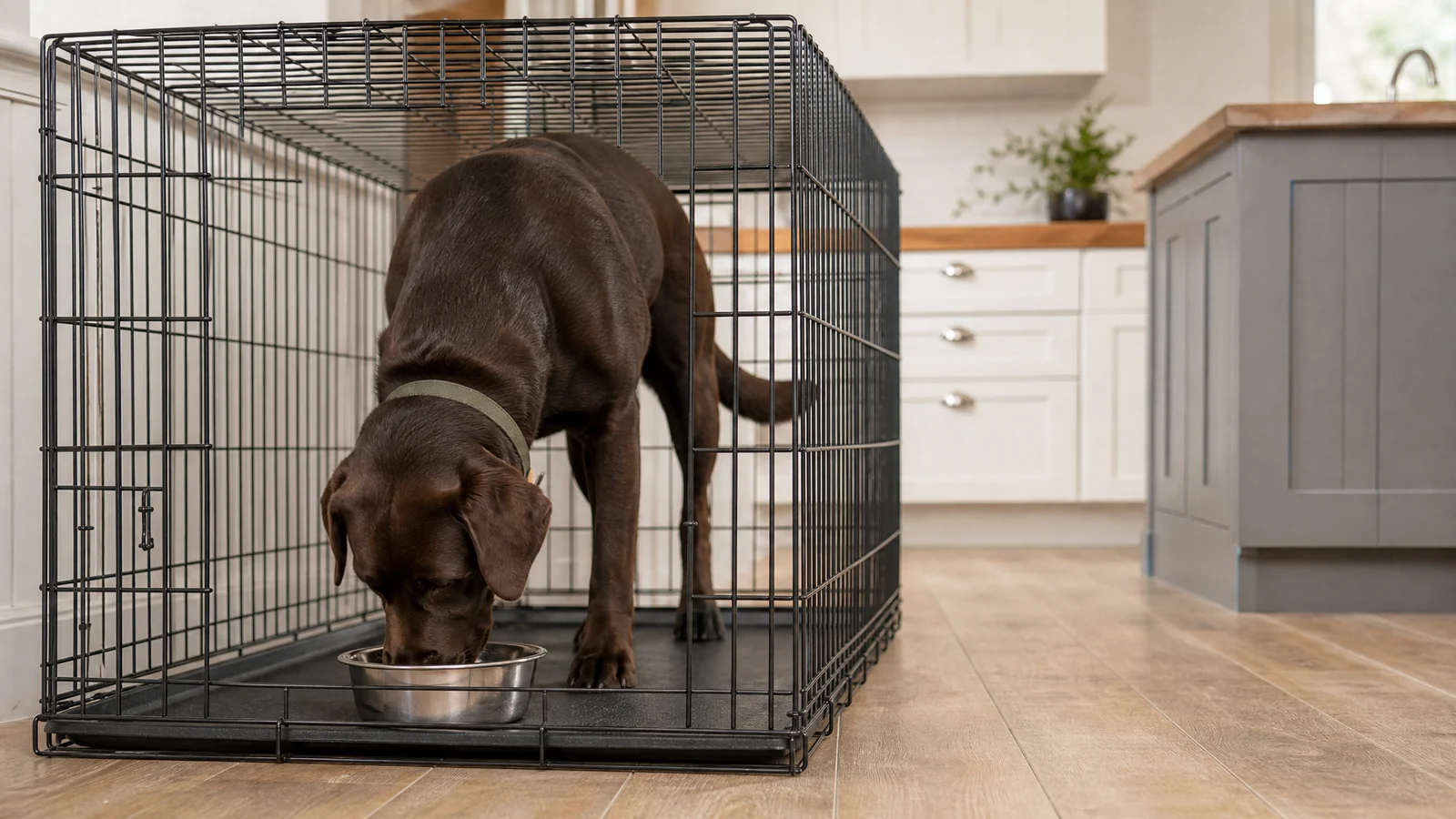
Look at the cause before the bars, because a bored, tired or uneasy puppy goes for them first. Offer a settle chew only while you are in the room, check that the crate is the right size and keep early rests short. If the chewing comes with distress, ask a trainer for help, and see our Labrador crate training guide for the setup.
Do chews matter once adult teeth are in?
Yes, though the reason changes from relief to habit. A Lab who has learned to trade and to choose a chew has a routine that carries into the adult months, so keep the stash and the trade going after the teething is over.
Closing Thoughts on Offering the Chew First
Even after the last baby tooth, each grab is a small race between the toy and the sleeve, and the winner is usually whichever one reaches your puppy's mouth first. A Lab puppy moves fast, so the right answer has to be nearer, sooner and better than the wrong one.
Speed matters more than strictness here. A toy offered a second late is only a consolation prize, while the same toy offered early is simply the best idea in the room, and a puppy who finds that out often enough starts looking for it. When your Lab's mouth opens, be earlier than feels necessary.
 Puppy trainingLabrador Puppy 4 Months to 6 Months Training Guide
 Puppy trainingCrate Training a Labrador Retriever and Choosing the Right Crate Size
 Exercise and jobsHow Much Exercise Does a Labrador Retriever Need?