 Labrador
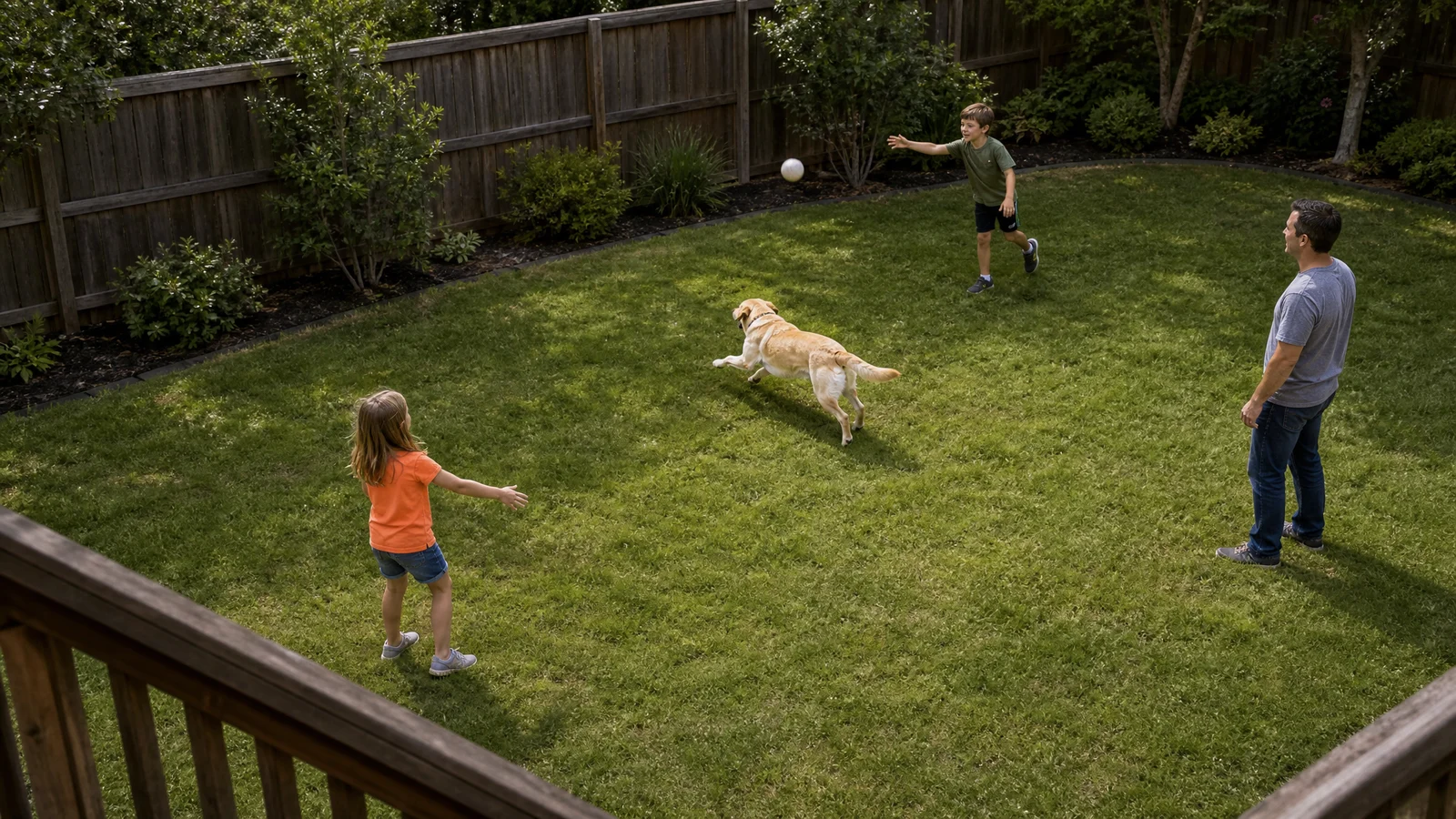
Your toddler gets bumped, a sandwich vanishes, a game turns rough, and you have to sort out what happened. Nobody means any harm. A glad Lab arrives at a child's level at full speed, with a mouth that wants something to carry and plenty of strength behind both. Labs are famously friendly, and that is exactly what makes a Labrador Retriever with kids in the house a training project instead of a given.
The fix is not complicated. It means training the dog first, coaching the kids second and keeping an adult close enough to step in.
You'll learn why a Lab's size and enthusiasm matter more than any worry about temper, which basic skills to build before the children join in, how to set up play, snacks and rest, and what to do when visitors or a growl change the mood.
Why a Labrador Retriever With Kids Needs More Than Temperament
AKC's family guidance puts the tension in a single line: Labs are "patient with kids, but their excitable nature may be better suited for families with older children." Patience and excitement live in the same dog, so we plan around collisions as much as around temper. These four are worth planning for:
- The Welcome Knock-Down: A strong dog hurrying to greet a small child can flatten them without any bad intent, and puppies jump up for the same reason, which is why a trained greeting comes first in this plan.
- The grab is a retriever's habit. Labs are retrievers, and retrievers pick things up, so a toy, a mitten or a snack in a child's hand reads as an invitation, with small fingers close to that mouth.
- Snacks at child height: Food in a small hand sits right at nose level for a Lab, so every cracker becomes a manners test the child never agreed to take.
- The chase begins whenever a child runs, because a running child looks like a game, and an excited dog may follow, jump up or nip at heels before anyone has said a word.
All four come from size, speed and enthusiasm rather than ill will, which makes them very trainable, because you are teaching a keen dog where to put their energy. They also mean an adult belongs in each of these moments for a good while yet, so the training starts with the dog and not with the children.
Labrador Training Basics to Settle Before the Kids Join In
Each of those collisions begins with the dog, which is why, as Lab people, we put the dog's own skills ahead of any job for the children. Three skills do most of the work, and each one fits into short, rewarded sessions with ordinary treats before a single child is asked to take part.
A Sit That Beats the Jump
Greeting is where most knock-downs happen, so teach a sit that earns the hello. Ask for the sit while the visitor or child is still a few steps away, pay low so the nose stays down, and let the greeting itself be the second reward. A Lab who learns that sitting makes people come closer stops needing to launch at them. The full method is in our guide to Lab jumping on people, and every sit you pay for before a greeting makes the next one easier.
A Settle Spot the Lab Chooses
A settle spot gives your Lab somewhere to go when the room gets lively. Pick a mat or bed, reward your Lab for lying down on it, then pay again for staying there while you move around, and add the sounds of family life a little at a time. Nobody sends the dog there as a punishment, because the spot only works if it feels like the best seat in the house. Our page on Lab impulse control training covers the longer build, including wait and focus.
An Easy Cue for Rough Moments
A child cannot give a cue the same way twice, so the adult owns this one. Teach an easy cue that means slow down, and use it when fetch or tug turns mouthy, saying it calmly and paying the instant all four feet are quiet. If the Lab keeps escalating, end the game without fuss and walk them to the settle spot.
Safe Play Rules for Kids and a Labrador Retriever
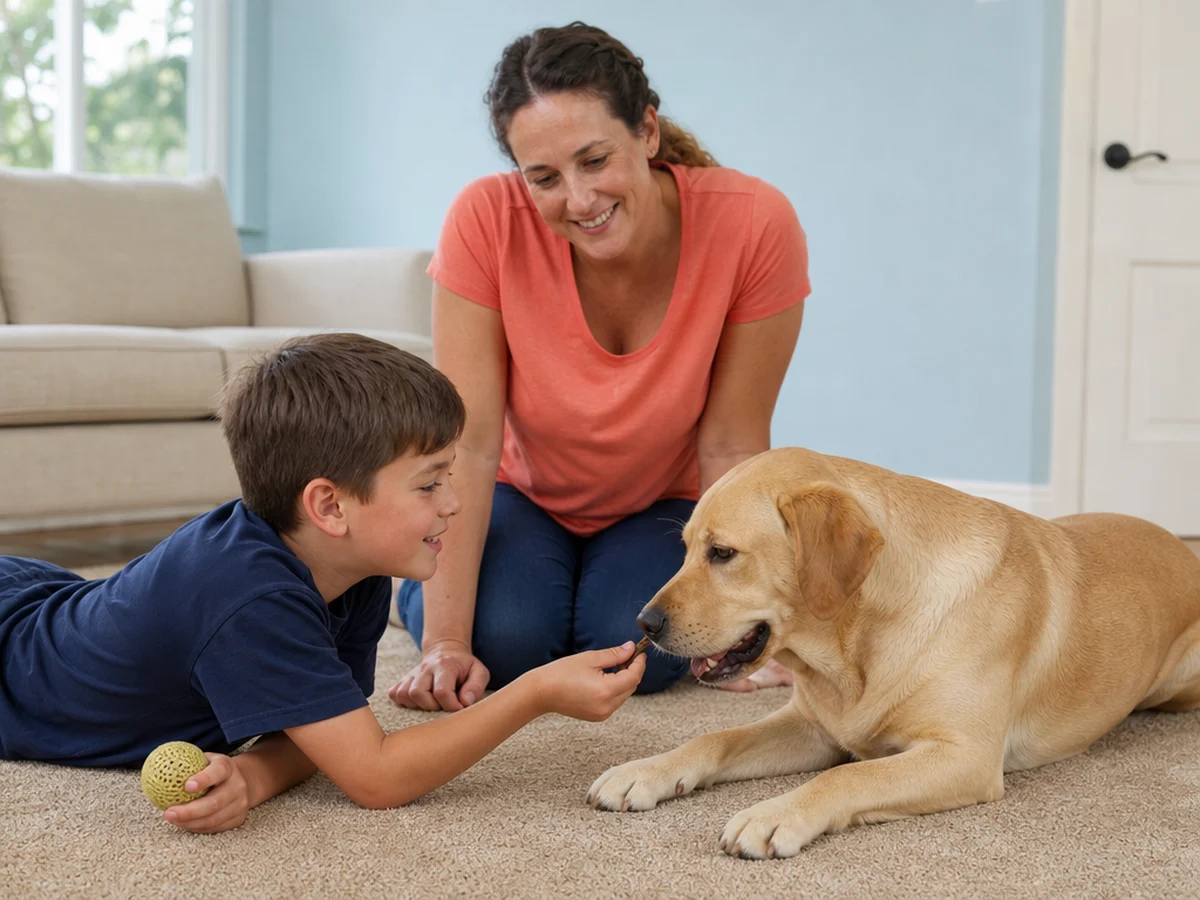
With those skills underway, play stops being a gamble and becomes something you can design. For a Lab, the design mostly concerns hands and mouths, and treats are the best example.
Children can be somewhat fearful or anxious when a dog goes for a treat in their hand, which can make them jerk the hand away at the last second. The dog may then jump up to get it, which may result in the child being knocked down. A flat, open palm instead of pinched fingers is the simple fix, with an adult's hand under the child's for the first few.
Games That Keep Everyone Safe
Structured games with a clear start and finish suit a Lab best, and fetch tops the list because the breed loves to retrieve. Teach a reliable drop it first, let an adult run the early rounds, and hand the throwing job to a child only when the Lab brings the toy back and lets go every time. Choose big, long toys, so a keen mouth lands on the toy and not on small fingers.
Quiet shared time counts too. Older kids can help with training sessions, using the same treats and the same calm voice you do, or fill a treat puzzle for the Lab to work on.
Games to Rule Out
Some games teach children habits that are unsafe with any dog, and a big, bouncy Lab raises the stakes. Wrestling and ear pulling, along with pony rides, fur grabbing and teasing, teach a child unsafe ways to treat a dog, so these stay off the menu from the first day:
- Wrestling or roughhousing on the floor, because a Lab's size and enthusiasm turn a tumble into a pile-on.
- Ear pulling, tail tugging, fur grabbing or climbing on the dog's back.
- Running games that send children sprinting with the Lab behind them, since the chase is exactly what a keen dog loves.
- Hugs around the neck and kisses on the face, which a dog may read as a threat, so teach a gentle scratch under the chin instead.
None of these rules is about distrusting the Lab. They protect a good-natured dog from games that ask too much of any dog, and they give children a clear list of what to do instead of a vague order to be gentle.
Safe Roles for Kids From Toddlers to Teens
Children are not one group, and the Wisconsin Humane Society separates them by age: young children naturally lack impulse control and the ability to follow directions, so their relationship with the dog should be primarily hands-off, while children of about five and up can start learning dog body language.
| Age group | What the child can do | What the adult does |
|---|---|---|
| Toddlers and preschoolers | Share a room with the Lab, watch from behind a gate and pet a stuffed toy that looks like the dog | Stays within arm's reach, redirects the child unless the Lab clearly asks for attention, and keeps a gate between the Lab and any child on the floor |
| School-age children | Learn the three-second pet: pet, pause, watch, and stop if the Lab walks away; help fill a treat puzzle | Supervises closely and ends the session at the first sign of unease, such as lip licking or yawning |
| Teenagers | Feed meals, practice sits and take walks with an adult nearby | Keeps coaching, because teens relax fast around a bouncy dog and still need reminders |
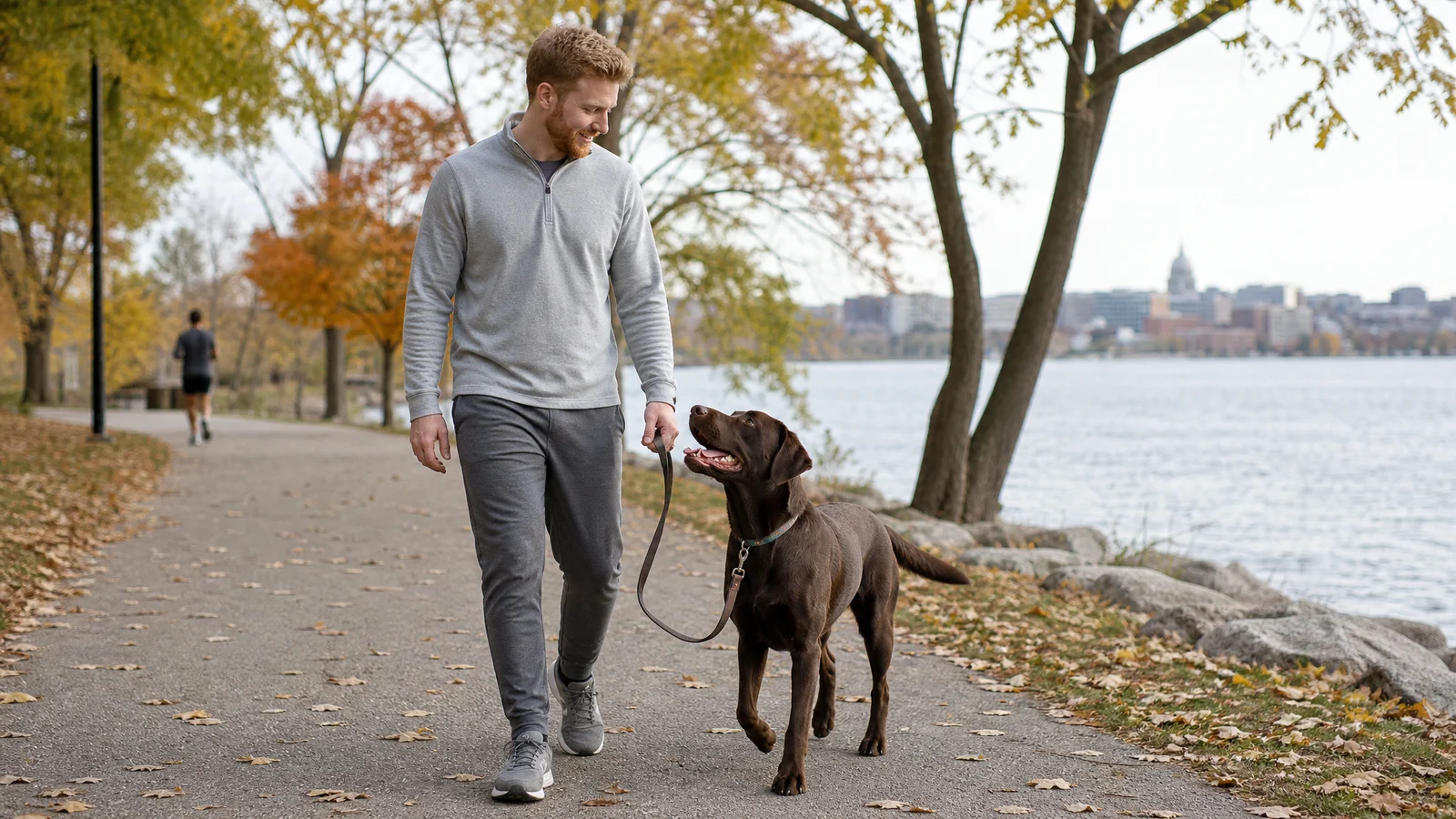
The table leaves one job with the adult at every age, and that job is the leash. A Lab pulls with real strength, and a child thrown off balance by a sudden lunge will neither enjoy the walk nor learn anything from it. Walk together, let the kids carry treats and give the cues, and keep your own hand on the leash until the dog and the child are both ready.
Meals, Chews and Naps Without Kids Around
Roles keep children involved, but even a busy household needs stretches when no child is part of anything, and for a Lab those stretches revolve around food and rest. Dogs can be possessive about food, toys and space, so the safest arrangement keeps all three out of a child's reach.
Meals and Chews in Their Own Space
Feed your Lab and hand out chews where children cannot go, whether that is behind a gate, in another room or inside a pen. The rule for every child, with no exceptions, is that nobody approaches a dog who is eating or chewing. That protects the child and lets the dog finish in peace. Food that lands on the floor at family meals is an invitation, so the mealtime spot also keeps the Lab away from the table. Our kitchen rules for Labs go through the routine.
Naps and the Crate Rule
Rest matters as much as meals. A sleeping dog is never to be woken, climbed on or hugged, and the bed or crate stays off limits to children for good. If you use a crate, it works best as the Lab's own den, which is why crate training a Lab comes first, and no child should climb in or reach through the door. If a Lab who used to accept handling suddenly dislikes being touched, talk to your vet before assuming it is only training, and keep up regular vet visits.
Kid Toys Versus Dog Toys
A Lab is a retriever, so a stray stuffed animal, glove or shoe is fair game. Give your Lab plenty of their own chews and toys, and keep the children's toys in bins or on shelves where a retrieving mouth cannot reach them. Skip old socks, retired shoes and worn-out kid toys as chew toys, because a dog cannot tell a retired item from the real thing. If the Lab gets hold of a child's toy anyway, call them to you calmly and pay for letting go.
Visitors, Growls and Loud Afternoons in a Labrador Retriever Home
Calm routines get tested the day another child walks in or the volume in the house climbs. Visitors, noise and the occasional growl all follow one idea: the Lab's own space comes first, and the adult makes the call early.
Labrador Socialization Training for Visiting Kids
A friendly Lab wants to meet every guest, and visiting children are the hardest test because they do not know your rules. Socialization here means calm, rewarded contact at the dog's own pace, not a forced meet-and-greet. Let the Lab settle first, ask the visiting child to stand still so the dog can approach, and never hold a dog in place for petting. When the Lab walks away, the greeting ends. Our guide to Lab puppy socialization covers the wider method.
When the House Gets Loud
Energy spreads fast in a room full of children, and an excitable Lab picks it up quickly. When the volume climbs, move your Lab to the settle spot with a chew before anything goes wrong, and bring them back once the room has quieted down. Acting early is kinder than waiting for a jump, a nip or a growl, and it keeps good memories attached to the children.
What to Do After a Growl
Labs most often growl over something held, such as a sock, a cracker, a chew or the crate. The growl is the dog saying that something is wrong, so separate the dog and the child calmly instead of scolding. Scolding a growl teaches a Lab to hide the warning, and the next sign may be a snap.
Then fix what led to it with this page's own tools: gated meals, the settle spot and the trade. We tell families to bring in a credentialed trainer who uses rewards if growling repeats, if food or toys are involved, or if a snap or bite ever happens. Keep them apart until you have a plan.
Kids and a Lab Trade Instead of Taking
Most of the trouble that ends in a growl starts over something held in a mouth or in a hand. Labs are retrievers, so a sock, a mitten or half a cracker is as good as any toy, and children are just as sure that what belongs to them should stay theirs.
The habit that serves both is a trade. Nobody pries, grabs or chases anything out of anyone's grip, and everybody gets something good for letting go. Your Lab learns that dropping an item makes a treat appear, and the kids learn to find an adult, who does the trading, instead of reaching for the dog's mouth.
Teach the habit once and it covers socks, snacks, stuffed animals and whatever next week brings. A Lab who trades and a child who asks already have a plan for the rest.
 BehaviorReactive Labrador Training for Calmer Walks Past Dogs
 Puppy trainingLabrador Teenage Phase Training From 6 to 12 Months
 Puppy trainingLabrador Puppy Teething at 3 to 4 Months