 Labrador
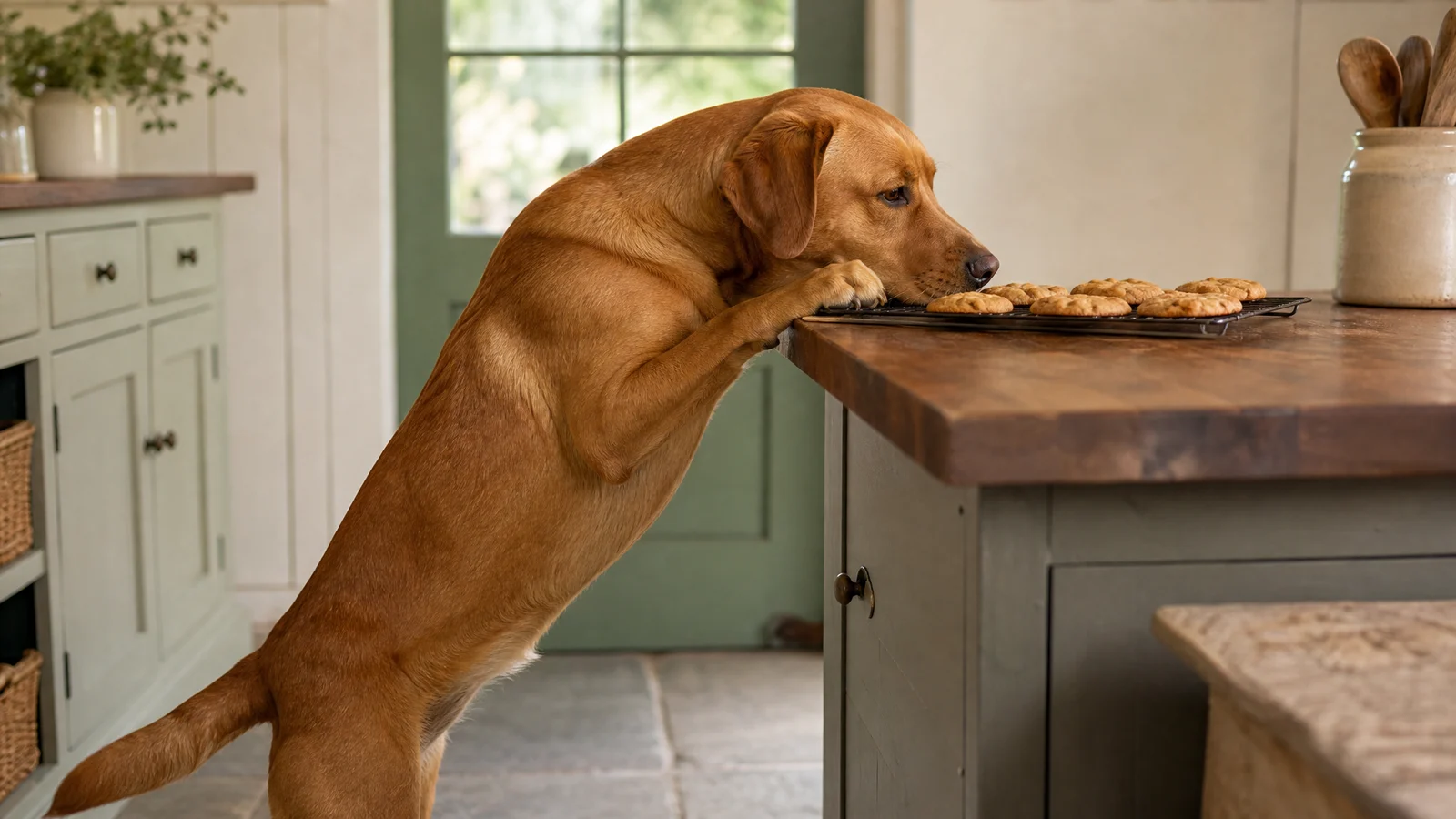
An empty kitchen becomes a worksite the moment groceries arrive, a cutting board comes out and people cross paths with hot dishes. A Labrador Retriever does not need access to every counter.
One rewarding reach during that busy shift can make the route worth checking again. The problem grows through access, not a lack of household rules spoken after the food is gone.
This guide treats counter surfing as kitchen traffic control. We will assign zones, open and close each cooking shift, reward a floor-level station, rehearse dropped-food emergencies and audit the workstation that keeps paying. The kitchen becomes predictable because adults manage access before food appears. The opening checks, closing checks and workstation audit divide that job into moments a household can actually repeat.
Treat Labrador Retriever Counter Surfing as Kitchen Traffic
Draw three zones. The work zone contains counters, stove, sink and waste. The dog zone is a mat or gated area outside reaching distance. The transit zone is the path people use for the refrigerator, table and doors. These zones should not overlap.
Mark the dog zone with a mat color or floor landmark that remains visible when people move. A station hidden behind grocery bags or chairs cannot guide the dog. Keep the route to it clear before the shift starts.
Measure success by feet staying on the floor and the dog remaining outside the work zone. Do not wait for paws to touch the counter before responding. The teachable moment is the approach path, while the dog can still turn toward the station.
The AKC Labrador Retriever standard describes a kindly, outgoing and tractable dog who is eager to please. Trainability supports a clear kitchen job, but it does not make exposed food less reinforcing.
Keep regular veterinary visits current and discuss appetite or weight changes. A sudden increase in hunger, scavenging or thirst may need medical assessment. Use measured daily food according to veterinary guidance rather than adding untracked kitchen calories.
Veterinary note: Appetite and weight can be affected by health and diet. This article cannot diagnose a cause or prescribe feeding. Ask the veterinarian about sudden changes and an appropriate daily plan.
Open the Counter Surfing Shift With Clear Zones
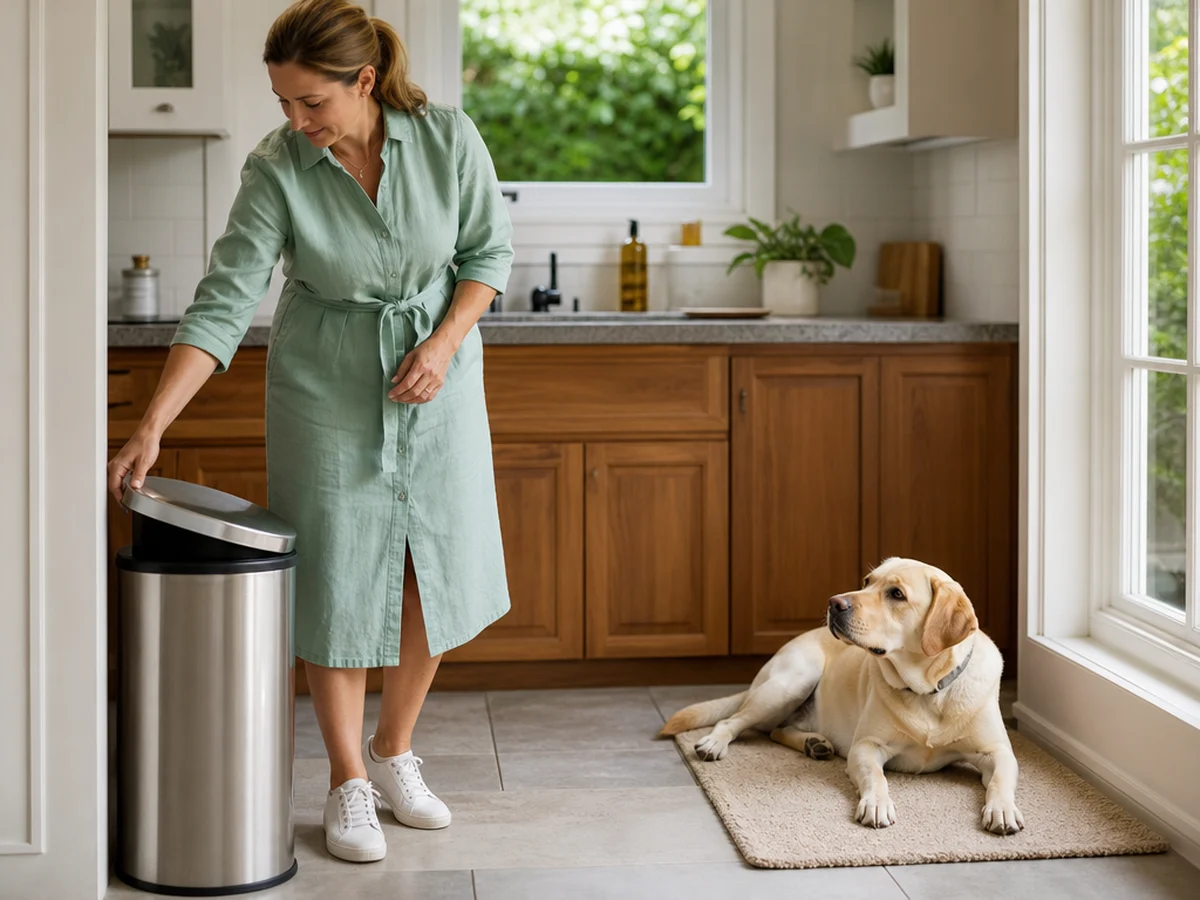
Before food leaves storage, run an opening check. Close the waste container, clear counter edges, move stools and secure any doorway used for deliveries. Put rewards at the dog station so nobody needs to cross the room while cooking.
| Shift point | Adult check | Dog's job | Release condition |
|---|---|---|---|
| Groceries arrive | Bags stay behind a barrier | Wait at station with safe activity | Food is stored and floor checked |
| Meal preparation | Edges and transit path stay clear | Settle outside work zone | Hot and sharp items are put away |
| Serving | One adult controls the transit route | Remain on station | Dishes reach table |
| Cleanup | Waste and leftovers are secured | Continue floor-level activity | Final floor sweep is complete |
Opening Check for a Quiet Meal
Walk the kitchen without the dog. Look for bread, fruit, wrappers and pans within reach. Check the sink and any island approached from furniture. Counter surfing often survives because one side of the room is forgotten.
Run a reach audit from the dog's height. A Labrador Retriever can stretch farther than a standing person expects, especially from a stool or open dishwasher. Remove launch points and close the appliance before the dog enters.
Opening Check for Visitors
Use a gate or closed door before guests carry food inside. Tell visitors where bags belong. The adult responsible for the dog should not also manage a hot tray or open exterior door.
The UK Kennel Club lists substantial daily exercise needs for the Labrador Retriever. Meet physical and mental needs across the day, but do not use exercise as the only counter-surfing safeguard. Food still requires physical control.
Pay a Floor-Level Labrador Retriever Kitchen Job
Teach the station outside meal preparation first. Place a mat several feet from the kitchen, reward one step onto it and release. Build duration in seconds while the room remains quiet.
Build the picture in small slices. Touch an empty cabinet handle, reward the dog on the mat and step away. Later, open the door a few inches before returning to the station. Walk to the refrigerator without opening it. Carry an empty plate. Return to the station to deliver rewards low between the dog's paws.
Use part of the measured daily food when appropriate. Place rewards on the mat instead of feeding from the counter edge. The reward location teaches where food arrives.
If the dog leaves, block access to the work zone and reset at an easier level. Avoid calling repeatedly from beside exposed food. A gate can preserve the correct boundary while the station skill develops.
Practice a second station outside the dining area. Some homes need one mat for preparation and another for meals. Teach each location separately before expecting the dog to follow a cue through a crowded transition.
The site's how to train impulse control guide covers waiting and settling broadly. This kitchen job adds room geometry, adult roles and food-safety constraints.
Run Counter Surfing Meal Preparation Safely
Assign one adult as the shift lead. That person checks the gate, station and floor while another handles food. In a one-person household, secure the dog before using knives, hot pans or ingredients unsafe for dogs.
Reward at irregular but frequent intervals while the dog is learning. Calmly walk to the station, place food low and return to work. Do not toss from the counter because airborne food can draw the dog toward the work zone.
Use a safe food puzzle only after confirming the dog does not break or swallow it. The item belongs at the station and ends before the dog begins roaming. Inspect it after the shift.
If barking or pawing begins, check whether the setup is too difficult. Increase distance, shorten the shift or use a barrier with a calm activity. PDSA's communication ladder reminds handlers to notice early discomfort and allow space.
Do not reward by handing food from the cutting board. Use the prepared station supply. That distinction keeps human food handling separate from the dog's training allocation.
End the station while the dog is still successful. Walk over, deliver the final reward and guide the dog to water, rest or an outdoor break. A clear close prevents wandering from becoming the unofficial release.
Close the Kitchen Shift Without Counter Surfing
The shift is not over when people begin eating. Cover leftovers, move dishes away from edges, secure waste and wipe spills. Keep the dog zone active until the floor and transit path are clear.
Closing Check After Cooking
Scan under cabinets, beside the stove and around the table. Pick up dropped food before releasing the dog. Some ingredients and packaging can be dangerous even in small amounts.
Closing Check Before Leaving Home
Return counters to neutral. Put bread, fruit, cooling pans and food-filled bags behind closed storage. Move chairs away from islands. Close the kitchen if the dog has a history of searching during absences.
Release from the station with a clear word and guide the dog to a non-kitchen activity. A release does not grant permission to inspect counters. If food remains out, keep the barrier closed.
Assign leftovers a destination before cooking begins. Containers, refrigerator space and waste bags should be ready. Closing slows down when adults must search for storage, and that delay creates the most tempting counter.
Rehearse Labrador Retriever Dropped-Food Emergencies
Practice with ordinary dog food in a clear room, not with unsafe ingredients. Keep the dog on the station, drop one piece inside the work zone and immediately cover it with a container or foot while another reward appears on the mat.
- Say one emergency cue only after the cover is in place.
- Reward the dog for moving toward the station.
- Pick up the dropped piece before releasing.
- Repeat with one piece and generous distance.
- Use a gate during real cooking regardless of practice success.
Gradually add harmless movement such as an empty utensil falling. Do not stage spills of hot, sharp or toxic material. The emergency drill supports adult action but never replaces physical prevention.
Every family member should know which items require an immediate veterinary or poison-control call. Keep the relevant numbers accessible. Do not search for a training solution while the dog may have eaten something dangerous.
Audit Counter Surfing by Workstation
Divide the kitchen into stations: sink, island, stove, pantry and table. Record approaches, successful mat stays and any food found. One station may be paying the entire behavior.
Add columns for day, shift lead and barrier status. The pattern may follow one meal or one adult rather than one counter. The audit should reveal the household condition that makes access possible.
Photograph the neutral workstation after closing. The image gives every adult the same target for clear edges, stored stools and secured waste, which makes tomorrow's opening check faster.
Check adult habits as carefully as the dog. A cutting board left near an edge, a child feeding from the table or an open waste bin can undo many quiet rehearsals. Fix the workstation before making the station cue harder.
Review the audit weekly. Progress appears as fewer approaches, easier station settling and predictable opening checks. Do not test by leaving food unattended. That only restores the old reward.
Keep the successful zone map visible for the next shift. Update it when a new traffic route or food station changes the kitchen picture.
The complete how to train a Labrador Retriever guide can support cues outside the kitchen. Keep this audit centered on the worksite and its shift rules.
Get Help for Dangerous Counter Surfing
Contact a veterinarian promptly if the dog may have eaten a toxic ingredient, medication, packaging, bones or another hazardous item. Follow professional instructions rather than inducing vomiting independently.
Ask a credentialed trainer who works through rewards for help when food searching involves guarding, bites, panic behind barriers or safety zones the family cannot maintain. Share the workstation audit and kitchen layout.
Today, close the kitchen and run one opening check before food appears. Mark the work, dog and transit zones, then practice a thirty-second station stay with an empty counter. Counter surfing loses its payoff when every shift begins with access control and food reliably arrives at floor level.
 Exercise and jobsBall-Crazy Labrador Retrievers: Fetch Rules and an Off Switch
 BehaviorWhen Labrador Retriever Play Gets Too Rough at the Dog Park
 Exercise and jobsScent Games and Tracking for a Labrador Retriever