 Labrador
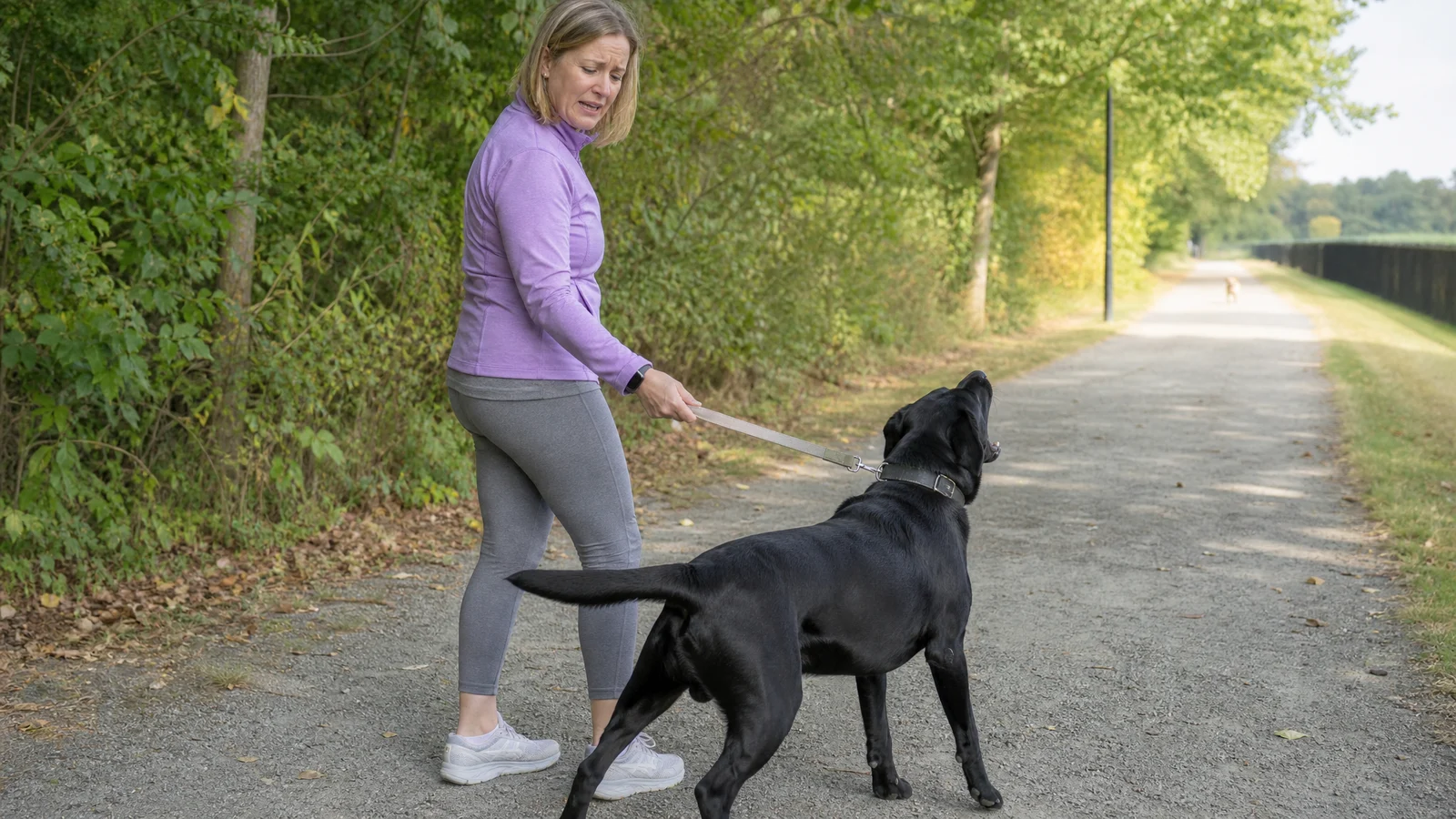
A sociable Labrador Retriever can be overwhelmed by a short leash and a dog walking closer, and the lunge is the loudest way they have to say so, whether the feeling is worry or wanting. Reactive Labrador training starts with a kinder reading of that scene. A Lab is supposed to love every dog on the sidewalk, so one who barks at the end of the leash can leave you embarrassed and a little baffled.
This guide covers safer walks first, then the worry or wanting behind a Lab's lunge, the distance where a food-loving Lab still eats, and counter-conditioning session by session. All of it is reward-based.
Pulling, yelling and punishment have no place in the plan. Each step pays your Lab for a choice they are already close to making.
Reactive Labrador Training Begins With Safer Walks
Before any treat leaves your pouch, the walks themselves need to change. Every time your Lab rehearses a lunge at the same corner, the lunge gets a little more automatic, and you do not want the reaction to harden into habit while you are still learning the skills.
That does not mean giving up walks. Labs are exuberant, high-energy dogs who need lots of exercise every day, so the aim is to keep the exercise and remove the gauntlet.
Why the Dog Park Waits
For now the dog park is better skipped, since it puts your Lab among many dogs at once and leaves you no say over distance, and our guide to Lab play at the dog park will still be there when your dog is ready. Pick routes with long sight lines and quiet hours, so you see another dog well before they reach you and have room to turn without a scramble. Other owners cannot know your dog needs space, so you do the watching for both of you.
Where a Lab's Exercise Goes Meanwhile
A Lab with energy to burn is harder to train near anything exciting, so move some of the exercise to places without surprise dogs. A game of fetch in a fenced yard, a swim at an indoor pool where you can arrange a path without other dogs, and puzzle toys at home all tire the body and the brain without asking your Lab to hold it together near a trigger. Our page on the exercise a Lab needs helps you balance the day.
The work itself is tiring for a reactive dog, so build in an easy day now and then. A quiet day at home with a stuffed chew toy still counts as progress.
When a Dog Shows Up Anyway
Even careful routes produce surprises, and a rehearsed response beats an improvised one. When a dog appears closer than you planned, keep your own moves small and the same every time.
- As soon as you spot the dog, say a cheerful let's go in an easy voice.
- Turn away from the trigger, never into your Lab, and walk off in a new direction so your dog follows you without any redirected frustration.
- Keep walking until your Lab is calm again and no longer looking back at the other dog, then feed a few treats.
Rehearse the turn on quiet streets first so it feels automatic when it counts. Ordinary pulling is a separate skill, and our page on loose-leash walking for Labs covers it.
If a stranger asks whether your Lab is friendly, tell them your dog is in training and keep moving. Most people mean well, and a quick, friendly answer keeps the meeting short.
Worry and Wanting Behind Labrador Retriever Reactivity on Leash
In a breed bred to be kindly and outgoing, a lunge can look like a contradiction, and worry is one common root. Veterinary guidance from Cornell's veterinary college holds that a reactive dog is usually a fearful dog, that reactive dogs are not necessarily aggressive and that reactivity can still turn into aggression, which is why it deserves a real plan and not a hopeful wait.
Frustration is the other common root, since leash behaviors are often rooted in it. A Lab who loves to greet may see another dog, want the hello and be unable to reach it, so they bark and lunge, the example given by Best Friends Animal Society, and a greeting on leash might end in a scuffle as that frustration builds.
Whichever root is at work, one check comes first. Pain, discomfort or illness may sit behind leash reactivity in some cases, a possibility included in a veterinarian's overview of leash reactivity on PetMD.
Labs are stoic by nature and seldom whimper to be noticed, so a sudden change in how your dog reacts deserves a vet visit before any training plan. Keep regular vet visits on the calendar as well, so you always have a healthy baseline.
Reactive Labrador Training Starts Where Treats Still Work
With safer walks in place and any health question settled, the real work begins at a distance. Trainers call the point where reactions start the threshold, and a reliable sign of it is food, because a dog past threshold stops taking treats. For a food-loving Lab, that refusal is hard to miss.
Your first job is to find that distance, and your second is to respect it. It changes with the trigger, the day and how much your Lab has already seen, so expect to measure it more than once.
Run this test somewhere dogs pass in view but cannot reach you, with your Lab on a standard leash rather than a retractable one. Bring your best treats and plenty of them.
- Start farther back than seems necessary, so your Lab can see a dog but is unlikely to react.
- The moment your Lab spots a dog, before any barking, say a short marker word such as yes and start feeding, so the sight of the dog becomes the signal for food.
- Keep the treats coming in a steady stream until the dog is out of sight or you walk away, then stop.
- If your Lab eats eagerly, you are working outside threshold. If they stiffen, stare or refuse the food, you are too close, so add distance before the next try.
- Across your practice sessions, move closer only a few feet at a time, and go back to an easier distance whenever your Lab struggles.
The distance where your Lab last ate with ease is your working number, and everything in the next section builds on it. Write it down by trigger, since a jogger and a barking dog will rarely share the same number.
Treats That Suit a Lab's Appetite
Our trainers reach for food before toys with a Lab, because appetite is the most dependable motivator in the room and a tiny, tasty bite can be repeated many times in one session. Pick small, soft, high-value pieces, such as bits of cheese or hot dog, and keep them for this work so they stay exciting. A Lab will accept every bite offered, so count the treats against the day's meals.
Carry more than you think you need. Running out mid-pass is worse than a long session.
When Your Lab Stops Eating
A food-loving Lab who turns down a treat is giving you clear information, because the dog is too close, too stirred up or both. Add distance until the food works again, even if that means starting where the other dog looks tiny. A bad day is not a step backward, only a reminder that the number moves.
Counter-Conditioning a Reactive Labrador Retriever Session by Session
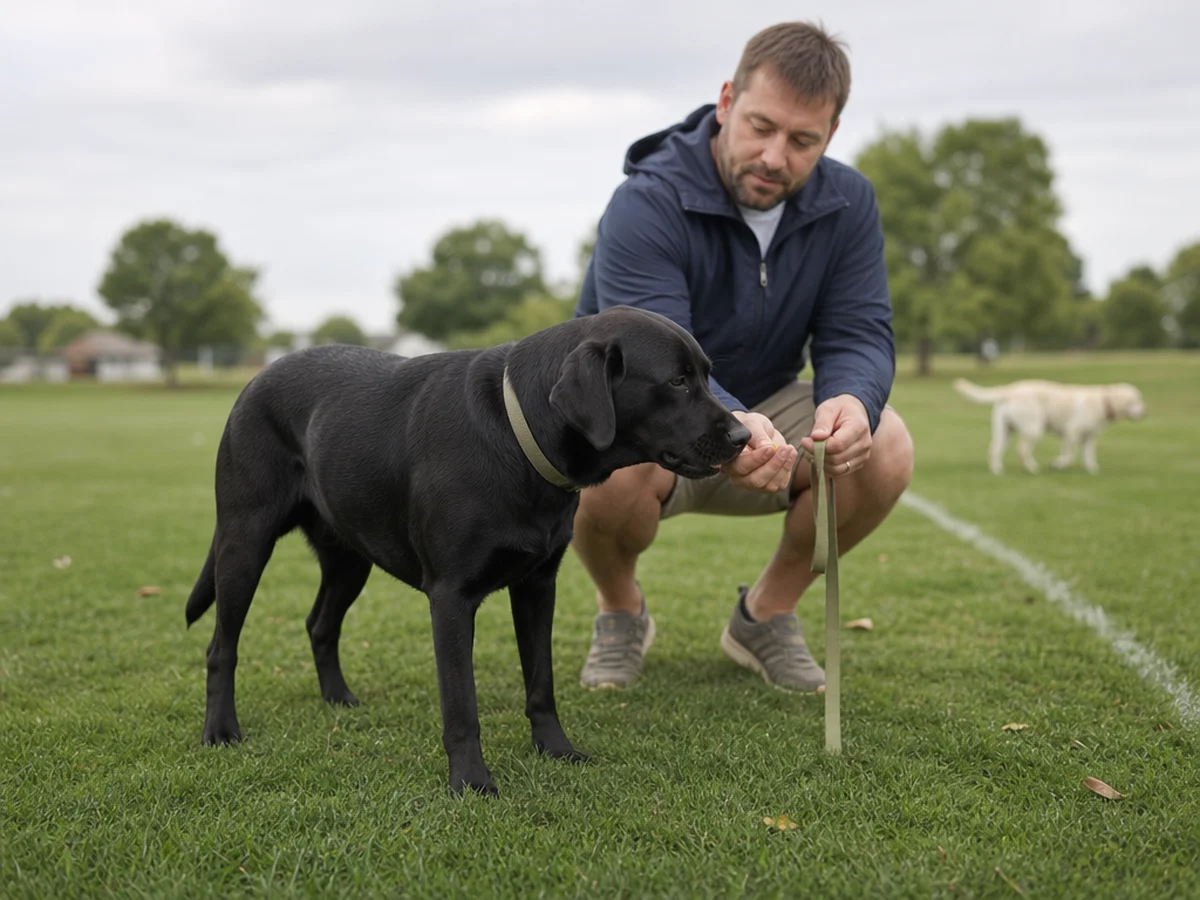
Few dogs make this work easier than a Lab, because food already means so much to them. Counter-conditioning uses that appetite to change what a passing dog predicts. Right now the sight of another dog may predict a tight leash, a rush of worry or wanting and a lunge, and the goal is to make it predict food and then calm.
It works because the pairing happens over and over below threshold, until a Lab who once braced at the sight of a dog turns to you for the treat instead. That is why the order of events matters so much in the stages below, and why patience beats speed.
Feed on the First Glance, Then Reward the Look
Stand at your working distance and wait for your Lab to notice a dog. The moment they see the dog, before any reaction, start feeding in a steady stream, and keep going until the dog passes or you move away. The sight comes first and the food second, every time.
Scattered treats give a Lab's nose a job, while treats from your hand keep your dog's eyes on you, so try both and keep whichever gets you the calmer dog. Move on only when your Lab is eating readily and looks loose and relaxed.
Once the feeding step goes smoothly, let your Lab look at the dog for longer. The moment they glance at the dog, say your marker word and offer a treat, then wait to see whether they turn back to you before the next treat. The trick is to pay the look, not the stare. When your Lab starts glancing at the dog and then back at you on their own, the picture is changing, and you can hold that distance a little longer before asking for more.
Move Closer a Few Feet at a Time
Move closer only a few feet at a time, and only after your Lab is comfortable at the current distance. If they start reacting, add distance until they can eat again, which tells you the step was too big and nothing worse.
It may take many weeks, and in some cases months, before your Lab can handle a close pass. Then practice in new places, with different people holding the leash and different kinds of dogs, so the skill holds up on a real sidewalk.
Snags That Slow Down Reactive Labrador Practice
Real walks wander away from the plan in predictable directions. These four situations sit between the steps above.
Should I scold my Lab when they lunge?
No. Scolding piles more worry or excitement onto a moment that already has plenty, and Fear Free's reactive-dog guidance warns that correcting a fearful dog can cause more anxiety. Turn away calmly, feed once your Lab has settled and save the learning for the next session.
Do I need a helper dog to start?
Not at first. Begin by watching real dogs from a distance at a spot where they pass but never approach, such as a pet store or vet clinic parking lot, and stay in your car for the first sessions if that feels easier. A friend with a calm dog becomes useful later, when you are ready to practice a planned pass.
A friend with a calm, well-mannered dog can help then. Ask them to walk on the far side of the street while you feed your Lab for staying quiet, and have them move a little closer when your dog stays calm or farther away when your dog stresses.
Does eating mean my Lab can move closer?
Not on its own, so check the body too. Look for loose, relaxed movement along with eager eating before you try a few feet closer, and hold your distance if your Lab stiffens or stares. With a food-loving breed, the body is the better gauge.
What if the other dog is the one barking?
A barking or lunging dog is the hardest version of the trigger, so treat it as a reason to add distance rather than a test. Early sessions go best with calm dogs who ignore your Lab, and you can work up through dogs who look, stare, pull and bark as your Lab gets steadier. On a real walk, use the same cheerful turn and leave the street.
Why a Quick-Learning Lab Needs Slow Steps
Of everything above, patience is the habit a Lab makes hardest, because early progress arrives so quickly. Within a short stretch of practice your dog may be eating happily at a distance that stopped them cold last week, and it is tempting to read that as permission to skip ahead.
Resist the shortcut. Labs are eager, quick learners, so a good day can fool you, and moving too fast sets your dog up to react, which works against everything you have built. Hold each distance a little longer than feels necessary, and move in the smallest steps you can manage. The Lab who passes a busy sidewalk calmly will have earned it at easy distances first.
A trainer who can watch you work will see whether your Lab is ready for a shorter distance before you do. Our homepage takes your ZIP code and lists local trainers who coach Labrador Retrievers with rewards, which is a quick way to start looking.
 Puppy trainingLabrador Teenage Phase Training From 6 to 12 Months
 Puppy trainingLabrador Puppy Teething at 3 to 4 Months
 Puppy trainingLabrador Puppy 4 Months to 6 Months Training Guide