 Labrador
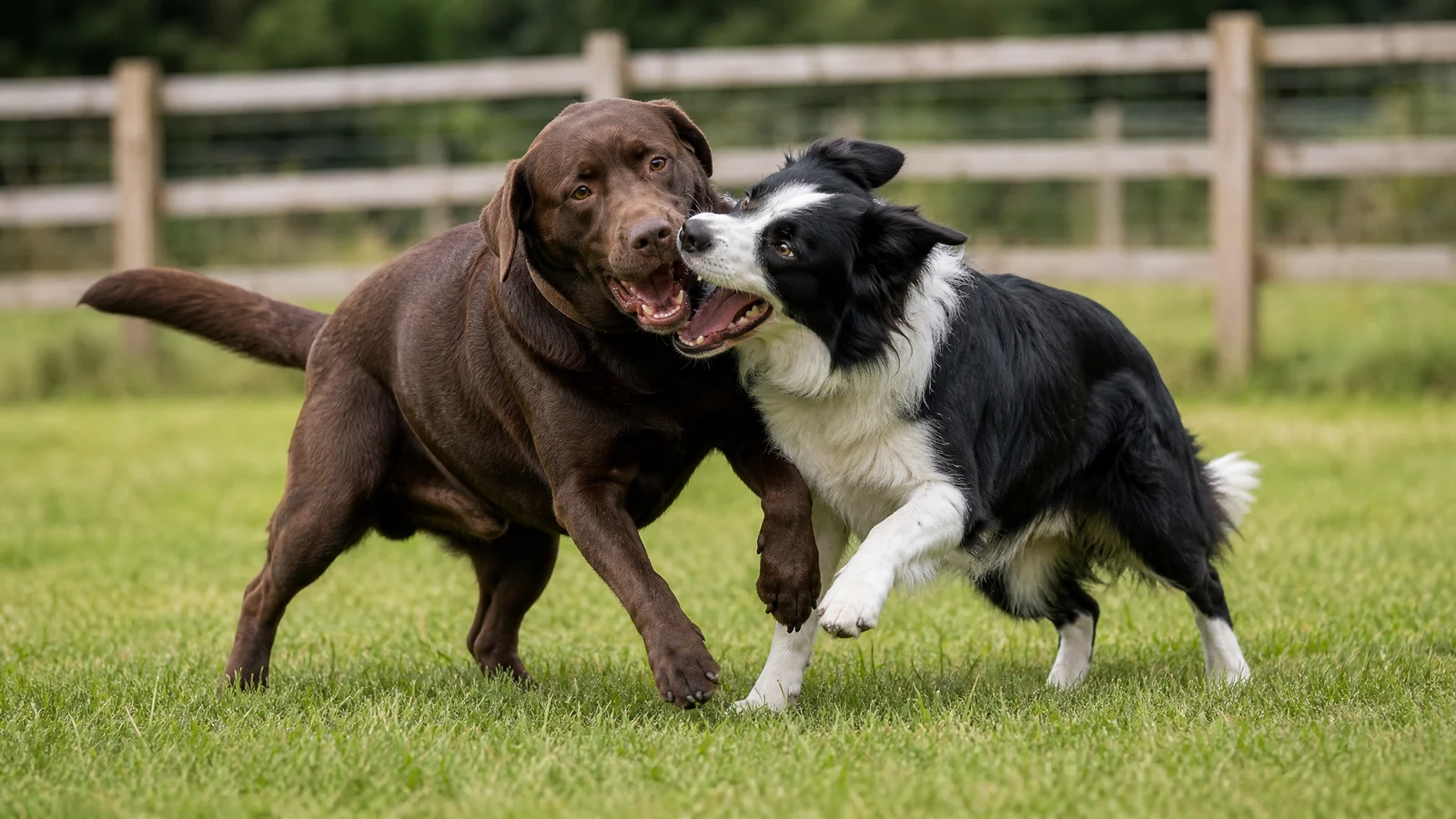
Two dogs may wrestle noisily and remain balanced, while a quiet chase can become one-sided. A good referee watches choice: both dogs return, roles change and either dog can pause. Noise and speed matter less than consent, recovery and the ability to leave.
This guide covers Labrador Retriever rough play with dogs as a referee's field guide. We will read consent, call short timeouts, choose compatible partners, leave before arousal spikes and review the session afterward. The goal is not maximum play. It is safe, mutual play with a reliable exit.
Age does not produce this judgment on a fixed birthday. Young dogs often need more frequent pauses, while an adult with pain or a poor match may need less play, not more intervention. The handler's timeline is built from what happens before, during and after each encounter.
Referee Labrador Retriever Rough Play With Dogs
Stand close enough to act but outside the play path. Keep gates in view and avoid clustering with people where dogs can crash into legs. Each handler remains responsible for their own dog.
The AKC standard treats stable temperament as a breed hallmark. That ideal does not guarantee compatibility with every dog. Age, play style, pain, space and experience all shape an encounter.
Keep regular veterinary visits current. Pain can reduce tolerance, and growing dogs may need activity limits. Stop for limping, repeated yelping, injury, disorientation or unusual fatigue.
Choose an exit before unclipping a leash. If recall is uncertain or the area is crowded, skip group play. The RSPCA's recall guidance supports keeping safety control while a response is still developing.
Warm Up Before Labrador Retriever Play With Other Dogs
Meet outside the play space and walk in the same direction with generous distance. Each dog should be able to move, sniff and respond to its own handler without pulling toward the other. Parallel movement provides information without forcing a face-to-face greeting.
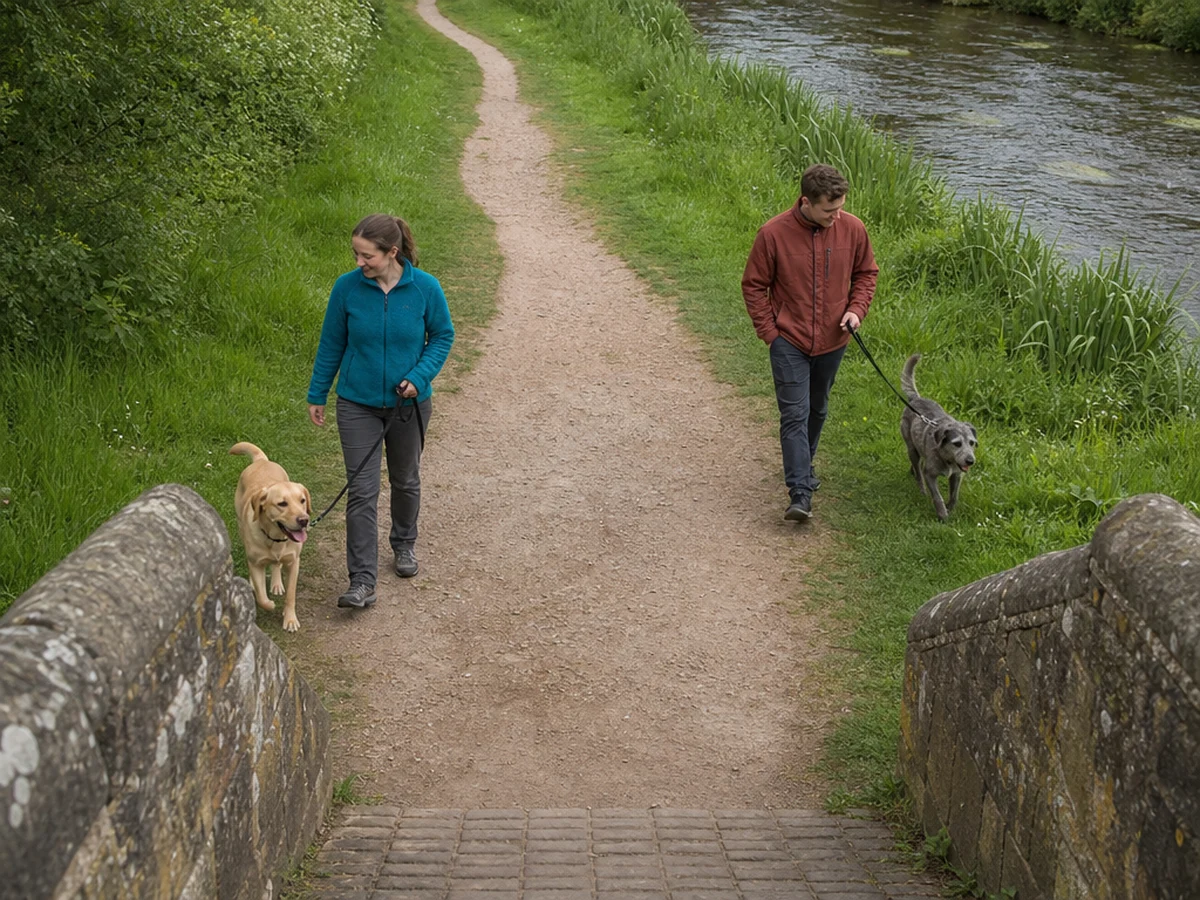
Close distance gradually only when both bodies remain loose. If either dog plants, stares, hides behind the handler or repeatedly surges forward, widen the route. The warm-up is not a test the dogs must pass. It is permission to decide that play is not suitable today.
Pause at the entrance before removing leashes. Check that the space has more than one exit path, no crowd around the gate and enough room for dogs to arc away. Entering a packed enclosure can erase the choice the warm-up was designed to reveal.
Release dogs from separate positions rather than pointing them at each other. Let the first movement curve through space. If a dog races straight into contact, call a reset and begin farther apart. The opening seconds should contain options, not an unavoidable collision.
Read Consent During Rough Play With Dogs
Start reading before bodies touch. Note whether each dog can approach in an arc, turn away and return to its own handler. Those opening choices create a baseline for deciding whether later speed is still mutual or has narrowed into pursuit.
Read sequences, not isolated gestures. A pause followed by both dogs returning differs from one dog repeatedly fleeing while the other pursues. Use the table to guide the next referee action.
| Play picture | Evidence | Referee action |
|---|---|---|
| Balanced | Role changes, curved bodies, voluntary returns | Allow a short interval, then pause |
| Uncertain | One dog avoids, hides or stops returning | Separate and test choice |
| Escalating | Speed rises, pauses vanish, bodies stiffen | End play and create distance |
| Unsafe | Injury, pinned escape attempts or handler risk | Secure dogs and seek help |
A consent test separates dogs gently, gives both space and observes what each chooses. If one returns while the other moves away, the answer is no. Do not steer the reluctant dog back.
The Labrador Retriever Club new-owner flyer describes an outgoing, tractable dog. Outgoing behavior still needs manners and mutual choice.
Look at the dog who has less freedom, not only the one creating the action. A dog under a bench, against a fence or beneath a heavier body cannot demonstrate a clean return to play. Move both dogs into open space before interpreting the next choice.
Role changes need to be meaningful. A brief stumble does not balance a chase in which the same dog always flees. Watch several exchanges and ask whether each dog can initiate, stop and move away without being immediately recaptured.
Call Labrador Retriever Rough Play Timeouts
Practice recall away from dogs first. During play, call once during a natural pause, move away and reward near the body. Hold a brief calm break, then release only if both dogs and handlers agree.
A Successful Timeout
The dog turns, takes food gently and can remain with the handler. Breathing and movement begin to soften. Another short play interval may be appropriate.
An Unsuccessful Timeout
The dog cannot turn, slams back into play or remains rigidly focused. Use distance and end the session. Repeating the cue from the edge of a chaotic group weakens the exit.
AVSAB's humane training statement supports reward-based structure. A timeout is a calm information break, not an attempt to frighten the dog.
- Pause before play becomes frantic.
- Reward staying with the handler.
- Check the other dog's choice.
- Resume briefly or leave.
- Record recovery after the session.
Vary the outcome of successful recalls. Some end with release back to play, some lead to a parallel walk and some finish the visit. If recall always predicts leaving, the dog may delay responding until play is already too intense.
Match Partners for Rough Play With Dogs
Choose one known dog in a spacious secure area before using a busy dog park. Match size, speed and play preference as well as friendliness. A dog who loves chase may overwhelm a partner who prefers brief wrestling.
Begin with parallel walking at distance. Look for loose movement and easy attention before allowing interaction. Skip greetings when either dog is already pulling, staring or vocalizing intensely.
Match the Movement, Not Just the Body Size
A fast dog may enjoy broad chase, while another prefers short bouts with frequent pauses. A wrestler may use shoulders and open-mouth contact without wanting a long pursuit. Compatible partners answer each other in the same movement language.
Watch what happens when one dog changes the game. If chase turns into wrestling and the other dog leaves, respect the exit. If both pause and rejoin in the new style, allow a brief interval before calling another timeout.
One familiar partner gives cleaner evidence than a rotating crowd. Repeat the pairing in similar conditions before adding speed, toys or another dog. The aim is not to prove sociability across every setting. It is to identify combinations that preserve choice.
Keep toys and food out of shared space unless a professional has designed the setup. Resources can change an otherwise easy interaction. Water access should not force dogs into a narrow corner.
Puppies need carefully selected adults and short sessions. The site's Labrador puppy training and socialization guide covers broader exposure. Social development does not require uncontrolled group play.
Leave Group Play Before Labrador Retriever Arousal Spikes
Set a time limit before entering and leave while recall still works. The final minutes should not be the most chaotic. A short success is more useful than waiting for conflict to signal the end.
Watch for fewer pauses, repeated body slams, ignored avoidance and a dog who stops checking in. Those changes call for an exit, even if nobody has barked or growled.
Make the Exit a Separate Skill
Move to a quiet edge after the timeout and reward the dog for remaining near the handler. Clip the leash only when hands can reach the equipment without grabbing through another launch. Then walk a curved path away from the gate traffic.
Do not stand outside the fence while the dog watches play continue at close range. That can preserve the same frustrated focus. Walk until the dog can sniff and orient, then decide whether the recovery route ends at the car or continues as a calm walk.
Move to the gate only after securing the dog. Avoid calling near an open exit. Clip the leash in a quiet corner, walk away and offer water after breathing begins to settle.
If other handlers will not interrupt one-sided play, leave. The Labrador Retriever does not need to endure a poor match to become social.
Review Rough Play With Dogs Afterward
Record partner, setting, duration, earliest timeout response and recovery at home. Include successful pauses. Review patterns across sessions rather than judging one noisy moment.
Check the dog's body for soreness, torn nails or skin injuries. Ask the veterinarian about concerns. A sudden drop in tolerance during future play can have a physical cause.
Progress means quicker exits, more role changes and easier settling afterward. It does not mean tolerating larger groups. The site's Labrador Retriever recall guide supports the exit skill outside play.
Choose the next partner based on the record. Repeat a compatible pairing before increasing group size or speed.
Separate the play record from the recovery record. A session can look mutual yet leave the dog pacing, pestering housemates or unable to sleep. That delayed result means the duration or environment needs to change next time.
Use the log to choose one adjustment. Shorten the interval, return to a known partner, increase warm-up distance or replace group play with parallel movement. Changing one feature preserves the evidence that the next visit provides.
Compare the earliest and latest timeout, not only the best response. A dog who returns easily once and then cannot disengage is showing that the useful play window has closed. Plan the next visit around that earlier limit. Write that limit beside the next partner and location so it becomes a real plan, not a memory after play starts.
Get Help for Unsafe Labrador Retriever Rough Play
Contact a veterinarian after injury or when tolerance changes suddenly. Consult a credentialed behavior professional using rewards for fights, bites, repeated pinning, guarding or a dog who cannot disengage at safe distances.
Avoid group settings while an incident is assessed. Share videos only when captured safely, plus the referee log and partner history.
Today, choose the exit and timeout cue before play begins. Refereeing protects choice. A Labrador Retriever can enjoy vigorous play while adults preserve pauses, compatible partners and a calm way home.
 Exercise and jobsScent Games and Tracking for a Labrador Retriever
 Puppy trainingCrate Training a Labrador Retriever and Choosing the Right Crate Size
 Exercise and jobsHow Much Exercise Does a Labrador Retriever Need?