 Labrador
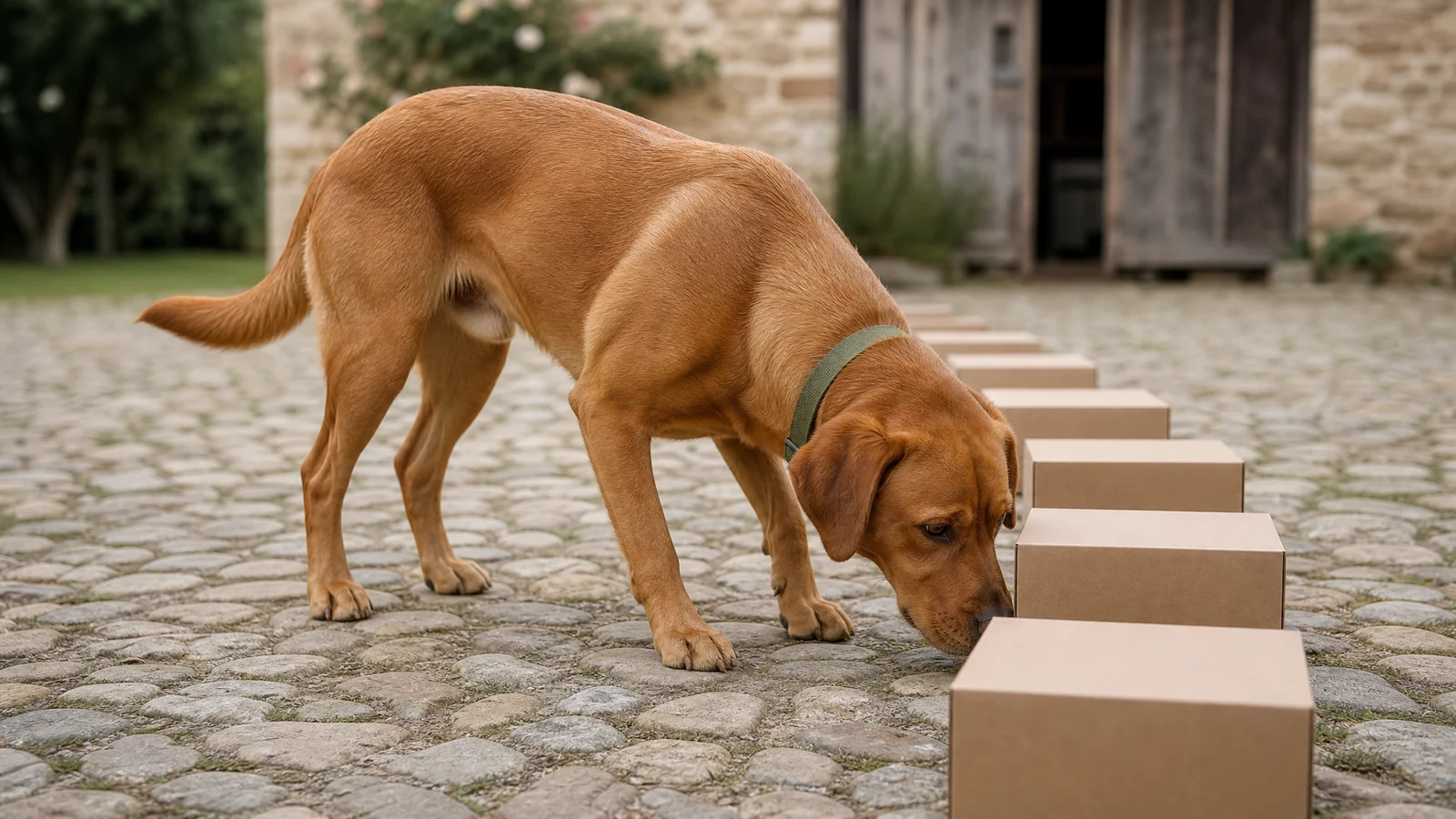
One closed box holds food and three identical boxes are empty. The first question is simple: can the Labrador Retriever investigate and locate the target without help from a pointing hand? A useful scent game starts with a question the setup can answer.
This guide covers a scent experiment notebook, controlled box searches, room searches, short trails and safe outdoor transitions. We will change one variable at a time, observe without steering and record recovery as carefully as the find. The goal is confident investigation, not a performance staged by the handler.
The notebook turns that independence into evidence. Each setup should reveal one part of the dog's search, then end clearly enough that the next experiment begins from rest rather than unfinished hunting.
Open a Labrador Retriever Scent Work Notebook
Give each session a date, location, target, number of hides and one changing variable. Record the dog's starting state, search path, find and recovery. Notes prevent difficulty from rising invisibly.
The FCI standard describes the Labrador Retriever as having an excellent nose. Breed aptitude provides a promising starting point, but each dog still needs clear, gradual setups.
Keep regular veterinary visits current. Nasal discharge, breathing changes, pain, sudden loss of interest or disorientation deserve veterinary advice. Choose searches that fit the dog's age, mobility and health.
Use measured food or a favorite toy according to the dog's needs. Keep sessions short enough that enthusiasm remains. End after a clear success rather than adding another hide because supplies remain.
Handle the Target Without Giving Away the Answer
Prepare the target before bringing the dog into the area. Use a dedicated container or bag and keep it separate from empty boxes. If food is the target, measure the session portion in advance so the same supply does not travel across every surface.
Move empty containers and target containers with the same deliberate pattern. Avoid touching the target and then every starting marker. The goal is not laboratory sterility. It is removing the strongest human-made trail so the dog's search answers the intended question.
Store finished equipment before recording notes. A dog who keeps searching while boxes remain open has not reached a clear ending. Use one finish cue, walk to water or a resting place and note how quickly ordinary attention returns.
Run Three Labrador Retriever Scent Work Experiments
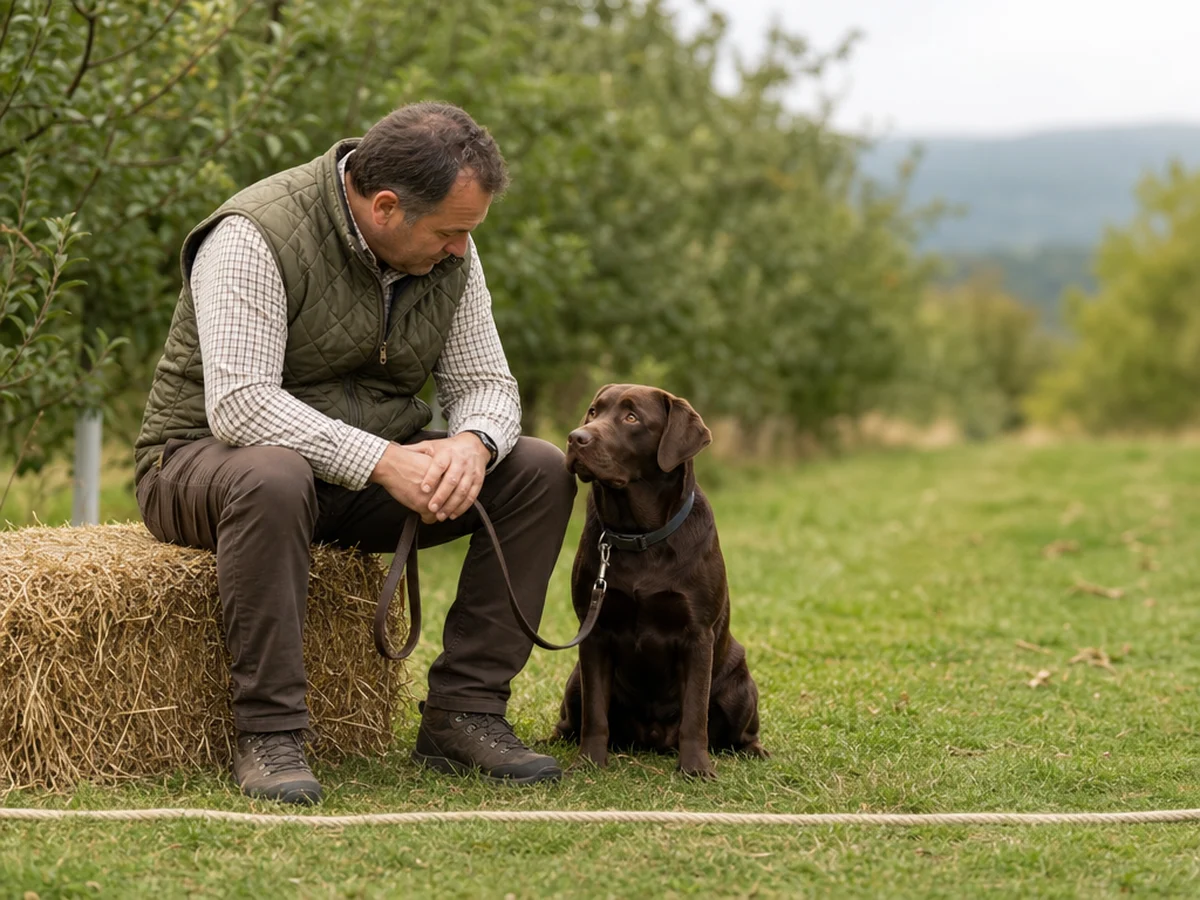
Begin each experiment with the same start routine. Wait outside the search area, bring the dog to a marked line, say one search cue and let the leash remain loose when used.
Box Experiment
Place four open boxes several feet apart and food in one. Release the dog to investigate. Reward at the source and end. On the next repetition, move the target while keeping the room unchanged.
Allow a complete pass before resetting the boxes. If the dog checks an empty box and moves on, that is useful investigation rather than an error. Repeated handler chatter can pull attention away from the odor problem.
Room Experiment
Hide the target in an accessible location while the dog waits elsewhere. Start with part of the target visible. Avoid furniture gaps where the dog could become stuck or knock objects down.
Build a safe search boundary with closed doors or gates. Remove food, trash and fragile objects that could become competing targets. The room should let the dog investigate freely without turning the handler into a constant safety monitor.
Trail Experiment
Lay a very short food trail across clean ground with a reward at the end. Walk beside rather than ahead of the dog. Keep the first trail straight before adding one broad turn.
Mark the route privately on the notebook diagram rather than guiding with the leash. When the dog drifts off, stop advancing and observe whether the nose returns to the laid path. Shorten the next trail if reacquisition becomes frantic.
The Labrador Retriever Club notes that tracking schedules often need modification for the individual dog. Its tracking overview supports patient, adaptable practice rather than rushing a rigid program.
Read the Labrador Retriever Search Without Interfering
Watch breathing, head position, pace and route. A dog may slow near source, return to one area or show a distinct change in sniffing. Individual patterns matter more than a universal alert.
Stand still and keep leash pressure neutral. Following too closely can crowd the dog, while moving toward the hide can supply the answer. Let the search path unfold.
Reward at the source so location remains meaningful. If using food, deliver it low beside the hide. Then use a finish cue and leave the search area for recovery.
The ASPCA describes sniffing as stimulating enrichment. Even so, watch for fatigue. A dog who becomes frantic or disengaged needs a simpler finish and rest.
Reset a Confused Labrador Retriever Search
End the current question when the dog repeatedly leaves the area, looks to the handler or scratches boxes without investigating. Walk out together and change the physical setup. Do not point to the hide simply to manufacture a find.
Restore two easy features and keep only one challenge. A lower hide in the same room or fewer boxes at the same start can reveal which part created confusion. The next repetition should be readable enough for the dog to work without rescue.
Record the reset as part of the experiment. Note the first behavior that changed and the simplification that restored searching. Those details are more useful than a tally of finds because they define the dog's current working edge.
Move Scent Work Outdoors Safely
Use a secure yard or leash according to the location. Check weather, footing, plants, waste, wildlife and traffic. Do not place food where another animal or dog may reach it.
Start beside the familiar door with the same container and target. Outdoor air movement changes odor, so restore every other easy feature. Allow a broader search path.
Use a harness and line for trails only when the handler can manage them safely. Prevent tangles and never let the dog hit the end at speed. Children should not manage line searches.
The site's Labrador Retriever recall guide supports outdoor safety. Scent work near wildlife remains leashed unless the area is securely enclosed, and the finish route should move away from the search rather than invite another unsignaled hunt.
Separate an outdoor search from an ordinary sniffing walk with a visible start and finish location. The dog can investigate freely during the walk, but the search cue opens one prepared problem. This distinction keeps every patch of ground from becoming an endless assignment.
Wind and sun can change where odor collects from one repetition to the next. Record direction and basic conditions without trying to control them. If the dog follows odor away from the object's visible position, allow the nose to work before assuming the path is wrong.
Compare Labrador Retriever Scent Work Experiments
The notebook becomes useful when several sessions can be compared without guessing. Group entries by experiment type, then look for the point where independence changed. A late table here supports review after the dog has already taught the handler what to observe.
Do not rank box, room and trail work as a single ladder. Each asks a different search question. A dog can be confident with containers and uncertain in open space, so the next step should strengthen that context rather than make every exercise harder.
Compare Scent Work With the Same Controls
A control is a feature kept constant. Use the same room, containers and target while changing only box position. Clean hands and handle every box similarly so food residue or body movement does not reveal the answer.
| Experiment | Keep constant | Change | Record |
|---|---|---|---|
| Box search | Room, boxes, target | Target box position | First approach and search path |
| Room hide | Target and start point | Hide height within easy reach | Time and signs of commitment |
| Short trail | Surface and reward | One gentle turn | Where the dog leaves and reacquires |
Best Friends describes starting nose work with boxes and a familiar target. Boxes make the question visible to the human while the dog learns that searching independently produces the reward.
Remove visual differences. Use matching containers, avoid standing beside the correct one and look at a neutral point. Video from a fixed location can reveal accidental cues.
Change One Scent Work Variable
Possible variables include distance, target height, number of boxes, room size, surface and air movement. Pick one. A new room with more boxes and a higher hide asks several new questions at once.
Increase difficulty only after repeated confident searches. If the dog begins looking to the handler, pawing randomly or leaving the area, simplify the experiment. Help by changing the setup, not by pointing to the answer.
Move the target a small amount and keep the start point familiar. Later, change the start while restoring the easy hide. Alternating one challenge with known work protects confidence.
Record unsuccessful setups without blame. The notebook should state what the environment asked, not that the dog failed. That wording makes the next adjustment obvious.
Link food used in repeated searches to the daily ration and the dog's broader routine. The site's calm waiting guide for Labradors can support the start line, while this notebook remains focused on independent nose work after release.
Choose the Next Labrador Retriever Scent Question
After several sessions, review target type, environment, independence and recovery. Look for the easiest condition that produced a confident search and the first variable that created confusion.
- Repeat successful experiments before increasing difficulty.
- Keep target handling consistent.
- End when the dog can still disengage.
- Store boxes and targets safely.
- Ask an instructor about sport-specific odor work.
A qualified reward-based scent instructor can help with formal nose work or tracking. Share the notebook so the instructor sees what the dog already understands.
Today, label one notebook page, place four matching boxes and ask one clear question. Scent work becomes richer when the human changes less, watches more and lets the Labrador Retriever provide the evidence.
Start One Labrador Retriever Scent Question Today
Choose the easiest experiment that fits the available space and prepare it before bringing in the dog. One target, one search cue and one finish provide enough information for the first notebook entry. Save a harder variable for a later session.
After the find, clear the equipment and record the route, independence and recovery while the details are fresh. The immediate next step is not a more difficult hide. It is a repeatable question that lets the Labrador Retriever's nose, rather than the handler's movement, supply the answer.
 Puppy trainingCrate Training a Labrador Retriever and Choosing the Right Crate Size
 Exercise and jobsHow Much Exercise Does a Labrador Retriever Need?
 Training basicsImpulse Control for a Labrador Retriever: Wait, Settle and Focus