 Labrador
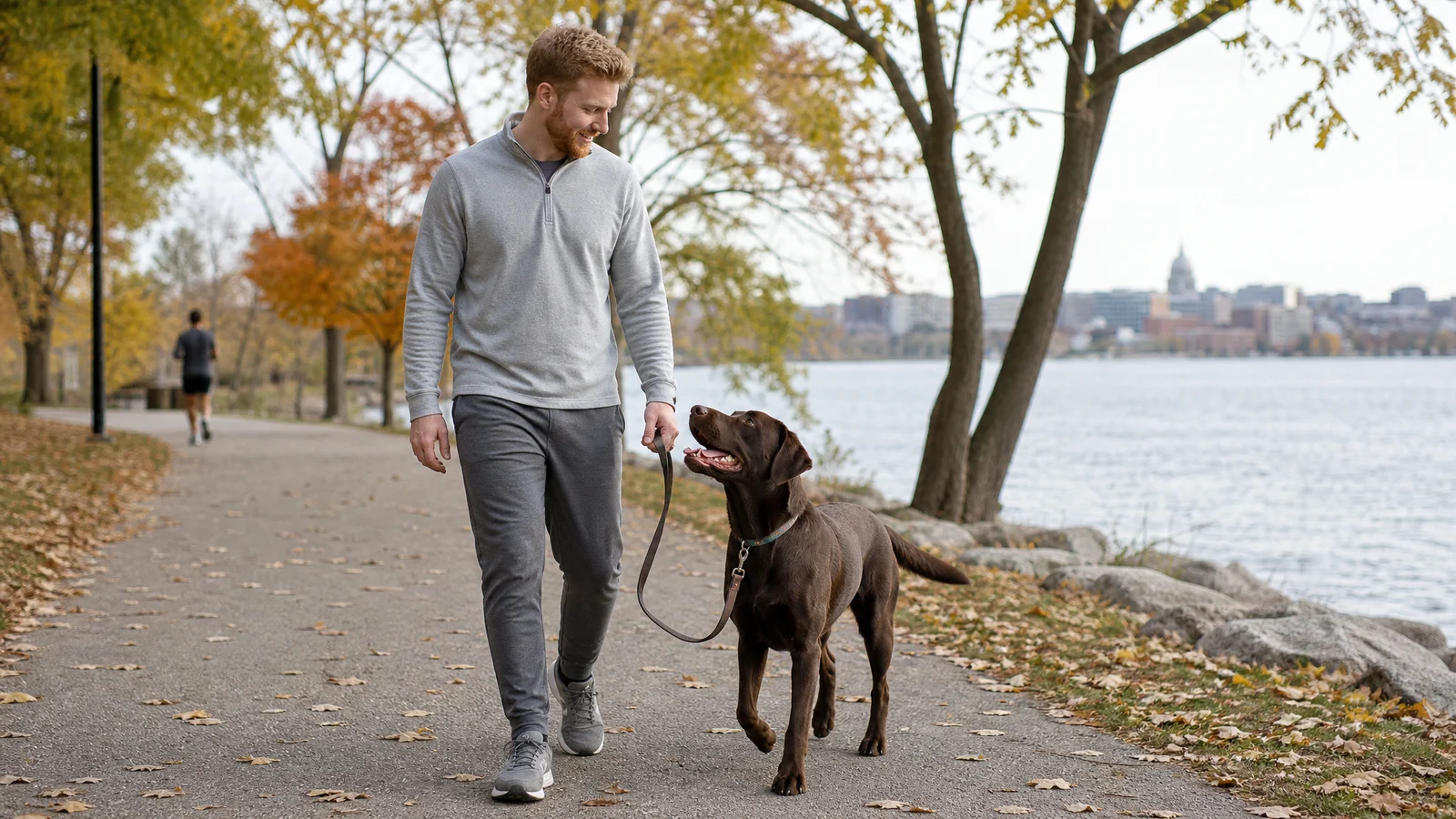
Cues that were solid last spring now arrive late, halfway or not at all, usually when a jogger, a squirrel or a picnic comes into view. Your Lab now has the legs of a grown dog and enough strength to tow you across a parking lot. This is the Labrador teenage phase, and in this breed it can stretch well past the first birthday.
Most of what looks like defiance at this age is strength and friendliness arriving before self-control. That changes the job, because self-control grows with clearer, shorter, better-paid practice and not with a louder voice or a longer lecture.
Below you will find why the phase runs long in Labs, how to keep leash walks and obedience workable, and what to do about the chewing and carrying. Three odd puzzles follow after that.
Why the Labrador Teenage Phase Lasts So Long
The gap between a big body and a small supply of self-control has a physical cause. A Lab's body is already full size while the brain region that handles self-control is still under construction, which is why adolescent puppies are often more impulsive than adults and may overreact to situations. The phase can run until two years depending on the breed or dog, and it generally ends around 18 months, having started around six months or later.
For a Lab, an ignored cue is rarely a decision. Self-control has not caught up with a body that is already full size, and four changes tend to arrive together, each one able to undo a different habit.
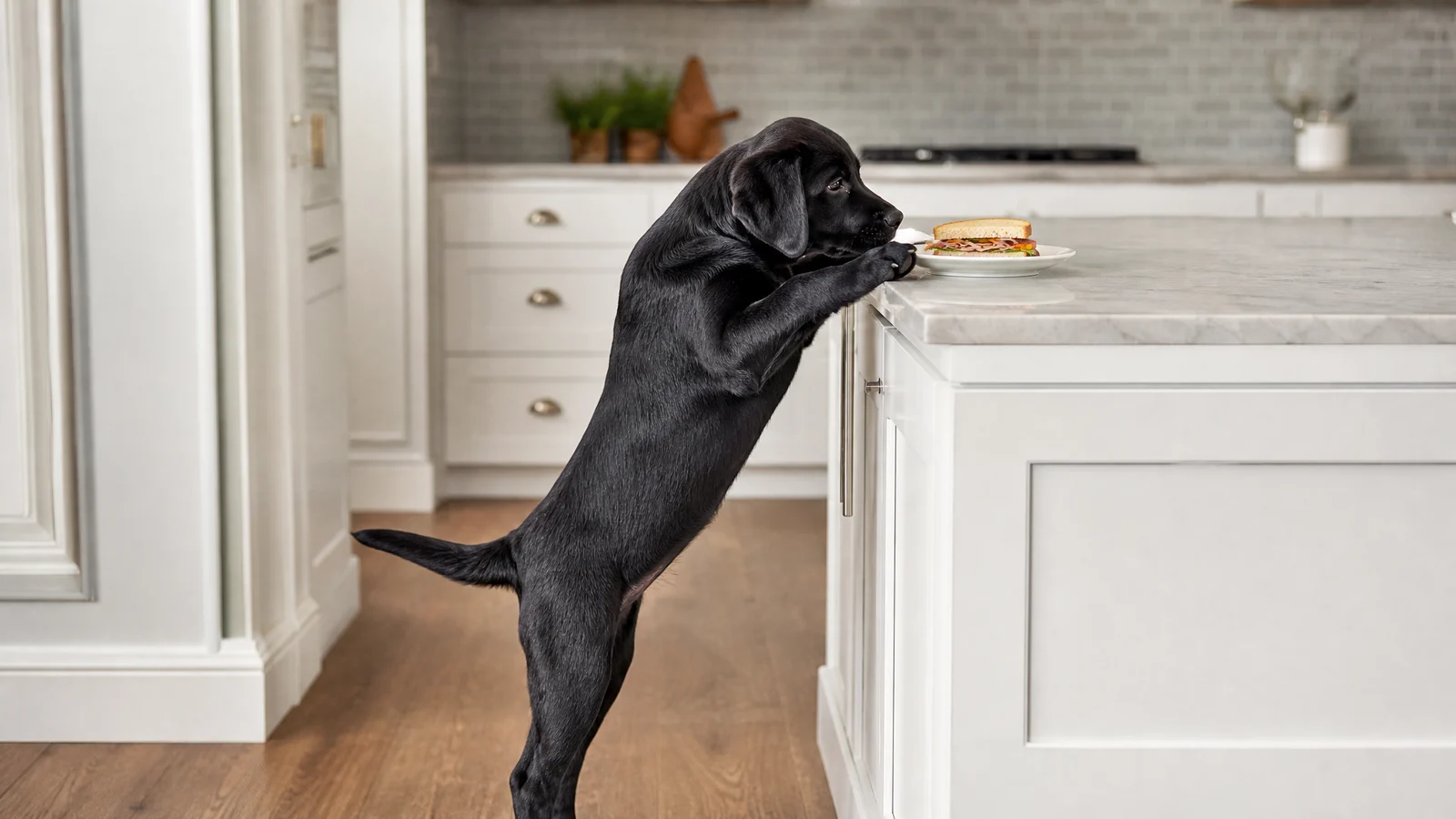
- Size and strength. A teen Lab can reach the counter, tow you toward a friend across the street and flatten a toddler with a friendly hello.
- Self-control still being built means a dropped sandwich or a passing dog can wipe out a cue the dog knew perfectly well last week.
- Friendliness at full volume. The breed is meant to be outgoing, and in a bigger body that welcome becomes leaping and towing toward every person in sight.
- Energy that needs somewhere to go, because a Lab without enough daily exercise and mental work finds an outlet, usually your shoes.
Where a Lab Falls on the Clock
Where a Lab falls on this clock is hard to predict. There is no set age at which Labs first reach sexual maturity, and the milestone may arrive as early as seven months or take until a dog is nearly two years old, at 22 months, according to the AKC's Lab puppy timeline.
Plan for months of change rather than one hard week. Our Labrador puppy training timeline shows where these months sit in the first year.
Loose Leash Labrador Training With a Stronger Teen
The same strength shows up first at the end of the leash, where a teen Lab is now strong enough to win every tug. As Lab people, we know the pull is rarely stubbornness. The walk is simply where a friendly, curious dog meets more reasons to hurry than you can offer reasons to slow down. A loose-leash routine for a strong teen runs on four steps, and each one pays for slack instead of fighting tension.
- Start where the leash is already slack, such as the hallway or the driveway, and pay at your hip each time the leash hangs in a loose curve, because the spot beside you has to be where good things happen first.
- When the leash tightens, stop walking and wait for it to loosen, then mark the slack and move on, because forward motion is what a pulling Lab wants and it should be earned with slack.
- Turn away before the pull builds, pay when your Lab catches up at your side, and keep the turns small enough that your Lab stays happy about them.
- Pay early and often as a person, a dog or a tennis ball comes into view, starting far away, and close the distance only while the leash stays loose.
Short walks that end well teach more than long ones that end in a tow, so cut the route in half on days when the leash keeps going tight. The full method, with the equipment and the common mistakes, is in our Lab loose-leash guide.
Labrador Retriever Obedience Training When Every Person Is a Prize
Of all the cues that slip, the ones that compete with people go first, because Labs are people dogs and a person coming into view is often the biggest reward on offer. We tell Lab owners to treat every hello as the strongest pay in the room and to build obedience training around it instead of hoping the dog will ignore it.
That is why a cue that works at home falls apart at the front gate. Practice has to include people, at a distance where your Lab can still think.
Pay for the Sit Before the Hello
Ask a helper to wait calmly far enough away that your Lab can still hear you, then ask for a sit and pay the moment the seat lands. Step a little closer between rounds. If your Lab pops up, turn away and start again from a distance that worked, because a dog who gets to greet after leaping learns that leaping is how greetings happen. Finish by releasing your Lab to the hello, so the person becomes the pay for the sit.
Keep rounds short and happy, and stop while your Lab is still winning. The full greeting method lives in our guide to keeping a Lab from jumping.
Rebuild a Cue Where It Fell Apart
When a cue stops working at the gate or the garage door, go back to the easiest place where it still does. A sit that holds in the hallway but not at the door was never taught at the door, so teach it there in small steps: start with the door closed, then cracked, then open with the leash on. Pay well at each step, because the reward has to outbid whatever waits on the other side. The sit, stay and come steps behind these rounds are in our Lab obedience basics.
Mouths, Chewing and Energy in the Labrador Teenage Phase
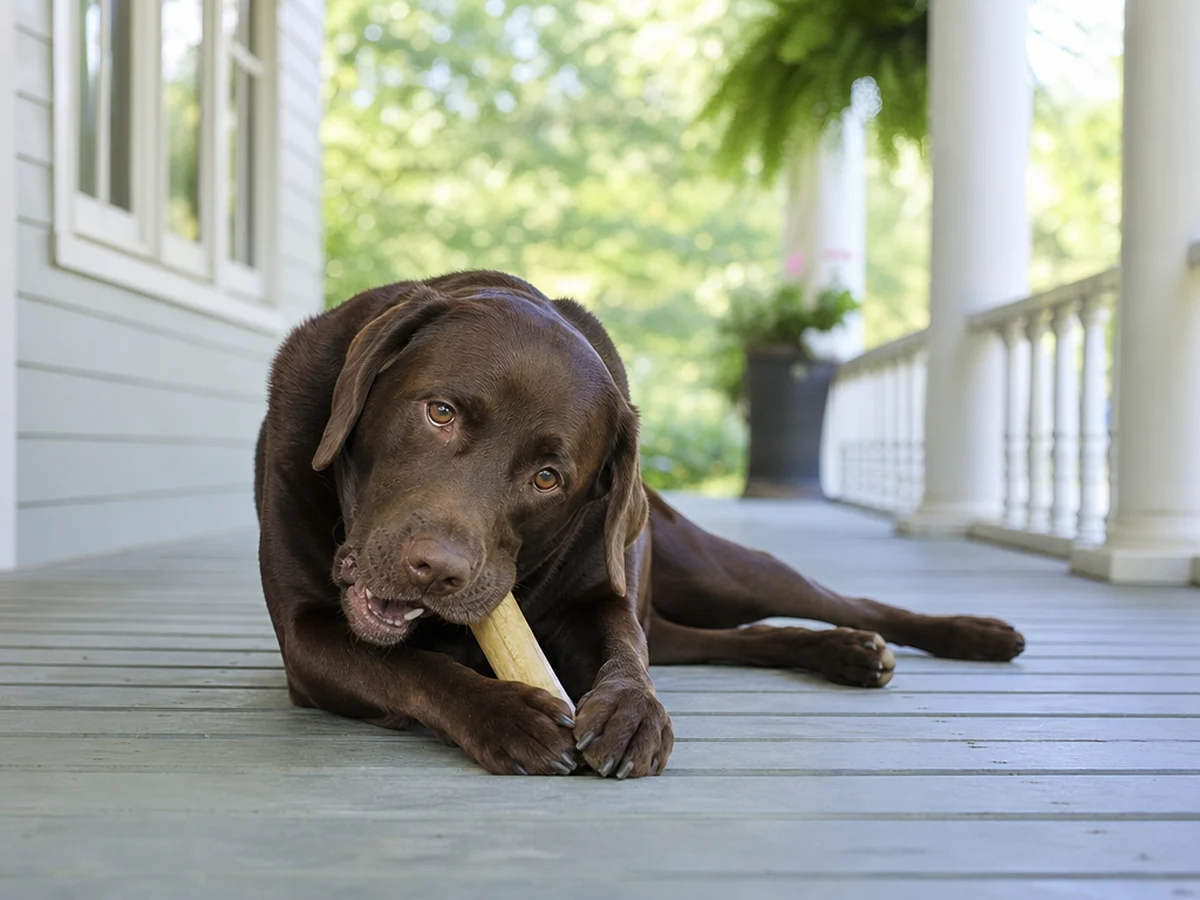
Mouths cause the next round of trouble, and the timing surprises owners who thought chewing ended with the baby teeth. Dogs often go through two chewing stages, and a second chewing stage starts around 7 months and can last until a dog is 13 to 14 months old.
A retriever's mouth is also built for carrying, so a Lab teen who cannot find a toy will carry a shoe, a remote or a sock, and the habit gets rehearsed every time it works. Put valuables out of reach, keep an approved carrying toy in every room and trade for the shoe with a treat instead of chasing, since a chase is a game your Lab will happily play for hours. The reasons behind the habit are in our guide to why Labs chew and carry.
Energy runs the rest of the show. A Lab who does not get enough exercise tends toward hyperactive or destructive behavior, and the teenage months add enough strength to make the damage bigger.
Daily walks, swimming and fetch help, but mental work tires a teenager in a different way, so scatter part of a meal across the lawn, hide a few treats for a nose hunt or hand over a stuffed chew while you cook. Ask your vet at routine visits how much running suits a growing Lab, and let the answer set the pace.
Your Teenage Lab Questions Answered
Water, an unexpected shy streak and a dog who obeys everyone but you are three teenage puzzles that need their own answers. Each one comes down to what is paying in that moment, which is also where the fix starts.
Why does my Lab ignore everything near water?
For a breed made for water, a pond or a pool often outbids any treat you carry. Use it as pay instead of fighting it. Ask for a sit at the edge on a long line, wait for your Lab's eyes to come back to you, then release them into the water as the reward. Keep the line on near open water until the cue holds, and stay with your Lab whenever they swim.
What if my friendly Lab turns shy?
A Lab is meant to be outgoing, so a young dog who hides, growls or barks at strangers deserves attention rather than a wait-and-see approach. Never punish those warning signs, because that teaches a dog to hide them. Keep a comfortable distance from whatever worries your Lab, offer a treat, then move the scary thing out of sight, and ask a reward-based trainer for help if the worry persists. A sudden change in behavior is also a reason to call your vet.
Why does my Lab listen to everyone but me?
You are not imagining it. Studies show adolescent dogs are less likely to follow commands given by their owners, and the loss of obedience seems to apply to owners and not to other people. Keep paying your own cues freshly with something your Lab loves, and let a neighbor hand over the treat for a round or two so the word, not the person, becomes the signal.
A Labrador Retriever Who Stays Part Puppy
Some of the puppy stays in a Lab for good, and most people who choose the breed are glad of it. The teenage months are the stretch when the grin at the door, the grab for a sock and the dash toward any water in sight learn what is supposed to come first. Pick the one moment, the door, the sock or the water, that slips most this week and practice it at an easy distance.
Door manners and a slack leash are easier to coach with someone watching in person. Enter your ZIP code on our homepage and it will list local reward-based help matched to Labrador Retrievers near you.
 Puppy trainingLabrador Puppy Teething at 3 to 4 Months
 Puppy trainingLabrador Puppy 4 Months to 6 Months Training Guide
 Puppy trainingCrate Training a Labrador Retriever and Choosing the Right Crate Size