 Labrador
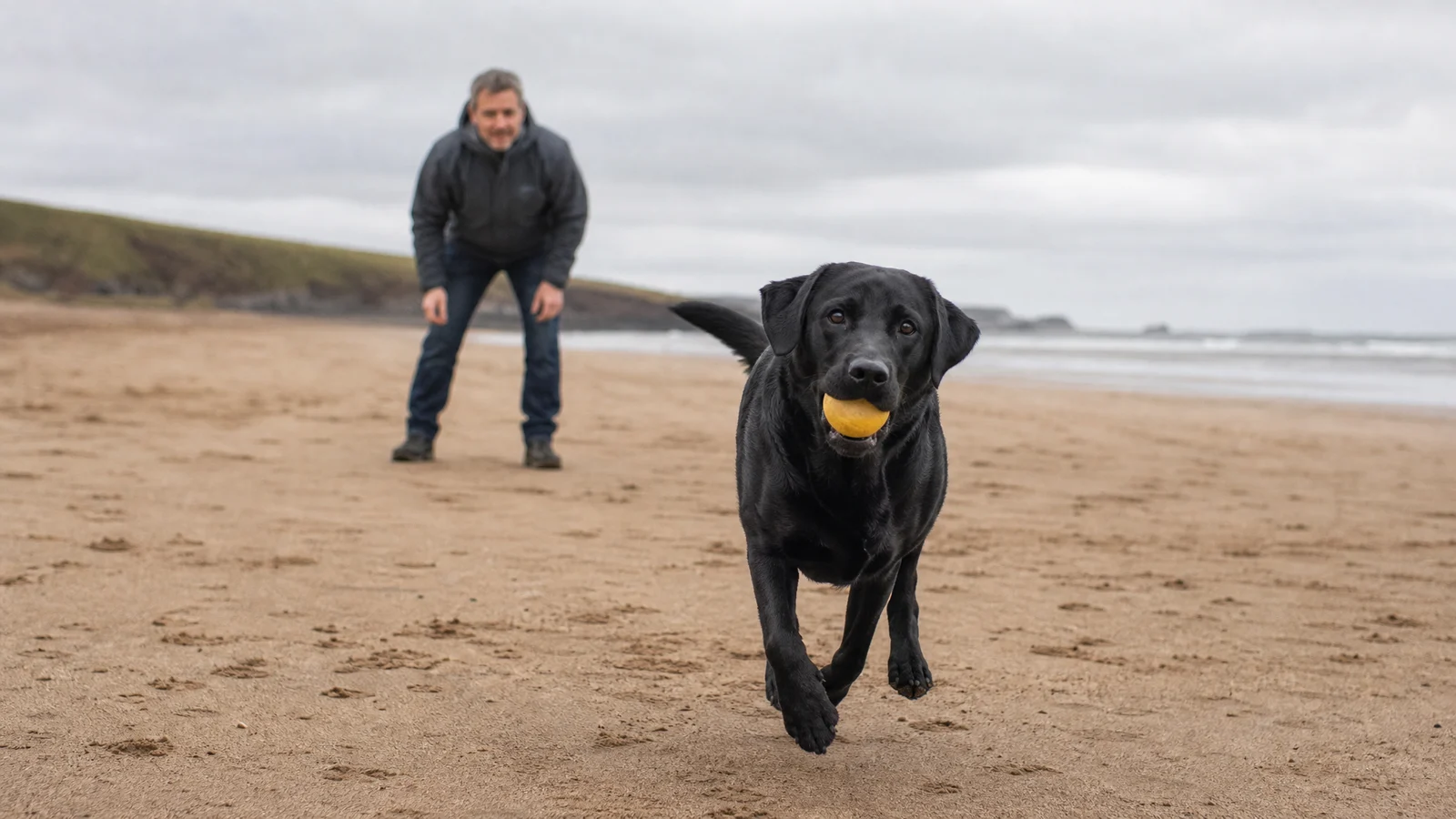
The ball lands at the handler's feet, but the Labrador Retriever is still panting hard, scanning the throwing hand and unable to sniff or drink. Another throw may look like the obvious reward. The more useful question is whether the dog has recovered enough to make a calm choice.
This guide covers fetch rounds, a recovery scorecard, start and finish rituals, varied retrieve jobs and fetch-free days. We will keep the breed's love of carrying and working while preventing one object from controlling the entire outing. The off switch is taught between throws, not after exhaustion.
The plan therefore separates desire from readiness. A dog may still want the ball while breathing, movement and attention show that the round is finished. That distinction gives the handler a fair stopping rule and gives the dog other ways to work.
Recovery Defines Labrador Retriever Ball Obsession
High enthusiasm is not automatically a problem. Concern rises when the dog cannot disengage, ignores water, searches long after the ball is stored or remains unable to settle at home. Record recovery instead of counting only retrieves.
The FCI Labrador Retriever standard describes an agile, biddable dog with an excellent nose and soft mouth. Retrieving fits that heritage, but a complete working sequence includes waiting, searching, carrying, delivery and rest.
Keep regular veterinary visits current. Ask about safe activity for the dog's age, body condition and health. Stop and seek veterinary advice for collapse, lameness, disorientation, breathing difficulty or recovery that seems abnormal.
Observe the first minute after the ball disappears. Use four ordinary behaviors as the baseline before assigning a recovery score.
- Food and water: the dog can take food gently or stop to drink.
- Movement: the body loosens enough for walking and ground sniffing.
- Breathing: exertion begins settling rather than remaining unusually hard.
- Attention: the dog can follow the handler away from the pouch and field.
A Bounded Fetch Round for Ball Obsession
A round has a beginning, a small fixed number of retrieves and a recovery break. Decide the number before play starts. Use the environment, dog and veterinary guidance rather than throwing until the dog refuses.
Set the Throwing Lane Before Fetch
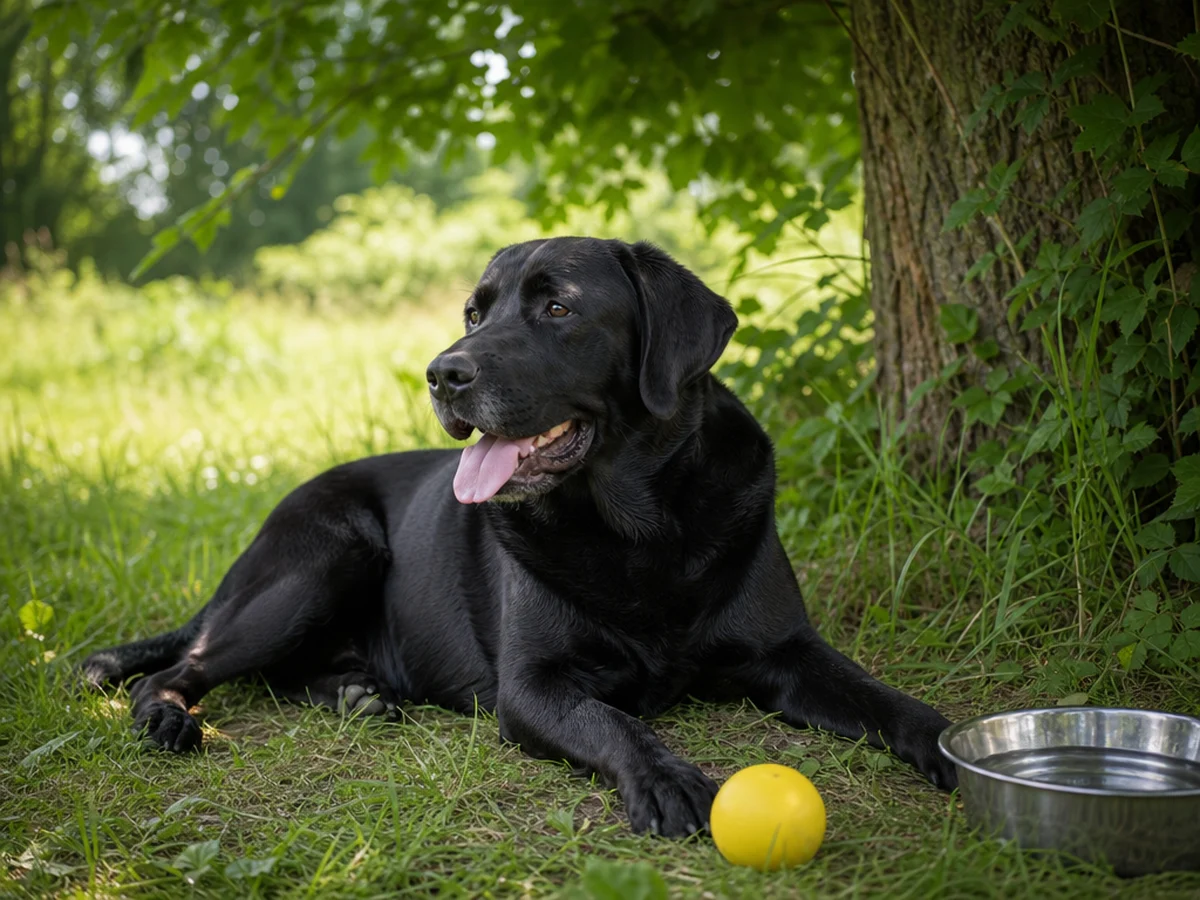
Walk the lane without the dog and remove choices that could turn one throw into a collision. Check for slick grass, hidden holes, hard edges and people crossing the landing zone. A shorter clear throw is more useful than distance added for spectacle.
Change direction between rounds instead of firing repeated turns from one spot. The dog should not have to twist around the handler, race another dog or brake at a fence. If the available space cannot support a clean lane, use a carry or search job instead.
Begin with a calm station several feet from the throwing line. Bring the ball out only after the dog can stand or sit with a loose body. Throw along safe footing, away from roads, holes, people and other dogs.
After each return, trade or cue a release without pulling the ball from the mouth. Place it in a closed pouch during the break. Walk slowly to water or a sniffing patch before deciding whether another round belongs.
The Labrador Retriever Club's current new-owner flyer describes a responsive, people-oriented dog. Use that social connection as part of the game rather than making the next throw the only valuable outcome.
Recovery Scores During Labrador Retriever Ball Obsession
Use the same four observations after every round. The score is a decision aid, not a competition. Stop if safety is uncertain regardless of the total.
| Recovery sign | Ready | Not ready | Handler action |
|---|---|---|---|
| Breathing | Settling steadily | Remains unusually hard | End and monitor |
| Movement | Loose walk and sniffing | Rigid scanning or frantic pacing | Increase distance from play area |
| Food and water | Can take gently or drink | Cannot disengage to respond | Continue quiet recovery |
| Attention | Follows handler away | Fixates on pouch or field | End the fetch session |
Let Recovery Choose the Next Round
A ready column does not automatically earn another throw. It means the dog can participate in the handler's decision. Ask for a simple movement away from the field, pause at water and see whether attention can leave the pouch without repeated cues.
When one sign remains in the not-ready column, close the session. Mixing a rigid scan with gentle food-taking does not average into readiness. The slowest recovery sign sets the decision because that is where arousal or physical strain is still visible.
Use the same observations on days without fetch. A normal walking and settling baseline makes a change easier to recognize. It also prevents the scorecard from becoming a ritual that is used only after the dog is already highly activated.
Write the result after the walk. Include weather, footing, number of rounds and time needed to settle at home. A dog who appears ready on the field but paces for an hour later did not complete recovery.
Compare several sessions. Progress may mean fewer rounds with easier recovery, not more throws. The scorecard protects the quality of the game from the pressure to increase volume.
Clear Start and Finish Rituals for Ball Obsession
Rituals separate fetch from the rest of life. Practice both without throwing so the dog learns the sequence rather than relying on exhaustion.
The Start Ritual
Walk to the station, wait for loose posture and show the ball. Say one start cue, then move to the throwing line. If the dog jumps, grabs or cannot pause, put the ball away and choose a sniffing activity.
Keep the ball out of sight during ordinary walks. Carrying it visibly can turn the entire route into anticipation. The start cue should predict a bounded game, not a promise attached to every park visit.
The Finish Ritual
Trade for the final return, place the ball in a zipped pouch and say one finish cue. Scatter a few pieces of measured food in grass, offer water and walk away from the throwing line.
Do not bring the ball back out after persistent staring or barking. The next opportunity begins on another planned start, after the dog has lived through a complete finish.
AVSAB's reward-based training statement emphasizes structure and clear guidelines. Predictable access is structure. It does not require frightening or physically overpowering the dog.
Different Labrador Retriever Fetch Jobs
Replace repeated long throws with different pieces of the retrieve sequence. Hide the ball in short grass while the dog waits, place it beside a visible marker or carry it together to a basket. Keep searches easy enough to avoid frantic scanning.
Use two identical toys for a delivery exercise only if the dog exchanges calmly. One toy moves after the first returns to hand or basket. If the second toy increases speed and possessiveness, return to one.
Add a carry without a throw. Walk a short route with the dog holding an approved item, then trade at a station. This preserves the mouth job while reducing repeated acceleration and abrupt turns.
The ASPCA favors non-contact games such as fetch and tug over wrestling with hands. Keep even non-contact games bounded by safe starts, releases and finishes.
The site's guide to Labrador Retriever recall supports returns away from exciting locations. Practice recall separately from the ball so the cue does not depend on seeing a toy.
Fetch-Free Days in a Labrador Retriever's Routine
A fetch-free day is not an empty day. Offer sniffing walks, simple searches, calm social time, food puzzles and rest according to the dog's needs. The purpose is to confirm that enrichment and connection exist without the ball.
Build a Different Job Menu
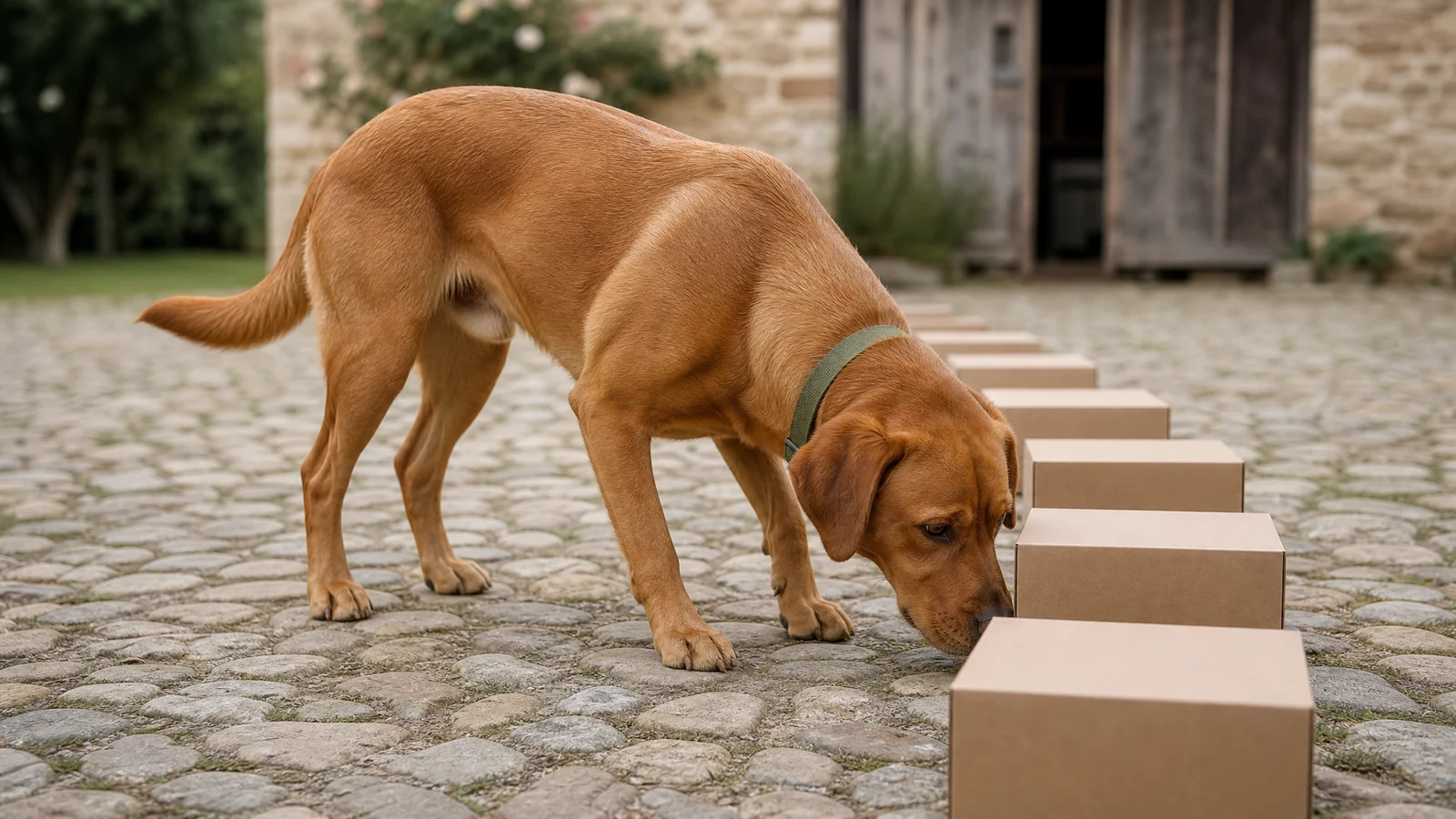
Choose one nose job, one low-speed movement job and one genuine rest period. A cardboard-box search, a loose sniffing route and quiet time in a familiar room answer different needs. None has to imitate the speed or repetition of ball play.
Let the dog finish each alternative rather than flashing the next option immediately. After a search, collect the boxes and move to water. After a walk, return home without visiting the throwing field. Clear endings make variety real instead of turning the whole day into anticipation.
If the Labrador brings household objects to request a throw, trade calmly and put the object away. Offer the planned job at its planned time. Starting a game in response to escalating demands can teach the dog that persistence controls the menu.
Match Fetch-Free Jobs to the Day
Nose job: search a small area for measured food or one hidden object, then clear the setup. Use this choice when the dog can investigate methodically without turning the room into a frantic food hunt.
Movement job: follow a loose sniffing route or carry an approved item without a throw. Keep the route broad and easy so movement remains steady instead of reproducing the acceleration and sharp turns of fetch.
Connection job: practice a few calm hand targets, grooming steps or station returns. Stop while responses remain easy and let quiet social contact be valuable without immediately opening another game.
Rest: make water and an undisturbed sleeping place available with fetch equipment out of view. Protect that pause from repeated invitations so the dog can discover that no task is also a complete part of the routine.
Rotate the menu according to the dog's state rather than offering every category in one long session. A busy replacement schedule can preserve the same expectation of constant entertainment that the fetch-free day is meant to loosen.
Store fetch equipment out of sight. If the dog watches the storage location, change the household route and reward settling elsewhere. Do not repeatedly open the cupboard without playing as a test.
Use the Quiet Day as Recovery Data
Compare how readily the dog naps, follows household movement and disengages from the storage area. One request for fetch is less important than whether ordinary life becomes available after the ball stays put away.
A dog who cannot settle across several well-designed days needs a broader review than another impulse-control drill. Bring the activity log to the veterinarian and describe both fetch sessions and the quieter days. The contrast can reveal patterns hidden by constant exercise.
Notice sleep, appetite, movement and ability to settle. A rest day can reveal soreness or persistent arousal that a busy play schedule obscured. Bring concerns to the veterinarian.
Use the site's how to train calm waiting guide for general skills. The recovery day remains about the whole schedule, not drilling self-control around a visible ball.
Help When Labrador Retriever Ball Focus Stays High
Contact the veterinarian for pain, lameness, heat concerns, collapse, unusual fatigue or a sudden change in drive. Share the scorecard and activity history. Medical guidance should set the boundaries for future play.
Consult a credentialed trainer who uses rewards when the dog guards the ball, bites during access, cannot settle after sessions or the household cannot complete the finish ritual safely. A professional can redesign the game at a workable intensity.
Today, decide the size of one fetch round before the ball appears. Score recovery, close the pouch and walk away together. A Labrador Retriever can love retrieving without asking the next throw to provide every job, reward and moment of the day.
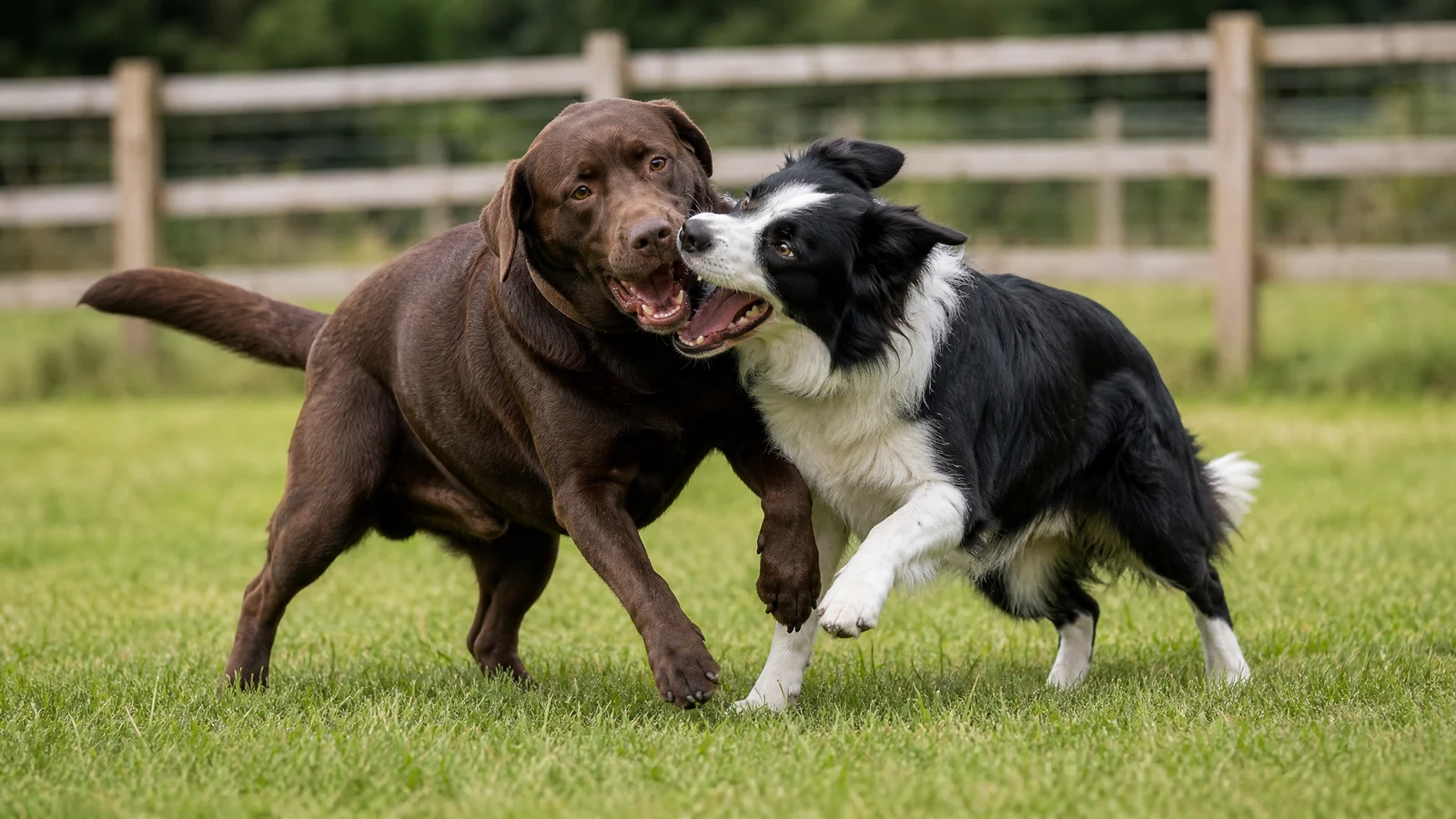 BehaviorWhen Labrador Retriever Play Gets Too Rough at the Dog Park
 Exercise and jobsScent Games and Tracking for a Labrador Retriever
 Puppy trainingCrate Training a Labrador Retriever and Choosing the Right Crate Size