 Labrador
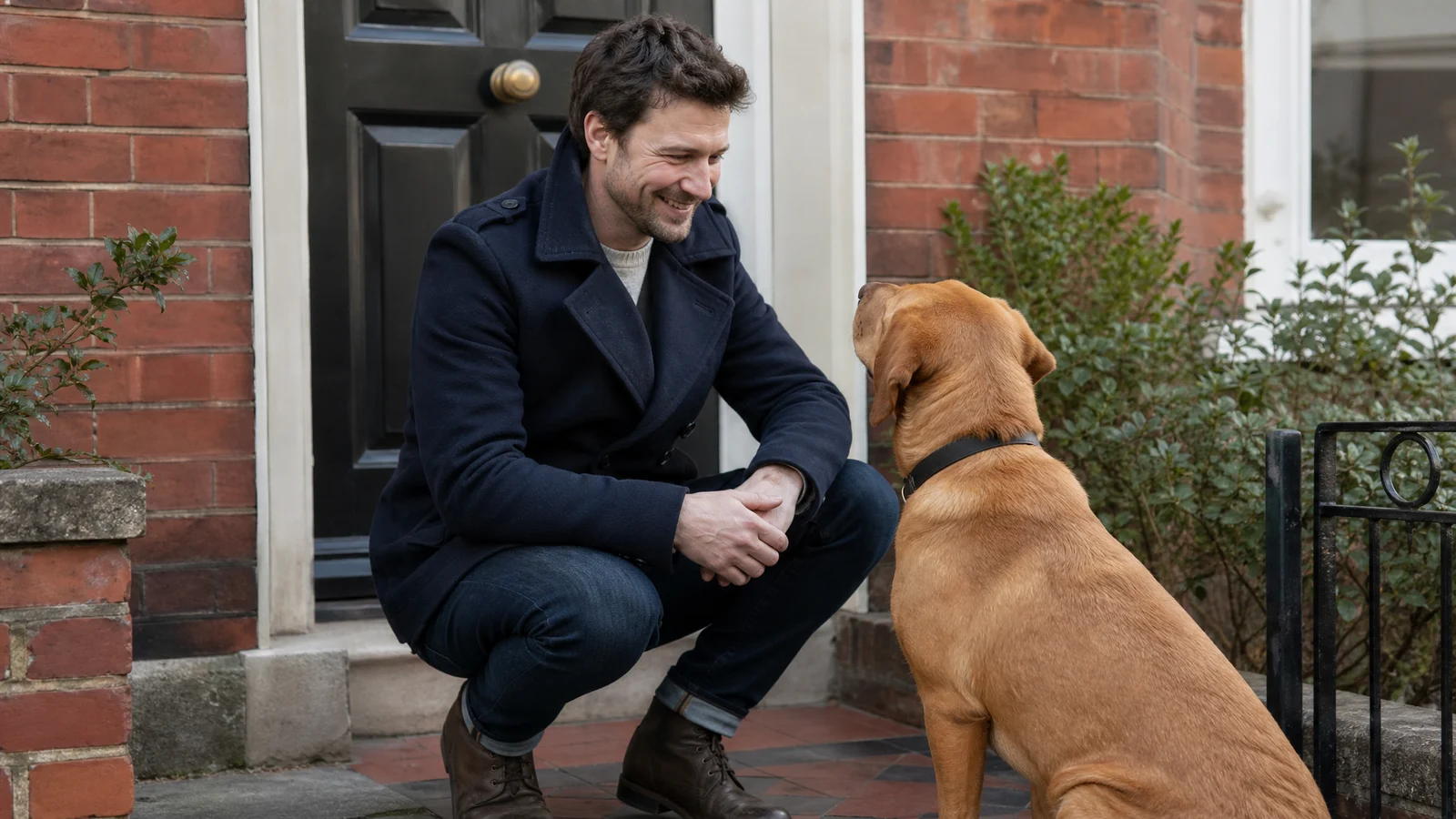
A Labrador Retriever can reach a person's face before a treat hand reaches the floor. If attention, hands and food arrive above the dog's chest, the greeting keeps pulling upward even when everyone says off. The useful change is geometric: valuable outcomes need to appear where four paws can stay grounded.
This guide builds a floor-level arrival lane rather than relying on a long sit at the door. We will place rewards away from bodies, use a helper's approach and retreat as clear feedback and practice resets without pushing the dog.
Different people need different spacing, so the final plan changes the lane for family, children and anyone whose balance needs protection. The trained outcome may be a brief greeting or calm observation behind a gate.
Why Reward Geometry Changes Labrador Retriever Greeting Behavior
Jumping moves the dog closer to faces, voices and hands. Looking down, speaking and touching the chest can all pay the behavior, even when the person sounds annoyed. The dog experiences access, not the human intention behind it.
AKC's breed description calls Labs bold, bouncy, strong and energetic. Those traits make placement important. A full-grown dog arriving upward can knock a person off balance before a cue has time to work.
Choose the first reward location in advance. Place food on the floor slightly behind the dog's front feet, or deliver it low beside the handler's leg. The dog turns down and away from the visitor instead of following a hand toward the visitor's torso.
Attention follows the same rule. The visitor's hands remain quiet until paws are down. Petting begins low on the shoulder or chest only when the person wants contact and the dog remains grounded.
Keep regular veterinary visits current. Pain, sensory changes or sudden behavior changes can affect greetings and movement. Ask the veterinarian about a new pattern, especially if jumping appears with sensitivity, confusion or reduced control.
Build a Floor-Level Labrador Retriever Arrival Lane
An arrival lane is the path from the dog's starting point to a grounded reward zone. It can run from a gate to a mat, from a hallway corner to the host or from the yard door toward a scatter area. The lane keeps speed and reward placement predictable.
| Lane point | Person's position | Reward location | Reason |
|---|---|---|---|
| Start | Handler beside dog | Low at handler's leg | Build connection before approach |
| Middle | Helper still and sideways | Floor behind front paws | Turn weight away from the helper |
| Greeting zone | Helper chooses whether to touch | Low and away from clothing | Keep the body grounded |
| Exit | Handler moves away | Search scatter at lane start | Finish without another launch |
Use barriers to prevent an uncontrolled run while the lane is new. A gate, closed interior door or secure leash held by an adult creates time to set food and coach the helper. The barrier is part of safe teaching, not a failure.
Keep the Lane Physically Clear
Remove bags, dangling clothing and food from the helper's hands. Those items change the target. The helper should be able to stand calmly, turn away and leave without stepping over the dog.
Practice the lane with no knock or doorbell first. Begin when the helper is already visible. Add arrival sounds only after the dog can move through the easy version with a loose body.
Mark the lane with ordinary household cues rather than equipment the dog sees only during formal practice. A washable mat, clear patch of floor and consistent handler position help the route survive real arrivals. Remove the markers gradually only after the movement pattern is familiar.
Watch the dog's rear feet as well as the front. A dog leaning hard toward the helper may keep paws down for one second and launch next. Reward a balanced turn back toward the handler, not a strained pause at the edge of reach.
The site's Labrador impulse control guide covers waits and settling more broadly. Here, the lane answers the narrower greeting question of where the dog moves and where reinforcement lands.
Human Approach During Labrador Retriever Greeting Behavior
Begin with the dog and handler at the start point. The helper stands well beyond jumping range and takes one step closer. If paws remain down, the handler marks the choice and places food low in the lane.
Humane World's helper practice uses the person's retreat when the dog leaves a sit. Apply the same consequence to grounded movement. The helper turns and walks away as paws rise, then returns when the dog is ready for an easier approach.
The retreat should be calm and immediate. No one pushes the dog, repeats a cue or leans forward. The dog learns that grounded movement keeps the person available, while jumping makes the person more distant.
Change One Human Feature
Change only one feature at a time. The helper can move faster, speak or extend a hand in separate repetitions. Combining voice, touch and close distance at once makes it impossible to know which feature caused the launch.
Best Friends' greeting guidance recommends frequent food rewards while polite greetings are being learned. Keep pieces small and include them within the dog's ordinary diet.
End while the dog can still follow the lane. The helper leaves, the handler scatters a few food pieces at the start and the dog moves away to search. That final turn prevents the session from ending with one last leap after everyone relaxes.
Reset a Labrador Retriever Greeting Without Contact
A reset begins by removing social access. The helper turns away or steps behind a barrier. The handler moves food to the floor away from the person, then guides the dog back to the lane start when four paws are down.
Removing attention by turning away or walking away gives the jump the opposite result from the one the dog sought. The reset works because the outcome changes, not because the dog is physically moved.
Keep hands off the collar during the leap when possible. Grabbing can add touch and conflict while the dog's front feet are airborne. The secure leash and barrier should already prevent contact with vulnerable people.
Use the same short reset every time. Consistency lets the next approach begin from a calmer, easier picture.
- The helper quietly removes attention and distance increases.
- The handler waits for paws to reach the floor.
- Food lands low and away from the helper.
- The pair returns to the lane start.
- The next approach begins farther away or more slowly.
After several resets, stop the session rather than repeating failure. The current setup is too difficult. Practice with a quieter helper, greater distance or less movement next time.
Give the dog a recovery period away from the entrance. Sniffing for scattered food, drinking water or resting behind a gate can bring arousal down before another ordinary household event. Do not restart the same difficult greeting immediately.
Labrador Retriever Greeting Behavior by Person
The same Labrador Retriever can greet different people in different ways. Familiar family may trigger speed, while an unfamiliar person creates staring or hesitation. Adapt the lane to the actual relationship rather than assuming friendliness makes every greeting easy.
A Family Member Returning Home
Place the reward zone before the person enters. The returning person ignores the dog while setting down belongings and walks toward the lane only after the handler is ready. Reunions can use several low rewards before touch begins.
Practice brief exits that do not follow a full workday. Repetition at low intensity helps the dog learn the pattern without the emotional weight of a long absence.
Someone Who Needs Extra Stability
Use a physical barrier and greater distance when a child or another person needs extra stability. That person does not deliver food or manage the dog. An adult handler rewards in the lane, and contact remains optional even when the dog stays grounded.
The safest success may be no greeting. Watching calmly from behind a gate can be a complete trained outcome. Protecting balance matters more than demonstrating progress.
An Unfamiliar Adult
Ask the person to stand sideways with hands still and eyes away. The handler delivers rewards. If the dog stays loose and the person wants contact, invite one brief low touch before moving the dog back through the exit point.
The site's Labrador puppy socialization guide explains calm exposure more broadly. A greeting lane supports that goal by making approach and withdrawal understandable.
Generalize Labrador Retriever Greeting Behavior
Move the lane to ordinary locations after home practice is reliable. Use a quiet sidewalk, veterinary parking area or training-class entrance without requiring the dog to greet. Reward the same low path as people pass at a workable distance.
Practice walk words and leash pickup separately if they trigger launches at family. Say the word, place food low and pause. Pick up the leash, reward grounded movement and put it down. The outing begins only after the sequence is calm enough to continue.
Add Real-World Differences One at a Time
Ask familiar helpers to vary clothing, carried objects and movement one feature at a time. A coat, hat or shopping bag can change the picture. Keep the reward zone visible and protect it from foot traffic.
RSPCA's adolescent guidance notes that frustration can appear as jumping, barking, scratching or nipping. If the dog is becoming more frantic, increase distance and provide recovery instead of adding greetings.
Use short real-life repetitions. A single grounded pass in the lobby can be more useful than asking the dog to remain in a crowded social space until control fails.
Keep a small record of location, person, first reward point and reset count. Patterns reveal whether speed, proximity or a specific kind of movement still lifts the dog. Use that evidence to choose the next helper rather than simply adding more greetings.
Review Where Labrador Retriever Greeting Behavior Pays
Audit the household for accidental rewards. Notice who speaks during jumps, who holds treats at waist height and which doorway allows a running approach. Change one payment point at a time and tell every person what the replacement looks like.
Progress includes faster downward orientation, easier resets, less speed in the lane and voluntary movement back toward the handler. It does not require greeting every person or holding a long sit while excitement rises.
Tomorrow, set one floor-level reward zone before the first arrival. Keep the helper far enough away that paws can stay grounded, then finish with a search back at the lane start. When attention and food consistently happen below the Labrador Retriever's chest, the greeting no longer needs a jump to work.
 BehaviorLoose-Leash Walking: How to Stop a Labrador Retriever Pulling
 BehaviorInstinct at Work as Labrador Retrievers Chew, Dig and Carry Things
 BehaviorLabrador Retriever Food Obsession: Kitchen Rules That Stick