 Labrador
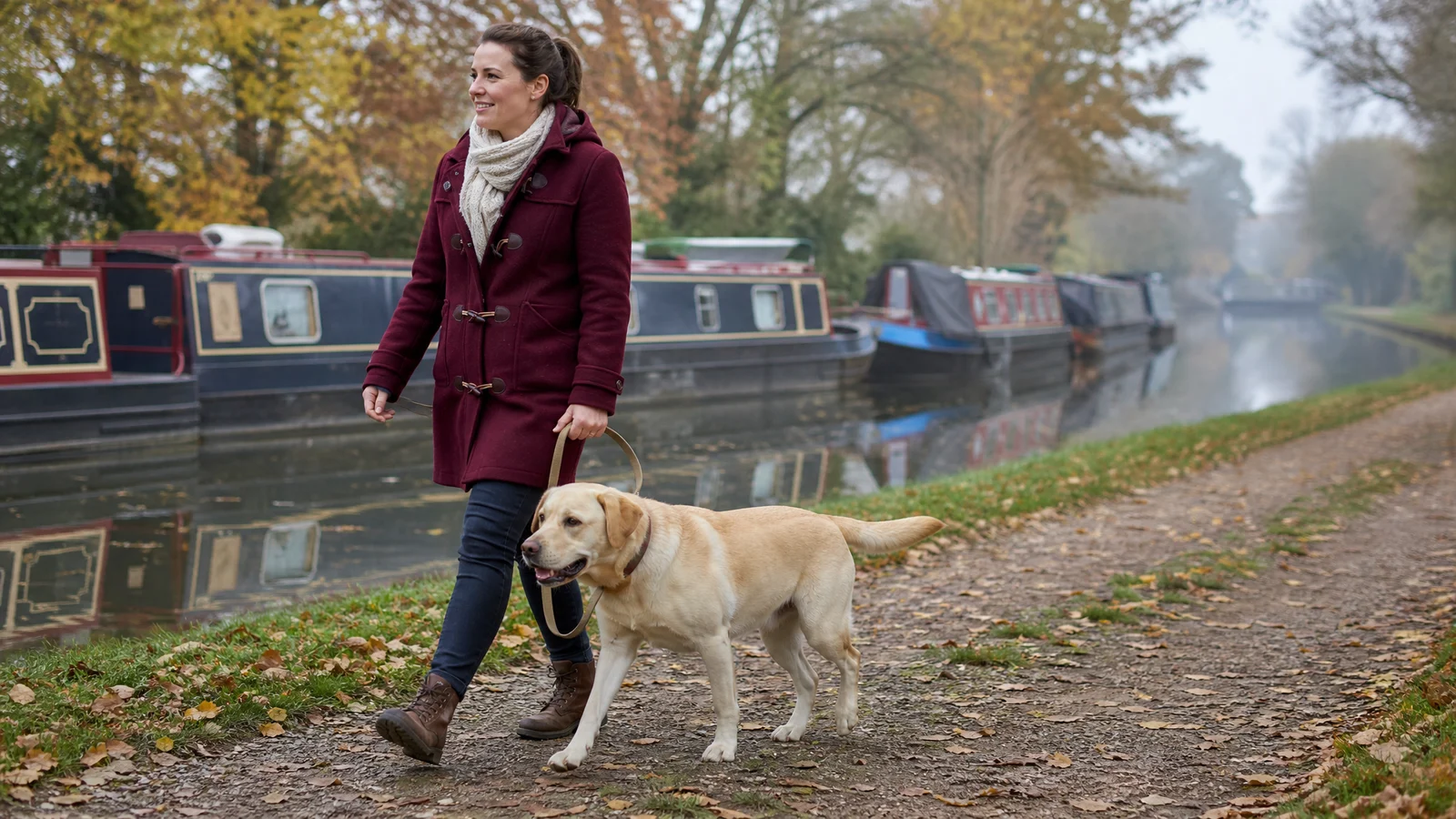
A walk asks a Labrador Retriever to do several different jobs. Near the door, the dog needs to connect with the handler. Along a quiet stretch, the pair travels. At a tree, the dog may sniff. When another dog appears, both need a passing plan. Calling all four jobs heel hides the decision the dog is supposed to make.
This guide gives each part a mode: connect, travel, sniff and pass. We will teach the transitions before asking for a full neighborhood route. The leash becomes feedback about which mode is active, while rewards and environmental access make staying connected worthwhile. Equipment must fit comfortably, but the lesson lives in the walk rather than in a tool.
Four Leash Modes Clarify Labrador Retriever Walking Behavior
Connect mode begins before the door opens. The dog orients toward the handler, takes food easily and can move one or two steps without rushing. This mode is short and returns whenever the pair needs to reset.
Travel mode is ordinary forward movement on a loose leash. The dog does not need to stare upward or hold one exact position. The practical criteria are a comfortable pace, a curved leash and enough attention to notice a direction change.
Sniff mode gives permission to investigate a safe area. Pass mode creates space and a simple route around people, dogs, cars or other distractions. Naming the modes helps the handler stop expecting the same behavior everywhere.
| Mode | Leash picture | Main reward | Transition cue |
|---|---|---|---|
| Connect | Loose beside handler | Food or brief play | Let's go |
| Travel | Curved during forward movement | Progress along route | Go sniff or this way |
| Sniff | Loose with agreed range | Environmental investigation | Let's go |
| Pass | Short enough for safety, still slack | Distance and food | Find it or this way |
The Labrador Retriever Club's new-owner flyer describes the ideal Lab as friendly, outgoing and strongly oriented toward people. Those qualities can pull the dog toward every social opportunity, so pass mode deserves deliberate practice.
Keep regular veterinary visits current. Pain, gait changes, breathing difficulty or sudden reluctance can affect leash behavior. Ask the veterinarian about any abrupt change before treating it only as a training problem.
Leash Mode Transitions for Labrador Retriever Walking
Practice each transition in a quiet room or yard. Begin in connect mode, take a few travel steps, say go sniff and place several food pieces on the ground. After the dog finishes, say let's go once, move away and reward the first loose steps.
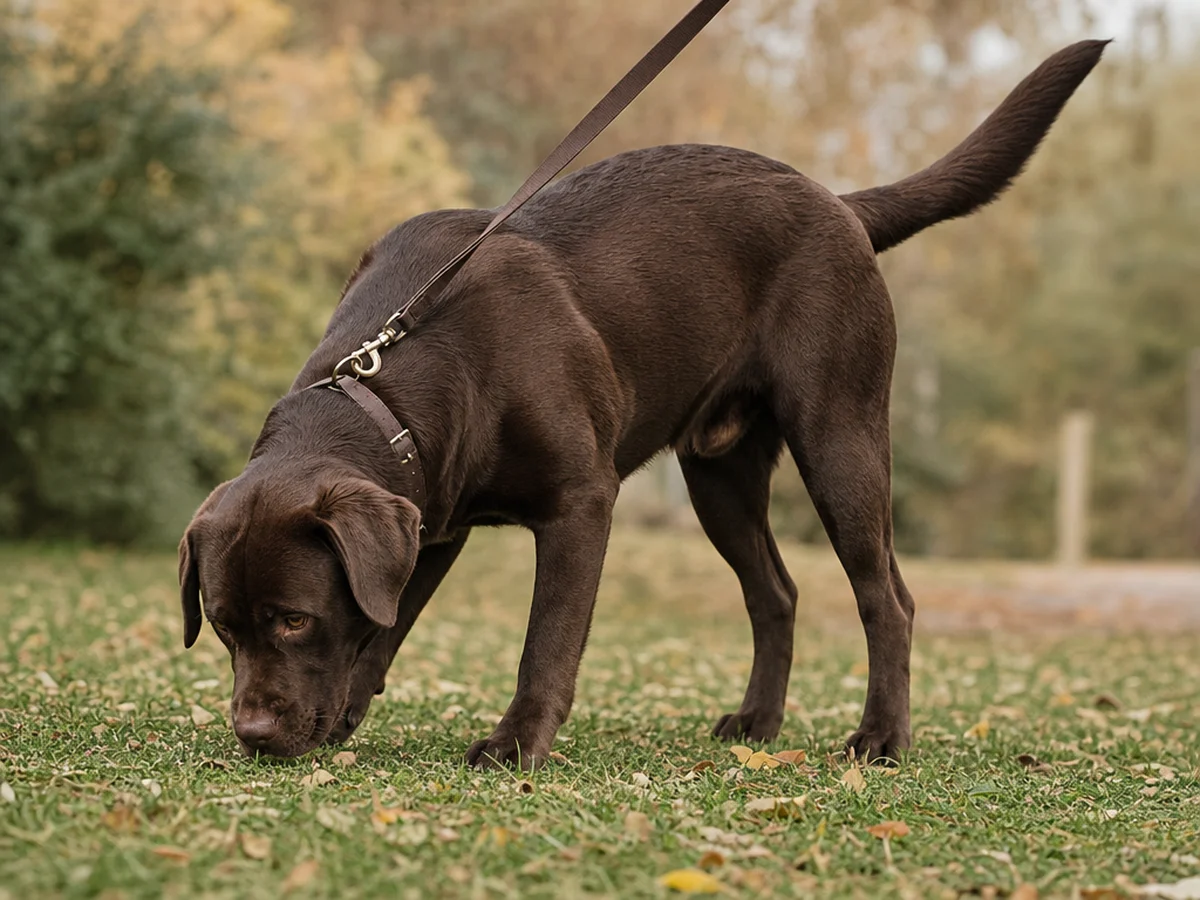
The words matter less than consistent outcomes. Go sniff should reliably open investigation. Let's go should predict movement with the handler. This way should begin a turn before the leash becomes tight.
Check the transition setup before increasing distance. The next route is ready only when these details are repeatable.
- The dog can take food and look back toward the handler.
- The leash is loose before the transition word is spoken.
- The handler moves clearly rather than pulling the dog into position.
- The reward appears in the new mode, not after tension begins.
- The pair can return to connect mode without conflict.
PDSA's loose-leash guidance ties forward progress to slack. In this system, leash tension closes travel mode. The handler waits quietly, then uses the first loose moment to reopen connect mode before moving again.
Do not pull the leash backward. Planting the body against pressure can invite more opposition and discomfort. Stand steadily, wait for slack and make the next decision easier by turning or reducing distance.
Practice the same transitions in the site's Labrador impulse control routines. A release word at a door and a release into sniffing share one useful idea: access opens after the dog can pause and notice the person.
The First Block of Labrador Retriever Leash Walking
The first block becomes a repeatable training unit. Choose a quiet stretch from the door to one landmark. It may be a driveway edge, tree or corner. The distance should be short enough that the dog can move through several modes without becoming overwhelmed.
Begin with connect mode inside the closed door. Clip the leash, reward orientation and pause. Open a narrow door gap while the leash stays curved, then close gently if the dog shifts into a forward rush.
Outside, travel a few steps and reward low beside the handler. Open a sniff area before the dog drags toward it. After a short investigation, transition back to travel and return home while the pattern remains clear.
RSPCA's walking guidance connects a loose leash with reaching the destination. Planned sniff access makes that consequence visible without requiring food for every step.
Repeat the same first block across several outings. Familiar ground lets the handler notice mode transitions instead of reacting to new events. Add distance only when the return block stays as organized as the departure.
Record where tension begins. If it happens at the door, extend indoor transitions. If it begins at the sniff landmark, open access earlier or reduce travel distance. The location tells you which mode needs practice.
Handler Mechanics for Labrador Retriever Leash Walking
Hold the leash with relaxed elbows and enough length for a curve, without loops hanging near the dog's legs. Keep the reward hand on the dog's side of the body so delivery does not pull the dog across the handler's path.
Turn from the feet and shoulders rather than steering with the wrist. Clear body movement helps the dog follow before the leash communicates the change. Practice both directions because one side may be easier.
Sniffing Inside Labrador Retriever Leash Walking
Sniffing is not a break from training. It is a mode with a beginning, safe range and clear ending. Choose places away from traffic, dropped food and private property.
Release the dog while the leash is slack. Follow within the agreed range rather than anchoring in one spot. If tension appears, stop moving and wait for the dog to create slack before investigation continues.
Keep sniff periods long enough to be useful but short enough that the dog can transition out. Say let's go once, move at an angle and reward reorientation. If the dog cannot leave, the environment is currently too difficult for that transition.
Alternate predictable and surprise sniff access. A familiar tree can anchor the first block, while an occasional release after several loose travel steps keeps the handler relevant. Do not make every smell a negotiation.
Notice the quality of sniffing. Slow investigation with a curved leash can support recovery, while frantic zigzagging may keep arousal high. Choose a quieter patch or shorten the range when the dog cannot transition back.
Use food searches sparingly in clean areas. A few scattered pieces can support connect mode after a difficult moment, but they should not encourage scavenging where unsafe objects may be present.
People and Dogs Change Labrador Retriever Leash Walking
Friendly motivation can still create unsafe tension. Decide the passing route before the Labrador Retriever reaches greeting distance. Cross the street, turn into a driveway with permission or make a wide arc in an open area.
Pass Mode Around People
Set the first practice arc far enough away for food to work and movement to stay fluid. Place rewards low on the side away from the person, then continue through the arc. The dog does not need to greet after passing.
Ask familiar helpers to walk by without calling the dog. Later, a greeting can happen only after the leash is slack and both people agree. Social access becomes a planned result, not payment for towing.
Pass Mode Around Dogs
Dog movement often raises arousal faster. Battersea's lead-frustration guide describes agitation linked to restriction. Increase distance before barking, lunging or fixed staring makes learning unavailable.
Walk parallel at a generous distance with a calm helper dog rather than approaching head-on. Reward brief check-ins and leave while both dogs remain able to move. Passing calmly is a complete outcome.
If the dog cannot take food or turn, use distance instead of repeating a cue. Best Friends' turning advice pairs a direction change with praise and food when the dog comes along. Make the arc smooth enough that the leash does not snap tight.
Labrador Retriever Leash Walking After Arousal
A difficult event does not need to ruin the route. Move away until the dog can sniff, eat or orient again. Stand in connect mode without demanding a long sit. Recovery behavior matters more than returning immediately to the planned direction.
Shorten the remainder of the walk. A dog who has just lunged at a car or dog may have less capacity for another busy block. Choose a quiet sniff area or return home through the easiest available route.
Review what happened after the walk. Record the trigger, first body change, distance and which exit worked. Avoid writing that the dog ignored everything. Identify the last moment at which a mode transition was still possible.
Practice that transition later without the trigger. If the turn failed, rehearse the arc on a quiet path. If food was ignored, increase distance during the next real pass rather than changing to richer food beside the same trigger.
Recovery belongs in the log too. Note how long the dog needed before the leash curved, food worked and ordinary sniffing returned. A faster recovery at the same safe distance can be meaningful progress even before the route becomes harder.
The site's Labrador obedience training guide covers broader cue reliability. Loose-leash repair stays focused on movement choices and recovery within the route.
An Ordinary Route From Four Loose-Leash Modes
Build the route from known blocks. Start with connect at the door, travel to the first sniff point, return to travel and use pass mode only where the environment requires it. A mode sequence gives the handler decisions before tension appears.
Add one new block at a time. Keep an easy route home and avoid increasing distance on the same day as a busier passing location. The dog should finish able to recover, drink and settle normally.
Review success by mode, not by a perfect walk. Connect may be strong while dog passes remain difficult. Sniff transitions may be easy while the door still needs practice. Work on the weakest transition without discarding the rest.
Tomorrow, walk only the first familiar block and name each mode before it begins. Reward connection, let loose travel open a planned sniff and turn home while the leash still curves. An ordinary Labrador Retriever walk becomes manageable when both ends of the leash know which job comes next.
 BehaviorInstinct at Work as Labrador Retrievers Chew, Dig and Carry Things
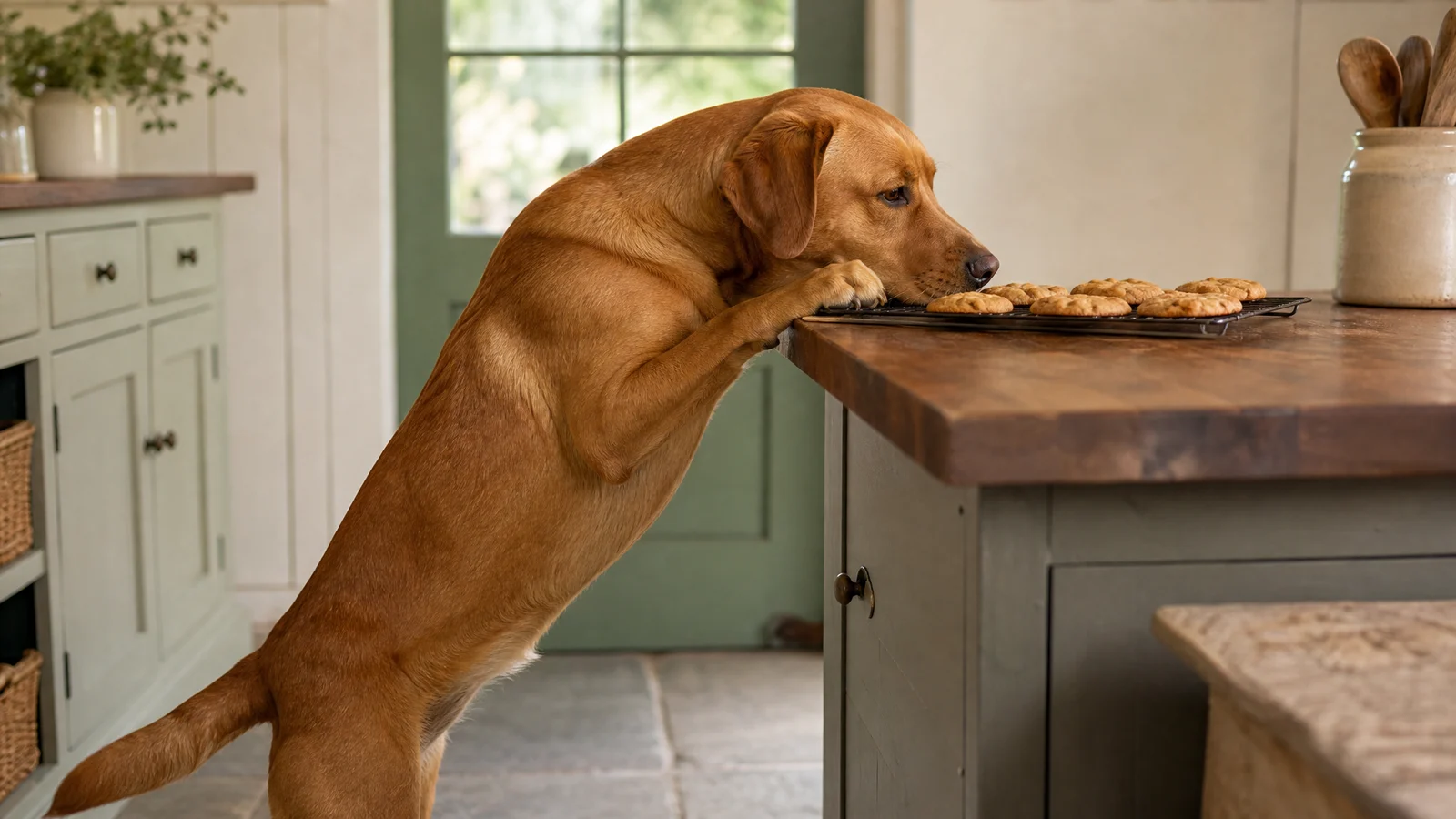 BehaviorLabrador Retriever Food Obsession: Kitchen Rules That Stick
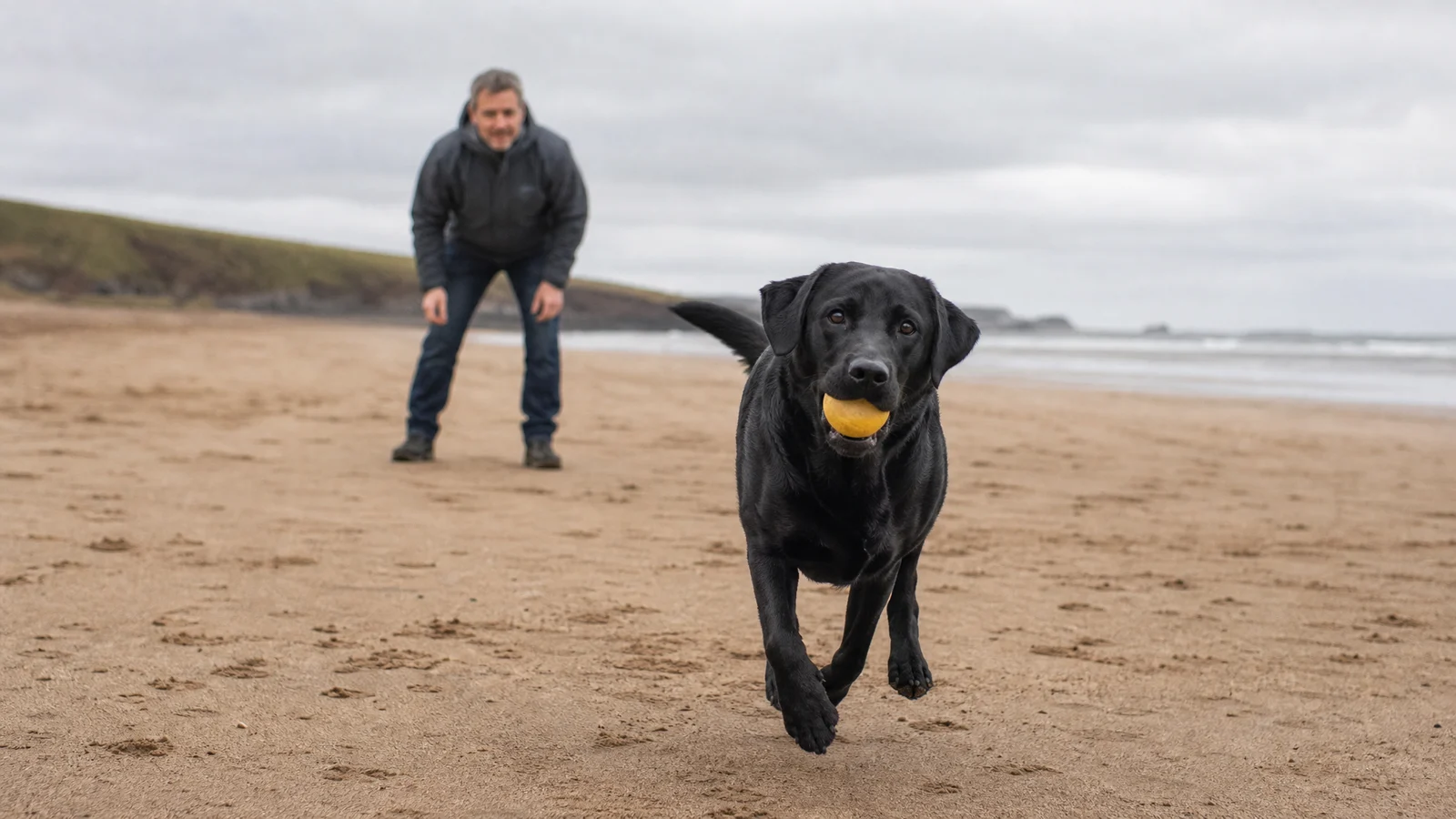 Exercise and jobsBall-Crazy Labrador Retrievers: Fetch Rules and an Off Switch